[ Content | Sidebar ]

Review: Mass Effect 3

August 11th, 2021

Written by: Rik

Hello!

Apologies for the somewhat sporadic content in recent months, even by our standards. However, a return to our usual pattern of semi-regular updates should follow.

Despite this review coming a little later than planned, I’m pleased to confirm that we can round off our coverage of the Mass Effect trilogy with this write-up of the third game.

I’m sure there are lots of worthy games released in the last 10 years or so that have escaped my attention, but I was pleased to have the opportunity to belatedly catch up with this series.

Anyway: here’s our review of Mass Effect 3.

Inside The Big Cardboard Box: Sold Out

August 5th, 2021

Written by: Rik

Inside The Big Cardboard Box is where we delve into the history of the largely defunct world of boxed PC games, with a particular emphasis on all the ones I used to own, but later gave away or sold.

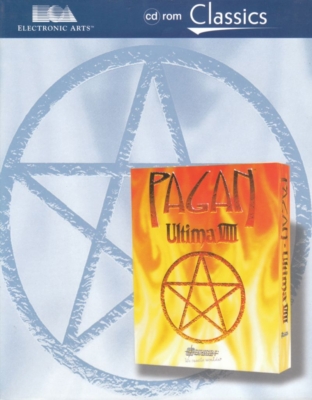
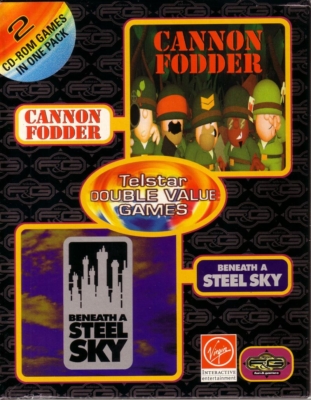
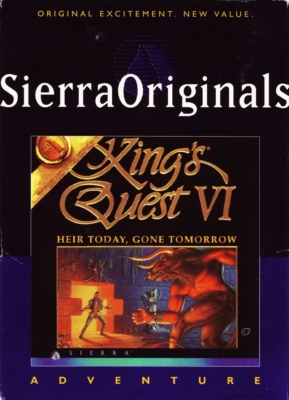
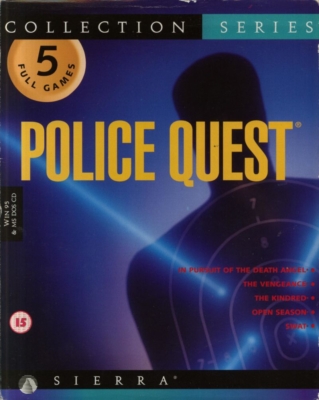
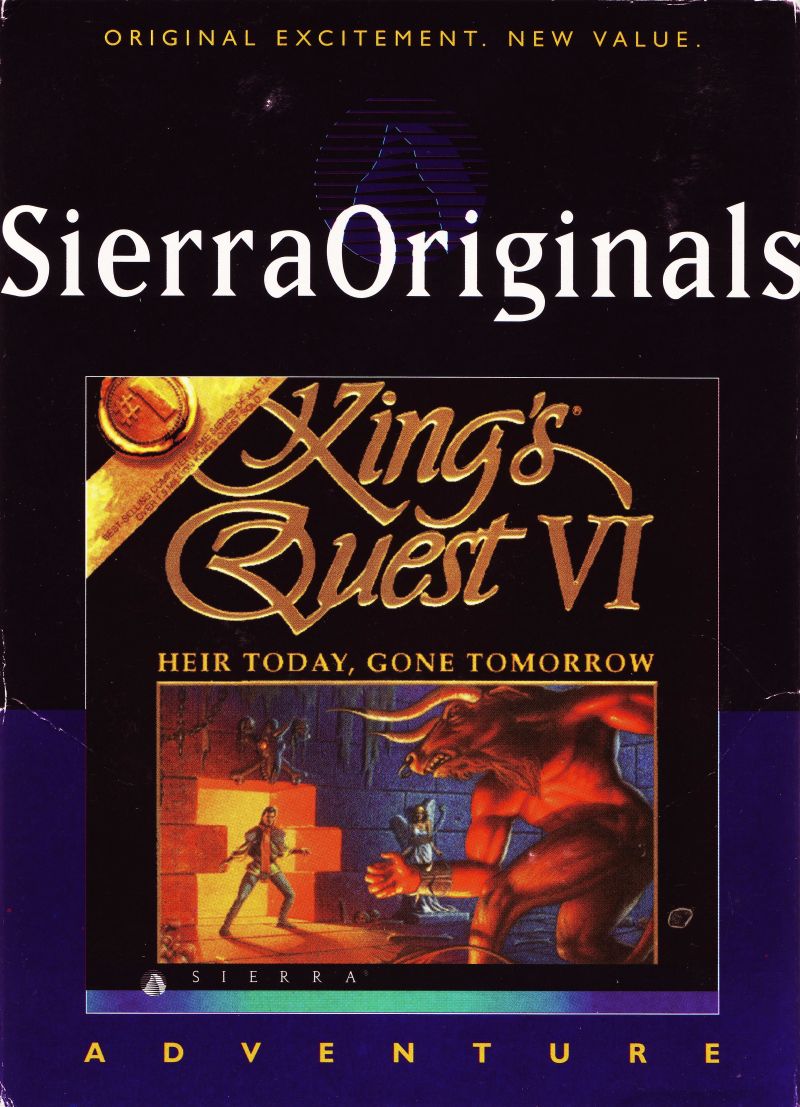
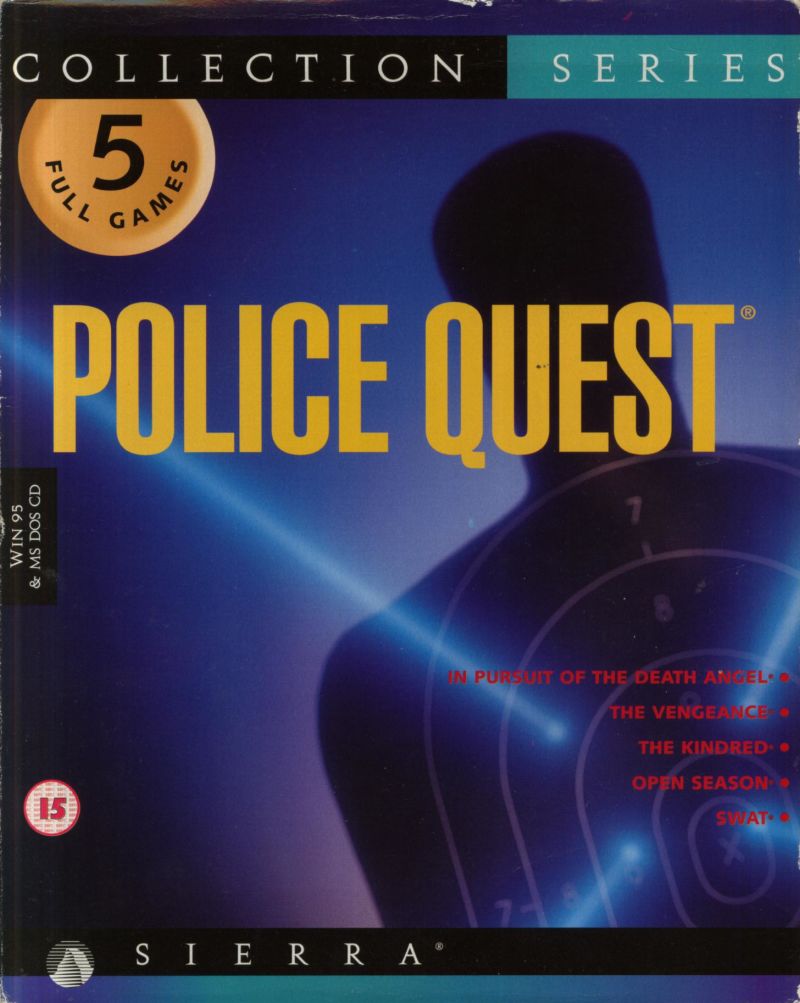
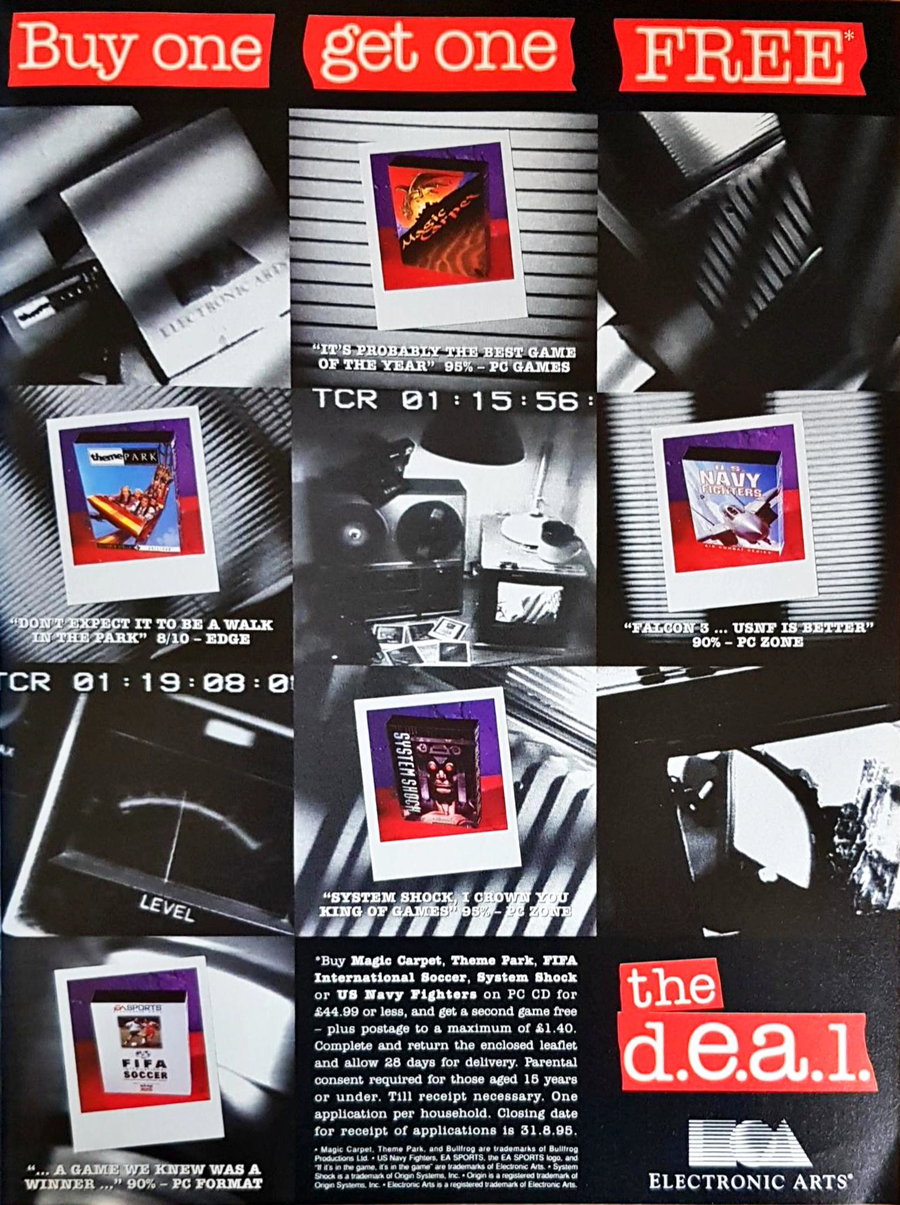
Sold Out was the budget range that heralded a new era of decent PC games at even lower prices. And, just as The White Label had previously captured the imagination by releasing the once-mega-expensive £70 FMV game The 7th Guest at the £10-15 mark, Sold Out did the same by including it among their first few releases in 1997. Even though, by that point, the gloss of the FMV adventure had begun to fade somewhat, it still sent a message that Sold Out wasn’t going to be about bargain basement rubbish.

There was some of that, much later on, but mainly as a by-product of there being something of everything, once the label really picked up momentum. And the journey of The 7th Guest to this new lower price point, via an initial budget release, arguably established a pattern that ultimately impacted the success and longevity of the mid-range budget labels, as their main market – people who liked a bargain – figured that they could always wait for a further reduction.

The other impact was the trade-off people were prepared to make for low prices: no-frills presentation, with a box that was empty except for a disc which held a copy of the manual as well as the game.

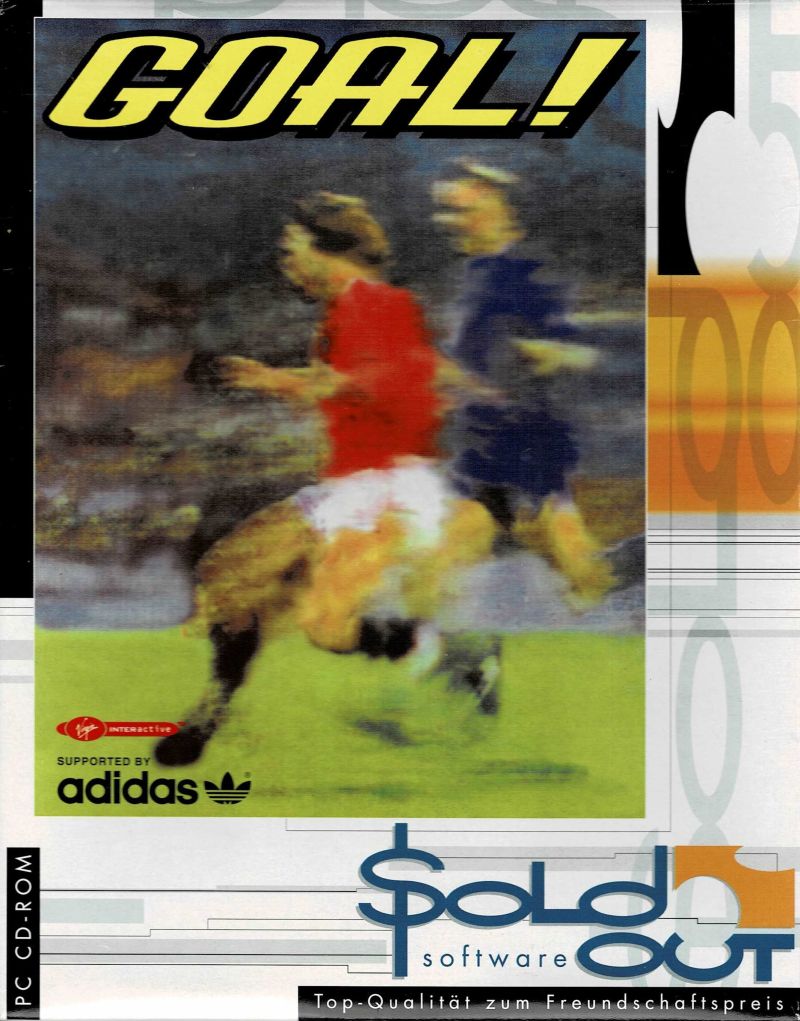
Sold Out straddled the big box and DVD case eras, with early releases coming in a full size box containing a cardboard CD sleeve. The 7th Guest aside, they were perhaps a little long in the tooth to really set pulses racing: early 90s DOS titles like Dune, Lure of the Temptress, Warcraft: Orcs & Humans and Goal! Still, a bargain is a bargain [is it? – a reader], and I still have my copies of the last two somewhere.

But, as things progressed, a mixture of newer and more high-profile titles secured the label’s place in the market. Squad shooter Spec Ops made a fairly swift transition from full price down to £5, while 90s classics like Grand Theft Auto and Tomb Raider were also soon added to the range.

Such was the prolific nature of the label during the 00s, tracking its history in detail, and plucking out memorable titles – or ones I used to own at least, which is part of the motivation in raking through these release histories – seems like an overwhelming task. There’s a list on MobyGames, but I couldn’t shake the feeling that it somehow doesn’t seem complete, without necessarily being able to name a single specific game that’s missing.

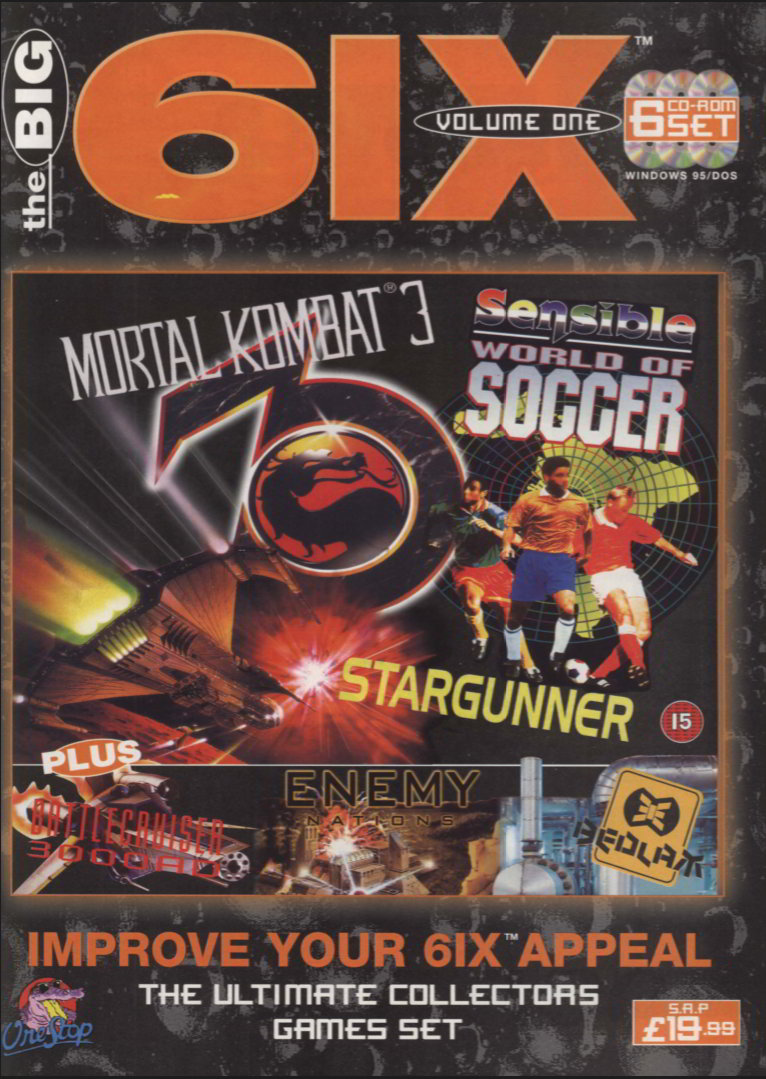
At times, it seemed as if every half-decent title that had a chance of selling would end up on Sold Out after a couple of years, and new games were constantly being added. This was the era, of course, when boxed PC games were still sold in high-street shops (and high-street shops were still things that existed), and the likes of GAME would offer a ‘Buy two, get one free’ type deal, with three Sold Out titles for £10.

Most of the time there’d usually be two games in the deal that you actually wanted, but with a third effectively free, you could end up (as with modern bundle key sellers like Fanatical) taking a punt on something that you would likely be terrible at or ultimately would end up not playing. Still, I do remember a good few lunch hours and shopping trips in the 00s involving at least a few minutes each time agonising over a potential bargain.

All of this was despite the fact that at one time Sold Out offered the same 3 for £10 deal via mail order and free postage, with the full range available, rather than whatever your local branch had on the shelves. Plus, anyone getting rid of any unwanted Sold Out games would do so for even cheaper on eBay, or via CeX, further increasing opportunities for the bargain hunter.

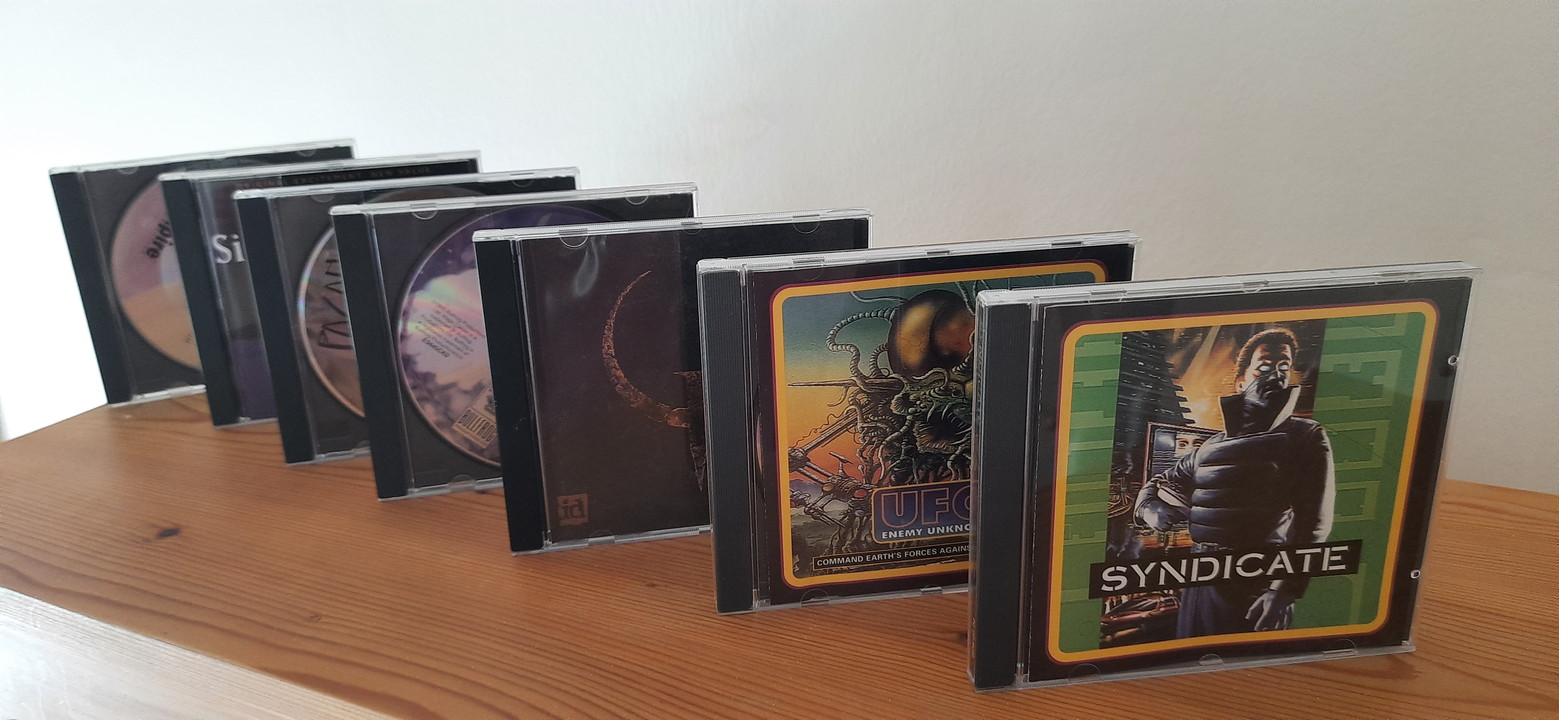
I don’t think I tended to get rid of too many Sold Out titles, as the packaging could always be discarded and the disc retained in a wallet. But there were so many ins and outs – lunch hour purchases from GAME or CeX on the one hand, and guilt-ridden Cupboard of Shame clear-outs on the other – that it’s really hard to say for certain. Looking at my CD wallet now, I’m as baffled by the selection as I am by the list on MobyGames: it doesn’t seem quite right, but I can’t explain why.

There is clear evidence on FFG of some kind of mini-purge in 2012, although it looks as if my attempts to sell my copies of Anachronox (sorry Stoo), Alone in the Dark: The New Nightmare and Prisoner of War were unsuccessful, although I don’t have them now, though, so assume they went to the local charity shop instead. (There’s also evidence on this site of me finding a Sold Out game in the house that I had no recollection of ever buying.)

I’m fairly sure that Desperados and Commandos 2 were once part of my collection (the first Commandos game was another popular early release that quickly made its way to the label): if I remember rightly, one slightly unwelcome feature of the brand as time wore on was the addition of a rather clunky Sold Out installer menu which would sometimes get in the way of the original setup files, and I have a vague memory of this not agreeing with 64-bit Windows. Either way, rock-hard 2D strategy games were probably a bad idea in the first place.

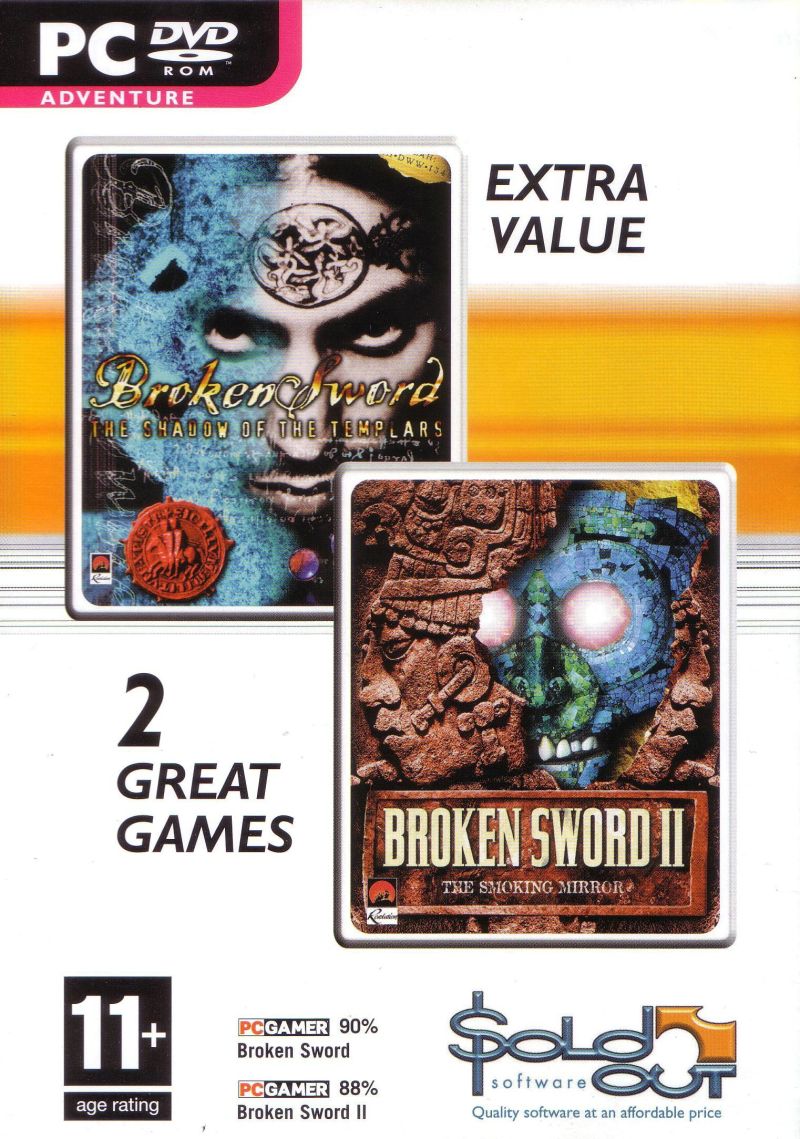
Double packs were a brief addition to the range: Carmageddon 2/Carmageddon: TDR 2000 is one I still have in the collection, while I have some (possibly erroneous) recollection of owning a bundle of the first two Broken Sword games at one point. And genuine rubbish was fairly rare: I don’t know that the Army Men games were ever particularly well received, and there were a few tycoon and management type games that snuck on there, but otherwise it was a range that did what it said on the tin: good games at bargain prices.

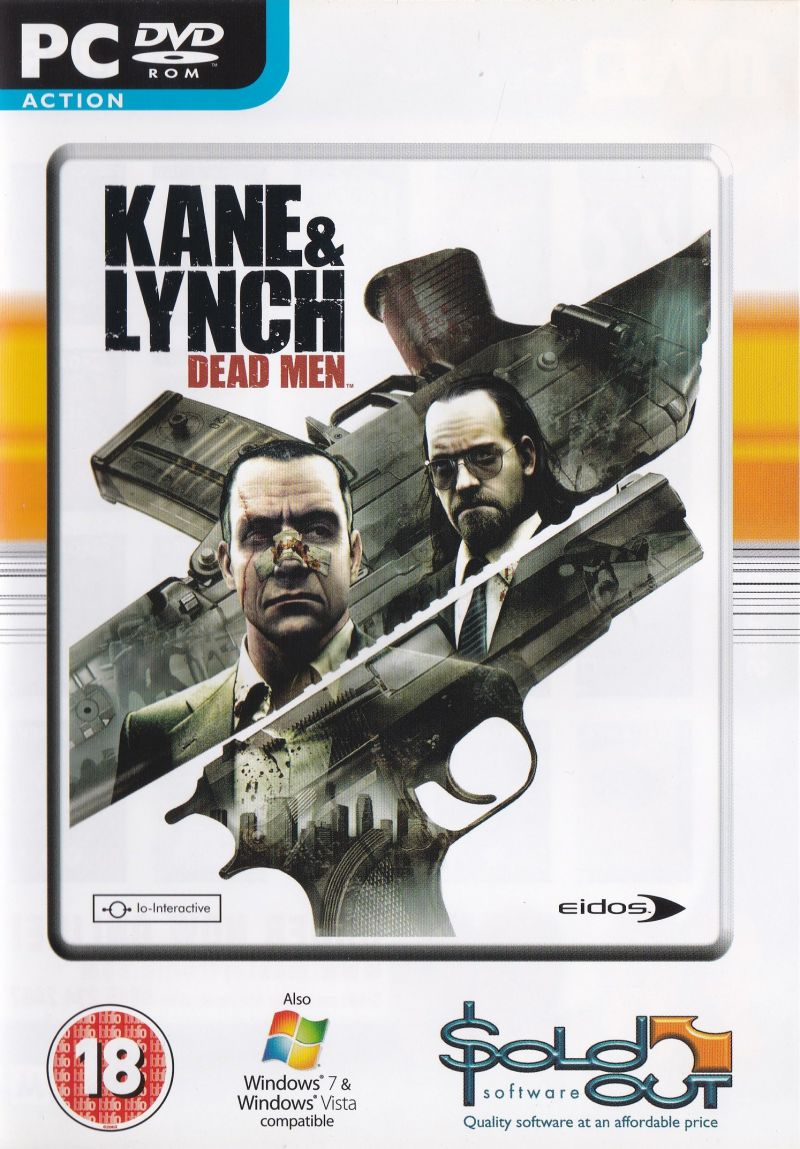
Ultimately, the challenge of competing with Steam and digital distribution in general proved to be a bit too difficult, especially when combined with those facing the high street and wider world at the end of the 00s. I would still pick up Sold Out boxes occasionally, and another one that’s still on my shelves, Kane and Lynch: Dead Men, was one of the last releases to hit the label, according to that MobyGames list.

The Sold Out name was just part of Mastertronic, who also offered other higher-priced lines including a ‘PC Gamer Presents’ (boo) range, which bizarrely included games that the magazine hadn’t even rated that highly. Once the Sold Out series was retired, the name was repurposed, and exists now as a standard publishing label, with no budget aspirations or mention of their prior history.

Probably more than any other budget label, many of my reviews on FFG have been from Sold Out re-releases, and I was grateful, both as a teenager and through my 20s, for access to a cheap source of a wide variety of games in the 90s and 00s. And arguably flooding the market with re-badged copies of so many games has helped from a preservation point of view, too.

Unfortunately, though, when it comes to trying to remember which Sold Out games I owned and got rid of (and preferably whether any of them were in that big cardboard box from 2002) – I’m none the wiser and, if anything, more confused than ever. Dammit!

NB: All scans sourced from MobyGames.

The Euros: A Brief History

July 11th, 2021

Written by: Rik

It’s the Euros! The final! And England are in it!

As usual, the real football created a hankering for some virtual football, and so, in time-honoured tradition, I dug out whatever modern-ish football games I bought last time there was a tournament on and failed terribly at them.

I’m not sure when exactly I went from being the (self-declared) Pro Evo master to the kind of person who sticks it on the middle difficulty setting and still finds the whole thing bafflingly slow and fiddly.

(But I think some time around this point might have been where it all started to go wrong).

Anyway, ahead of the Euro 2020(1) final, it seems like a good time to take a brief look a bit further back at the history of European Championship tie-in games.
 

European Championship 1992

Goooooal! (etc.)

While it’s altogether a less significant affair than the World Cup, it’s still a surprise that the first game based on the European Championship didn’t come out until 1992.

Not that it has much in the way of official licensing, or indeed any frills at all. The roster of teams doesn’t match the real tournament, and there are no player names.

As we shall see, tournament-based games tend to be based on an existing release, a reasonable strategy given their limited shelf life. I thought this unheralded oldie might be an exception, but apparently it too is effectively an update of an older game, Tecmo World Cup.

A side-scrolling arcade title, the PC in 1992 wasn’t perhaps its natural home, and your correspondent’s periodic attempts to play it for review have, to this point, always been abandoned at an early stage.
 

Euro 96

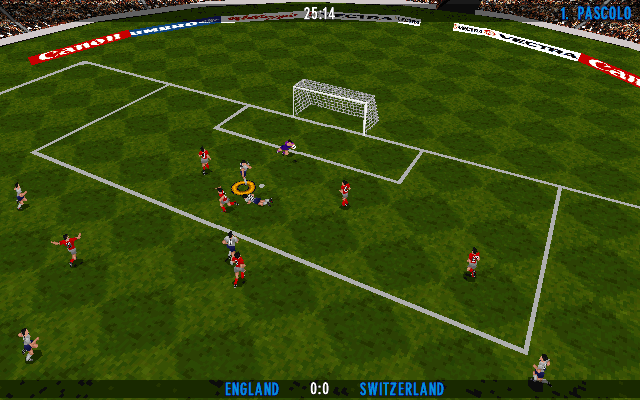
I couldn’t play this one for long without unearthing historic Actua Soccer rage.

With the tournament in England, it made sense for the official game to be provided by an English studio, Sheffield based Gremlin Interactive, who had recently stood up to the might of the big-budget FIFA series with the critically-acclaimed Actua Soccer.

Euro 96 was less well received, however, and was the subject of some confusing to-ing and fro-ing from PC Zone, who secured an exclusive review and gave it a lukewarm score, only to issue an addendum and apology to readers, explaining that it was based on unfinished code, and that a new review, based on the finished game, would follow.

When it did, the game received exactly the same score as before, with the review reiterating all of its original criticisms.

Zone were fans of the original Actua Soccer though, while the position of this humble site is that it is one of the worst old footy games we’ve covered over the years. As such, we’ve not been in a rush to catch up with this one.
 

EA takes over (Euro 2000-2008)

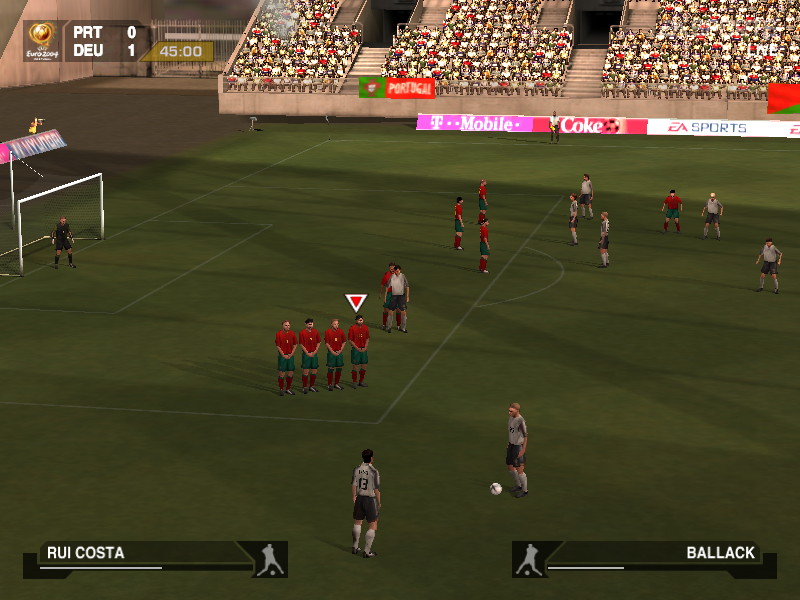
Euro 2004

Electronic Arts finally got their grubby hands on the license in 2000, and began producing tie-ins that were broadly in line with their previous FIFA game.

The early part of the decade was a low period for the FIFA series, however, with EA’s football games lagging behind Konami’s Pro Evolution Soccer.

EA’s games did introduce the qualifying campaigns into their games, extending their lifespan, and allowing fans of nations that hadn’t qualified to get their team into the tournament.

In general though, footy in the mid-00s meant Pro Evo, and its superiority on the pitch proved more than enough to make up for the lack of official frippery.

By the time of Euro 2008, FIFA on the Xbox 360/PS3 was actually getting better, but PC owners got a converted and mildly-polished version of the inferior PS2 version instead.
 

Hello DLC (2012-)

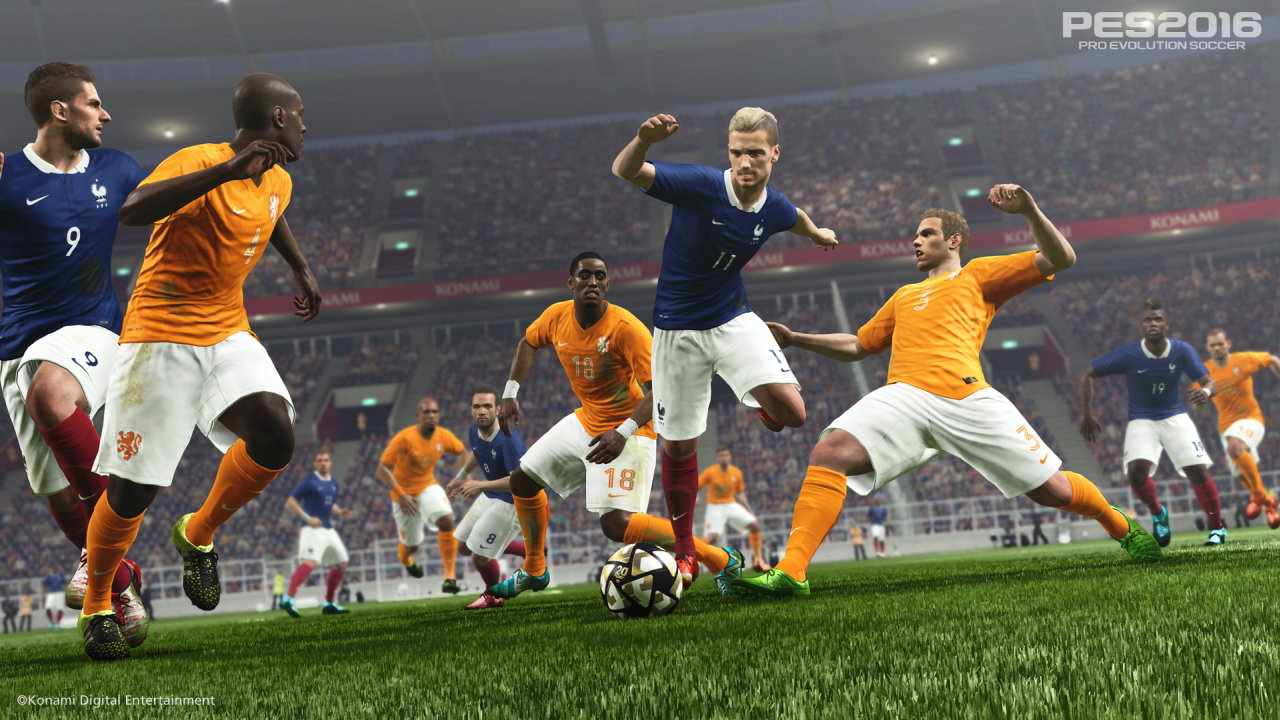
PES 2016/Euro 2016 (official press shot as I only have this on 360!)

For a period, whenever gamers bemoaned the fact that tournament licenses were an excuse for the likes of EA to charge full price for essentially the same game as their last one, the suggestion of cut-price data discs was occasionally made as an alternative.

Eventually, this came to pass in the form of the modern equivalent, DLC. For the first time, in 2012, FIFA 12 owners could purchase a content pack for the summer tournament and no standalone title was released. (Although they did revert to a separate game for the 2014 World Cup).

From 2016, the rights switched to Konami and Pro Evo/PES, although the DLC idea persisted, with the additional content provided for free to existing owners of the game.

Your correspondent played this 2016 edition most recently, managing to successfully recreate the ignominy of the real-life England team at that tournament by losing 2-1 to Iceland in the knockout stages.

Discussion: Virginia (spoilers!)

June 7th, 2021

Written by: Rik

Welcome again to Discussion: [indie game] (spoilers!), our semi-regular, plot-spoiler filled adventure into the world of comparatively modern indie gaming.

Today’s game is Virginia, a 2016 release from 505 Games, which sees you in the role of Anne Tarver, a fresh graduate from the FBI academy, partnering up with a more seasoned agent, Maria Halperin, to take on your first case, investigating the disappearance of a teenager in the small town of Kingdom, Virginia.

As usual, we’ll keep further details for the discussion itself, and instead present you with the official trailer, a note that this game is short and broadly enjoyable, and an invitation to check it out for yourself, it you haven’t already.

And now, the ***FINAL SPOILER WARNING*** for the discussion below!

Discussion: Virginia (spoilers!) continued »

Inside The Big Cardboard Box: More Budget Labels

May 27th, 2021

Written by: Rik

Inside The Big Cardboard Box is where we delve into the history of the largely defunct world of boxed PC games, with a particular emphasis on all the ones I used to own, but later gave away or sold.

So, after a brief detour into the world of compilations, we’re back again finding more budget labels inside the big box. (Did I ever even buy any full-price games? I think such things were luxuries reserved for birthday and Christmas presents).

We’ve already covered the main two ‘prestige’ budget lines from Virgin and EA, and as far as I remember, they were the most prominent and successful ones available in the 90s. While other publishers certainly followed suit, they never quite had the range or quality of titles available to leave a lasting impression, and even a committed bargain hunter like myself would find that these second-tier lines would either have been discontinued or rebranded following an initial purchase.

We’ll start with one that took an unusual approach which, to my mind, was actually a pretty good idea. One of the main selling points of Replay, from GT Interactive, was that you would actually get the game in its original packaging. Although there would be a yellow Replay-branded sleeve for the box ‘on the shelf’, once you got it home, that gaudy monstrosity could be removed and discarded altogether, leaving only the original packaging for you to proudly display, like the kind of person who buys games for their recommended retail price.

Unlikely as it might seem, budget labels of the 90s are evidently a niche interest, the memory of which no-one has expended any effort towards preserving in any detail. I had feared that evidence of this ‘fake box’ scenario would be thin on the ground, and it is. However, the series’ initial tagline: ‘The world’s greatest games in their original packaging’ has been captured and uploaded to Mobygames, although the only example I can find in English is for a pinball game called Balls of Steel (‘Pinball on Steroids!’) which I do not recall ever being dubbed one of the world’s greatest games.

Meanwhile, scans of the German box art (‘Unsere besten spiele in ihrer original-verpackung’) also confirm that Flight of the Amazon Queen and Total Annihilation, two games that I remember owning, were also released in the ‘removable sleeve’ format. I’m reasonably certain my copies of Quake, and possibly Carmageddon, were from this range too. GT published The Ultimate Doom and Duke Nukem 3D in the UK, and these were also fairly high-profile releases on this label.

Eventually the ‘original packaging’ gimmick was ditched altogether, and you just had to make do with the yellow box, which was, as previously noted, not particularly attractive. However, there did some to come a point in the late 90s when PC budget labels seemed to shift from a ‘cheap doesn’t mean low quality’ type approach, to one that seemed to acknowledge that the likely target market just wanted the games to be as cheap as possible. However, during the full-size cardboard box era, printed manuals etc. were still provided.

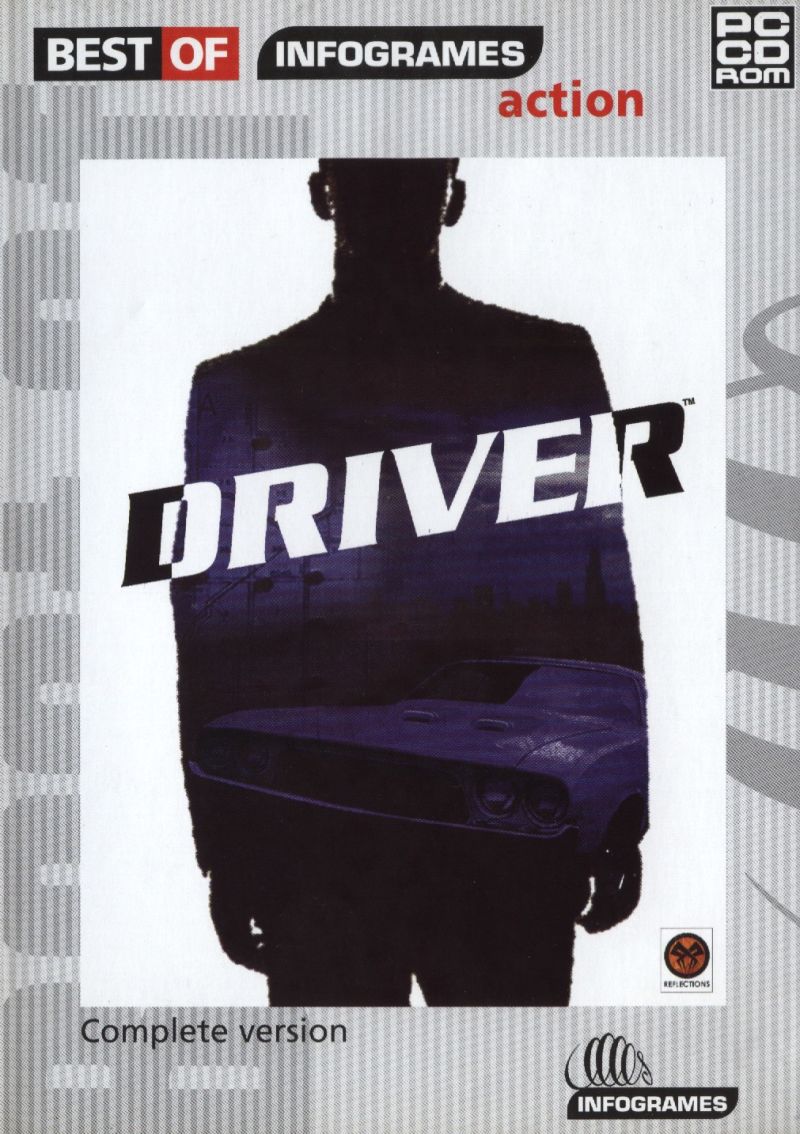
The Replay range didn’t last much longer than the 90s, and neither did GT Interactive itself, which got folded into Infogrames. (Speaking of which, in the early 00s DVD era, there was an Infogrames ‘Best Of’ range, which offered cheap copies of Unreal Tournament and Driver (with PDF manuals), which are still in my collection. But then Infogrames started using the Atari brand (the legal history of which seems far too complicated to go into here) and so the budget line became ‘Best of Atari’, although I don’t think I ever bought anything with this box art).

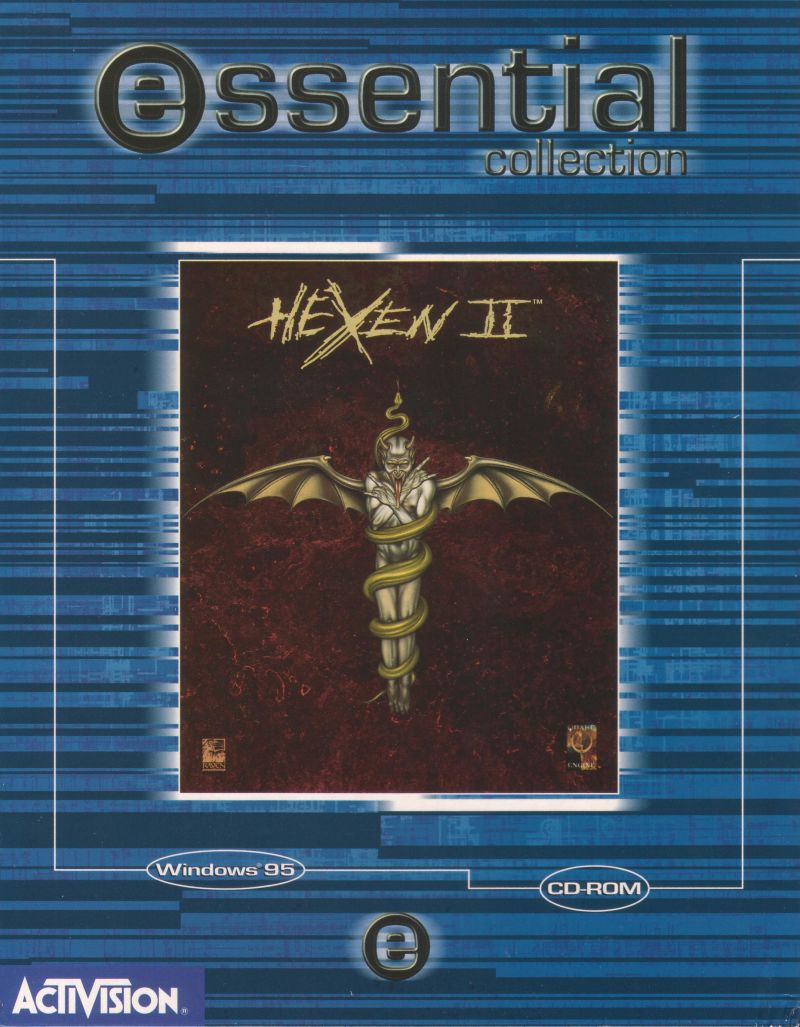
Activision’s 90s budget range was known as The Essential Collection, and to start with aimed for a classical/framed artwork style of presentation, in the mould of The White Label. My recollection was that my copy of Interstate ’76 came from this range, although the jewel case that’s still in my possession would suggest otherwise. It definitely was an Essential Collection release, though, as were Mechwarrior 2, Spycraft and Earthworm Jim. The range later rebranded to feature rather indeterminate blue packaging… I had Hexen II from this era (later donated to Stoo at some point in the 00s).

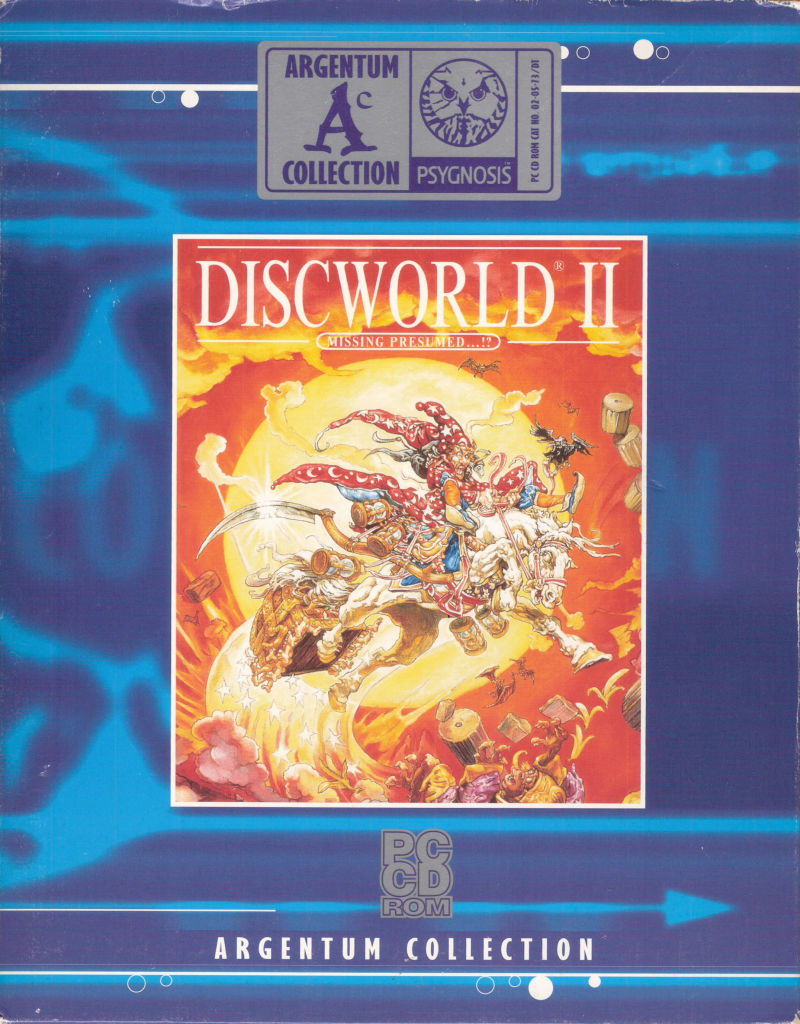
This blue packaging wasn’t dissimilar to that later adopted by the Psygnosis budget range, the Argentum Collection, the first iteration of which used a grey and purple design inspired by the colours in the Psygnosis logo. My copy of Wipeout, which I still have, comes from this range (with the jewel case showing signs of the kinds of issues that once plagued PC gamers, particularly during the bumpy mid-90s transition from DOS, with two hastily-added stickers warning that the game is ‘Not compatible with Windows ’95’ and that the ‘Sound will only work with Creative Labs Sound Cards’). Fellow PSX conversion Destruction Derby, along with Discworld and Ecstatica were also among the games on offer, with their sequels securing a later release during the blue box era.

Hexen II aside, I think I pretty much held onto most of the games from these various budget ranges. Although I’m not sure where Quake is, or whether that was even mine in the first place. (My Dad, uncharacteristically, rather enjoyed Quake in single-player, so it might actually have been his).

As we mentioned last time, the appeal of random compilations started to wane into the early 00s, and it seems likely that publisher-based budget labels went the same way, particularly for those with a limited number of big-name titles to re-release. Instead, this kind of thing became the preserve of specialist budget publishers like Xplosiv and $old Out, which more or less abandoned the notion of classy presentation in favour of just hoovering up as many games as possible and flogging them to the consumer with the manual on CD in cheerily generic packaging.

NB: All scans sourced from MobyGames.

PC Zone Lives!

May 19th, 2021

Written by: Rik

“PC Zone’s Alive!?”

Yes, it is, and it’s with that exclamation from Brian Blessed, grabbed from the Zone archives and neatly repurposed as part of the introductory jingle, that the greatest PC magazine of the 1990s returns, this time in podcast form.

It’s all down to the sterling efforts of ex-Deputy Editor Richie Shoemaker (occasionally spotted in these parts), who has summoned an impressive array of former staff from across the span of Zone’s history to spend some time talking about their time on the magazine.

(If you’re new here, we were both big fans of PC Zone, and for a bit of a look back from a reader’s perspective, you might want to check out our retrospective from a few years ago.)

The first episode acts as a general overview, with pairs of former editors discussing each era of Zone. First up, there’s Paul Lakin and Laurence Scotford talking about the early years, followed by John Davison and Jeremy Wells, who were in charge during Zone’s mid-90s heyday. Then we hear from Chris Anderson, who took over after the 1998 redesign, and Dave Woods, who oversaw the next one in 2005. Finally, there are contributions from Jamie Sefton (who also provides the podcast’s intro music) and Will Porter, who were in the hot seat during the mid-late 00s.

(Perhaps understandably, there are no contributions from anyone representing the final, allegedly rather unhappy, years at Zone).

Other than being really excited about the project, I wasn’t sure in advance exactly what to expect, but figured that it was likely to be a deeper dive into the history of the magazine than had ever before been attempted, and would therefore go beyond the usual surface-level potted history of ‘notable incidents’ with which long-time fans will already be familiar.

Early signs are extremely promising. The first episode is reassuringly candid, and a bit more serious – in a good way – than I was expecting. Although the interviews were conducted in pairs, the sense of shared history, and shared pride in having been a part of PC Zone, really comes across. The rapidly changing nature of magazine publishing meant that each editor faced different challenges, but all relay fond memories of their time working on Zone.

The format of the podcast going forward will be to look at individual issues with some of the writers that worked on them, and Richie acting as host. So, it seems likely that there’ll be different combinations of writers contributing to each future episode, which could be fun.

Episode two looks at an issue that was slightly before my Zone-reading days: issue 19 from 1994, when Wing Commander III and Under A Killing Moon were the big games of the day and Virtual Reality seemed like it would be the next big technological breakthrough around the corner.

With more contributors this time (Scotford returns, alongside Phil South, Daniel Emery, and Warren Chrismas), the episode is slightly more freewheeling than the first, and provides a few laughs as well as a look back to a different era of PC gaming: when PCs were becoming more affordable, but still weren’t actually that affordable (and came with mammoth software bundles), and when technology was moving so quickly that the VR headsets of the day were quickly rendered redundant almost as soon as they were released.

More specifically, if you were a Zone reader, it’ll take you back to a time when you could either give no score or two scores to a high-profile but power-hungry release, and to a time when the answer to the question posed at the start of a VR headset review face-off, ‘which VR headset should I buy?’ was ‘neither of them’.

(Super cool dude that I am, I actually remembered the later VR feature discussed in this episode and the names of the two competing headsets, and had to stop myself guessing out loud at the scores awarded. The quiz questions posed by Richie about the different games reviewed in the issue were a bit harder, though).

The second episode is dedicated to the late Duncan MacDonald, who sadly died in 2017. Duncan was a talented contributor to Zone’s review pages as well as providing regular back-page laughs as his alter-ego Mr. Cursor. Before that, he also entertained readers of Zone’s spiritual predecessors Your Sinclair and Zero.

Certainly, Zone wouldn’t have been the same without him, and no doubt some of his contributions will come up in future episodes. Through the podcast I learned that he had written a book – South Coast Diaries – and I plan to check that out very soon.

Anyway, PC Zone Lives! is a bit of a dream come true for any former Zone aficionado who wants to get some insight into what it was really like to work on the magazine. In the unlikely event that you used to read PC Zone, and now read this website, but also somehow haven’t checked it out yet, I’d certainly urge you to do so.


PC Zone Lives! is available here, and on Spotify, and a few other places.

Review: TOCA Touring Car Championship / Race Driver: GRID

May 9th, 2021

Written by: Rik

Hi there.

We have another anniversary double-bill for you today.

First, there’s a retrospective look at TOCA Touring Car Championship, released in 1997 and first covered here in 2004.

Followed by a review of the comparatively modern Race Driver: GRID from 2008.

We try not to over-promise here, but there are tentative-to-firm plans for more anniversary content, including (potentially) another discussion.

And possibly some cake.

Review: Lost: Via Domus

May 3rd, 2021

Written by: Rik

Hello!

Are we almost at the end? Let’s hope so. I’ll buy you a beer, when it’s all over.

Anyway, one of the things I did to pass my time in recent months was to watch a TV show about characters being cut off from society, friends and family and forced by a dangerous present and uncertain future to contemplate past experiences and mistakes in some detail. It was great!

They made a game of it too. Here’s Lost: Via Domus.

Review: Mass Effect 2

April 23rd, 2021

Written by: Rik

Hi there.

Hope you’re doing well.

In an uncharacteristically logical move, today’s review is of a sequel to another game that we covered recently.

Yes, that’s right – we’re reviewing games from a series in order, and without a delay of several years between write-ups. It’ll never last.

(Also I think this marks the first example of something being hauled out of the Vault of Regret and dusted off for review).

Here’s a look at Mass Effect 2.

Vault of Regret: Formula One

April 15th, 2021

Written by: Rik

The Vault of Regret is a very large place, which houses dusty old game CDs and boxes, untouched digital libraries, and the metaphysical concepts of remorse and embarrassment. Here we write about all the games we should have played but haven’t, or that we have played but didn’t enjoy, among other things.

Declaring an interest in Formula 1 seems like the ultimate way to advertise your advancing middle age. For those in the UK of a certain generation, a Grand Prix would often just be something that would happen to dominate one of the four terrestrial television channels on a Sunday, whether you liked it or not, and if you had even a passing interest, you would end up watching some or all of it.

Inevitably, it would later become the sole preserve of subscription-based sports channels, and hence only for people who actively wanted to pay money to watch it. At which point, the casual viewer largely disappeared, unless he or she was sufficiently interested in other sports to have those channels anyway.

However, the recent arrival of Drive to Survive on Netflix – also a subscription service, admittedly, although one with a broader range and viewer base – has recaptured that audience. Despite attracting the ire of more hardcore fans with its approach, it somehow manages to take the tale of three fairly unexciting F1 seasons, all of which were won by the same driver, and make them interesting, by focusing on individual and team stories from up and down the grid.

As a fan of driving games, this renewed interest did of course lead to thoughts of seeing what Formula One games – both old and new – might be worth a try.

In 20 years, we’ve managed a single review of an F1 game – the PC port of Formula 1 ’97, which was initially released, and found success on, the PlayStation. As acknowledged in that dusty write-up, despite a few idiosyncrasies, in terms of looking and sounding like the real thing while also being accessible enough to pick up and play, it pretty much nailed it. It was also the last F1 game to be developed by the now-defunct Bizarre Creations, who went on to create the marvellous Project Gotham Racing series on Xbox, which, as your correspondent has belatedly discovered, also hits a sweet spot at the arcade-y end of simulation rather successfully.

F1GP still seems intimidating.

But F1 is a technical sport, with all of the off-track tweaking, performance and strategy almost as much a part of success as the driver behind the wheel, which means that most games have tended to lean in that direction. A key early reference point, particularly on PC, would be Formula One Grand Prix from MicroProse, which, along with two further sequels, dominated the 90s.

Our family had the first one on Atari ST, and my memory is of an intimidating challenge, akin to a flight sim, with a slightly droopy frame rate. Whenever I played, I was struck by an overwhelming sense that without most of the driving aids switched on I would never get around the circuit. I think I did try a handful of races with maximum assistance, which included automatic braking, but that just made me feel like I was actually doing very little driving myself.

By the time of Grand Prix 2, the PlayStation had arrived, and Bizarre Creations’ initial Formula One game had casual fans of F1 with a PC glancing over at the world of the small grey box with some degree of envy. Like the later follow-up, it would eventually be ported to PC, but in the meantime I was experimenting with inferior knock-offs, such as Power F1, a little-remembered, middling effort that pitched itself as an accessible alternative to the heavyweight sims. Nevertheless, it was still a bit of a pig to drive. I recall punctures occurring with such regularity that they seemed inevitable, with each race becoming a matter of waiting for a wheel to fall off altogether and end your chances.

Power F1: all four wheels intact, for now.

The end of the decade brought Electronic Arts into the equation, although uncharacteristically for them this did not lead to their financial might slowly strangling and eliminating all competition until they obtained a monopoly on games based on a particular sport. Instead, they released a few moderately successful titles over a few years, before the exclusive rights passed over to Sony, which meant that their PlayStation consoles (2 and 3) were the only places you could find officially-licensed F1 action in the mid-00s.

In theory, the Sony games were a continuation of the earlier series from the original PSOne, although it had experienced mixed fortunes since the departure of Bizarre Creations in the 90s. It was at this point I dabbled with the 2003 or 2004 edition for PS2, but I again found it both too difficult (playing properly) or too forgiving (with aids and ‘stupid mode’ turned on). The challenge was – is – really to make it easy enough for someone to get around the circuit while still making them feel like they’re actually doing something.

Maybe the truth is actually that for it to feel good you really do need to practice the tracks and take the races one at a time instead of trying to breeze through like you would in a more arcade-y track-based racer, like TOCA Race Driver or NFS: SHIFT. Also, in those games, it feels perfectly ok to pause and restart when you mess up. But F1 is a sport, and you wouldn’t usually quit out of another sports game just because you were losing. And, arguably, there’s even more incentive for doing so here: having practiced the circuit and qualified well, it must be infuriating for real-life drivers to have their race, and their chances, ended prematurely due to a careless prang or technical issue.

In the last decade, Codemasters have become the stewards of officially-licensed F1 games, bringing the sport back to the PC, as well as consoles. They have a pretty decent track record with arcade/sim hybrid racers, from TOCA/Race Driver/GRID to Colin McRae/DIRT/DIRT Rally, and I have a couple of their older titles in the backlog from some bundle or other, so maybe it’s time to give it all another go.

Still, it’s likely that for the franchise to have succeeded and lasted as long as it has, the tastes of the hardcore petrolheads and fans need to have been adequately catered for. And it sure still looks like a lot of hard work. Is it too much to ask for a game in which there are no nuances, except that Mercedes and Red Bull have the fastest cars and Haas the slowest? Probably, yes.

Perhaps I will dabble again. Or go back to the older sims, and see what I can make of them. But until then, it’s probably best to submit Formula One games for storage in the Vault of Regret.