[ Content | Sidebar ]

Inside The Big Cardboard Box: EA Classics

February 17th, 2021

Written by: Rik

Inside The Big Cardboard Box is where we delve into the history of the largely defunct world of boxed PC games, with a particular emphasis on all the ones I used to own, but later gave away or sold. On one occasion, during a particularly thorough clear out, around 40 or so went at once, packed into a giant cardboard box and sent off to a lucky eBay auction winner.

With any attempt to try and remember the details of each and every game that was in that box quickly becoming futile (and likely of little interest to you, dear reader), we instead bring you this more general look back at some of the boxes of old, prompted by the memories of my own lost but previously-owned titles.

Last time, we looked at a budget range that was fairly popular in the 90s, and we’ll continue in that same vein here. While The White Label was technically a Virgin Interactive line, they also secured rights to games from other publishers, most notably LucasArts. During that decade, however, it became more common for the big publishers to have a budget label exclusively dedicated to re-releases of their own titles, although very few had the marketing might, substantial back-catalogue and recognisable branding of Electronic Arts.

The word ‘Classics’ was consistently deployed across most iterations of their budget ranges, which may well have been a deliberate choice to avoid the possible negative connotations of words like ‘value’ or ‘budget’. However, I recall that one of their early forays into this territory was slightly low-key, in the form of the ‘Electronic Arts Presents: CD-ROM Classics’ series, which in the UK was presented in an orange double-CD case, with the manual on CD, and only a quick-start guide and technical support sheet provided in print.
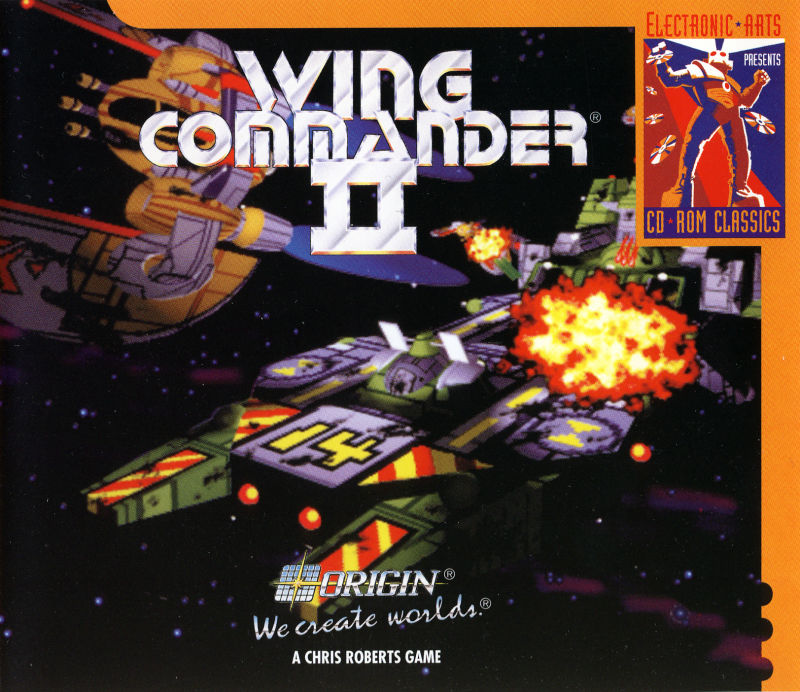
Despite this slightly cheap approach, I don’t think the price reflected the lack of frills, with my recollection being that these titles were priced at around the £12-14 mark. Re-releases of Origin Systems games were a prominent feature of this range, and my copies of Wing Commander II (Deluxe), Strike Commander, Privateer and System Shock were picked up during this period. Meanwhile, Shadowcaster, Ultima VII and Wing Commander: Armada also got the orange jewel case treatment, as did other non-Origin EA titles, including Syndicate, Noctropolis and (I think) SEAL Team and Michael Jordan in Flight.

As the budget market became more competitive, the CD cases were abandoned in favour of big boxes with a light blue sleeve, and the word ‘presents’ was removed from the range title. This was the mid-to-late 90s counterpart of The White Label, with the contents inside mirroring the original release: CDs, manuals, supplements et al. Aesthetically, it wasn’t perhaps quite as pleasing as White Label, but it was still reasonably classy presentation.
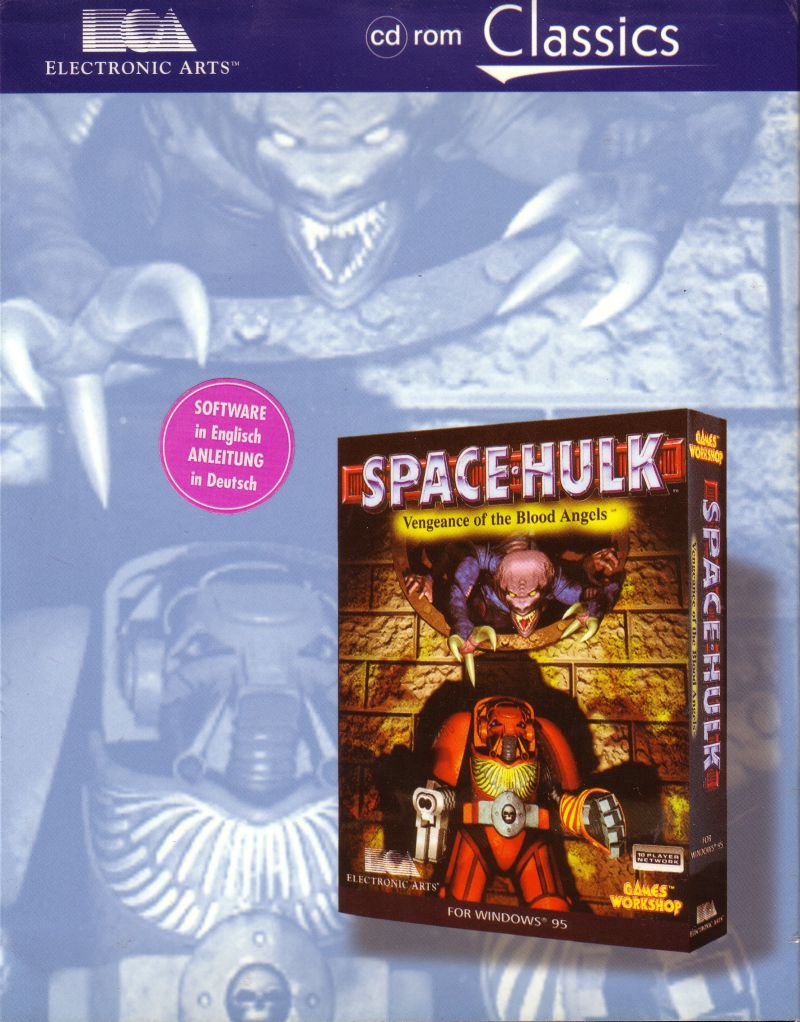
And it seemed like almost every EA game of this era got a re-release on this range, with everything from Bullfrog strategy hits like Theme Park and Theme Hospital, to EA Sports titles such as FIFA and PGA Tour 486 getting another go at around the £13-15 mark. Also, the big-budget Origin epics, starting with Wing Commander III, which had seemed out of reach just a couple of years previously, were now affordable titles. I still have my WC3 discs, but no longer any of the manuals or supplements, sadly. My copy of WC: Prophecy was from this range, too, as well as Fade to Black, Crusader: No Remorse, and the subject of the worst-ever published review on FFG, Space Hulk: Vengeance of the Blood Angels.

In my mind, this design lasted a long time, although it was likely just 2-3 years at most, before being replaced by a succession of comparatively short-lived and less successful efforts. As part of the transition from Electronic Arts, purveyor of high quality computer software, to EA Games, brash multi-format conquerors, the tone of the range’s presentation shifted from the glossy but slightly old-fashioned approach to a slightly cleaner and bolder one, albeit with the retention of the blue/white colour scheme.
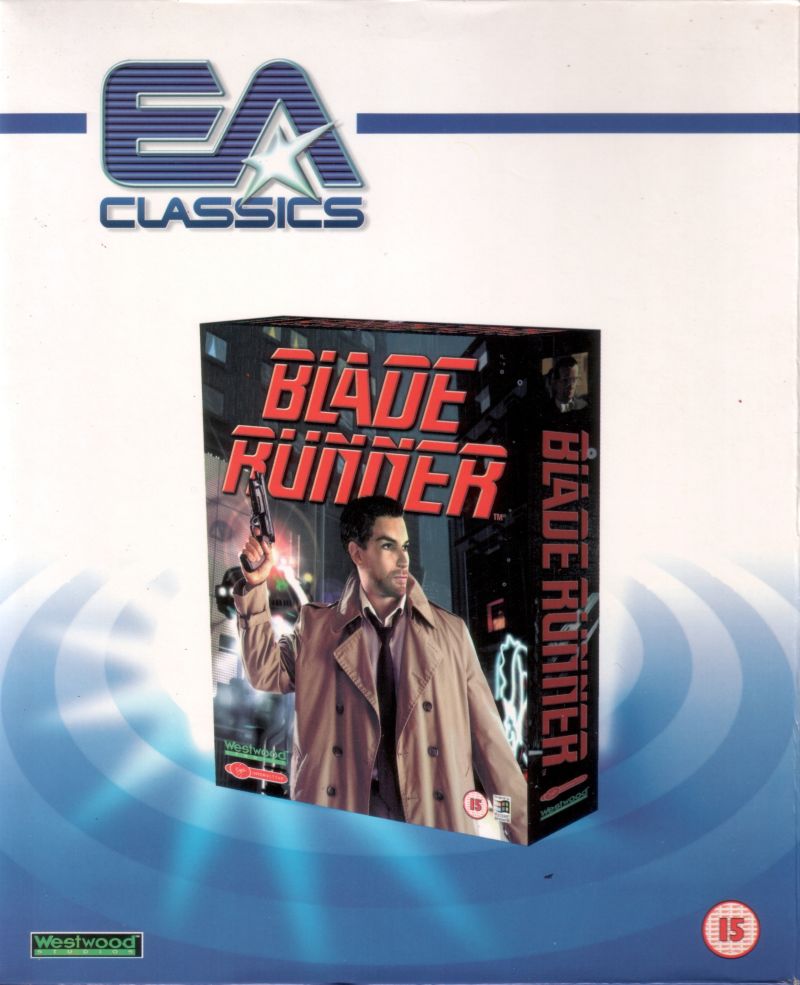
This was towards the tail end of the big box era, and the new branding, now simply ‘EA Classics’ also saw the boxes themselves thinned down, and jewel cases replaced by paper sleeves, although you did still get a printed manual. EA had absorbed/welcomed Westwood Studios by this point, and I remember that Blade Runner was a notable release from this period, although your correspondent showed rare good judgement in picking up an original boxed copy for the same price (I think this range was now retailing at more towards the £10-£13 mark at this point, although I can’t be certain). Need for Speed III was another one from the collection that I bought, and still have, although, again, only the disc has survived to this point.

Compilations were briefly another feature of the EA range around this time. The Biggest Names, The Best Games was a series of six pack bundles which came in what looked like a big box of washing powder. Eschewing any kind of thematic coherence, these packs invariably contained a mixture of sports, racing, action and strategy games, some of which had already been released individually. None of them seemed to boast an appealing enough combination to pique my interest, although it could also have been the £30 price tag.

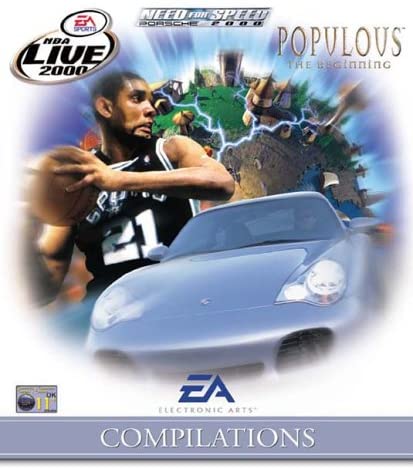
Bizarrely, lots of the same titles appeared again in another batch of triple packs from EA, this time just called ‘EA Compilations‘. These were still packaged in cardboard (albeit the thinner design of contemporary EA Classics releases) but came with the manuals on CD. This time there seemed to be more of an effort to keep similar games together, with a couple of sporting collections (FIFA 99, Tiger Woods 99, Cricket World Cup 99; Premier League Stars, Premier League Manager, Superbikes) but otherwise two out of three was usually the best you could hope for. Dungeon Keeper 2 and Theme Hospital were thrown in with Sports Car GT; NBA 2000 and Need for Speed: Porsche 2000 came with Populous: The Beginning (I had this one, but I don’t think I ever played Populous even once). I’m pretty sure these retailed at £20 each.

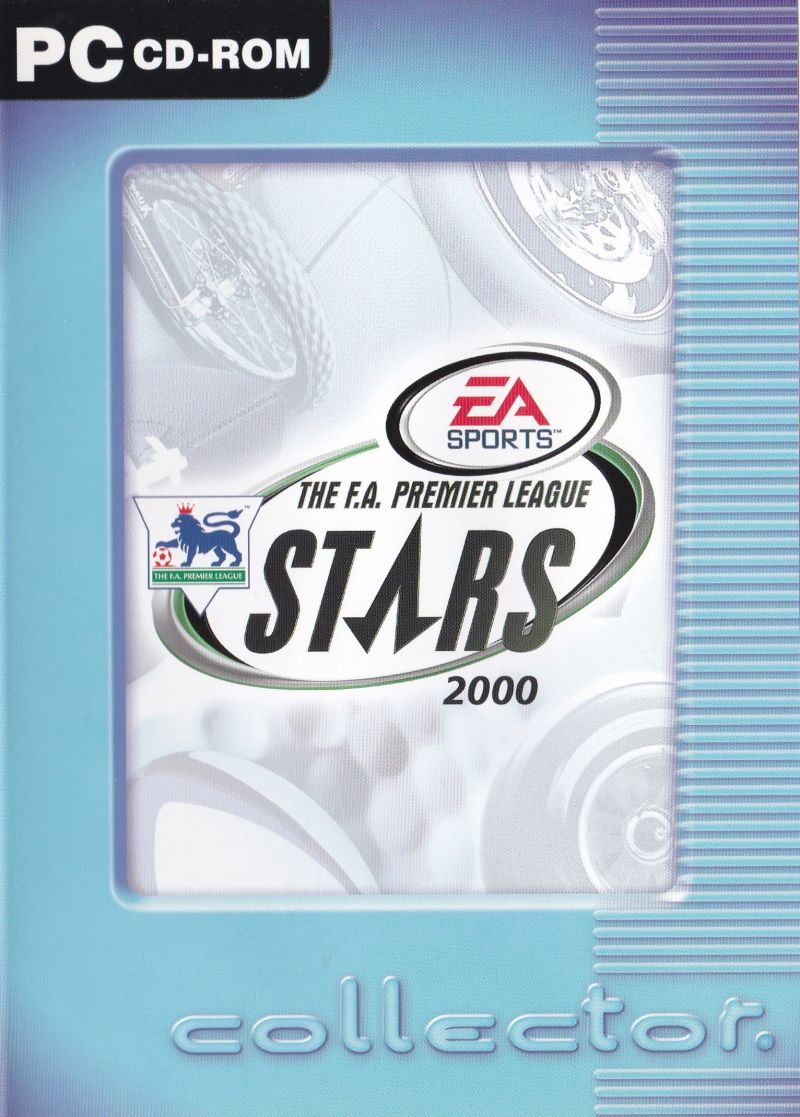
The design of those compilations, with a slightly more austere and reserved aesthetic, stayed with the brand as it moved into the DVD box era, at which point a scattergun approach to the range seemed to take hold. At the start of the 2000s, the mid-range budget title was losing ground anyway to the likes of $old Out, which ditched any pretensions in favour of basic presentation, PDF manuals, and a low price point (£5). And many of the games released as EA Classics ultimately made their way to $old Out in the end. That said, they did briefly flirt with a lower-priced range of their own, Collector, although I can’t recall too many of the titles released on this label, other than the aforementioned Populous: The Beginning and a few old EA Sports games.
Dalliances with grey and then yellow artwork in the mid-late 00s were spotted, as the Classics range persisted, although concepts like physical packaging and making older games available for purchase were going out of fashion by that point.

But it’s the light blue box era of the mid-90s that I most associate with the name, and with fond memories of picking up games at more affordable prices, although as noted most of the evidence of my purchases from this era has long ago been jettisoned in the name of saving space.

(NB: Scans sourced from MobyGames, except for the EA Compilations image, which was nabbed from Amazon).
Review: Mass Effect

February 1st, 2021

Written by: Rik

Hello all.

Hope things for you are as good as they can be at the moment.

I think the background to this one is covered enough in the review and the accompanying piece (and possibly here, too) to negate the need for any preamble, so let’s get straight into it.

Here’s a review of Mass Effect.

I hate you, Terror missions

January 29th, 2021

Written by: Stoo

Terror from the Deep is a very similar game to its predecessor, UFO: Enemy Unknown (aka X-Com in the US). Once again, you’re leading a small, elite but beleaguered military organisation against a greatly superior alien foe. The game is based around the same mix of global strategy, and squad-level turn based combat. Managing your bases and resources works exactly the same way, and most of your weapons and equipment are direct copies of something from UFO with a new name and sprite.

There are basically two significant changes. Firstly, the game has been effectively re-skinned with a deep-sea theme. The aliens are coming from the depths of the oceans, and UFOS are swapped for submarines. Battles take place on sea beds and in underwater bases. The alien plasma guns are now called Sonic Cannons.

To give Microprose some credit, the aesthetics of the game amount to more than just UFO with torpedoes and squids. UFO already felt ominous, like you were never quite sure when the aliens would finally overwhelm you, but TFTD adds a layer of lovecraftian dread. There’s a strong theme of something ancient and pitiless, rising from the depths to enslave humanity.

The other alteration is that TFTD is bastard hard. If you don’t play with some skill (or save-scum like mad) it will crush you. You may think you’re doing everything right, regularly thwarting alien attacks, and fool yourself into feeling in control of the war. Then it will pull something unfair or frustrating just to trip you up. As I understand it the game was made in a hurry (while the original UFO guys took their time on X-Com 3). So I imagine that tweaking the difficulty settings, effectively making an expert-mode game for veterans of the original, was seen as the most efficient use of limited time.

This uptick in difficulty manifests in numerous ways. The research tree is more complex. Weapons copied and reskinned from UFO have new limitations added. Aliens are tougher, particularly the ridiculously heavily armoured lobstermen. Then there’s the matter of some particularly gruelling missions.

UFO introduced us to Terror attacks, where aliens would basically just rock up to a town somewhere and roam around causing chaos. You would fight through houses and gas stations while hapless civilians ran in circles, and it was your job to keep them alive. Dealing with the terror attacks was vital, otherwise the countries that fund X-Com became deeply upset with you.

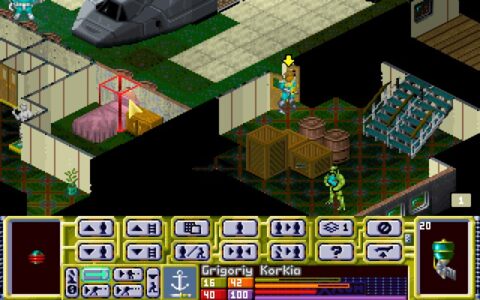
For TFTD, Micropose keeps the regular terror attacks but adds a new type, where aliens attack cruise ships. Here you face two problems. Firstly within the cramped confines of the ship, lines of sight are restricted and there are lots of hiding places for enemies to lurk in. Your soldier may be within four steps of an alien, and you’ll never know until he or she suddenly gets shot in the face.

Image taken from mobygames, I do not have the time or patience to be playing this right now…

Secondly, these missions are extraordinarily lengthy. They’re split across two maps, each of which is huge and divided up into masses of separate rooms. There are cabins, kitchens, engine rooms, cargo holds and more. Each one must be searched individually.

So you must prepare yourself for a lengthy grind, kicking down cabin doors one at a time, as your troops methodically work through every deck. It’s tempting to charge through as fast as possible, but if a soldier uses up all their action points (spent on moving, shooting etc) in a turn, they can’t actually react to anything they encounter until the next turn. Frustrating as it may be, wise tactics involve a slower pace and having one trooper stand mostly still to cover the advance of another.

After the tenth cabin you may declare, f*** this and start setting off some large explosives. With a boom you can tear through several rooms at once, right? Unfortunately, there’s a danger that hapless civilians will be caught in the blast. You’re meant to be saving these people, you psycho.

Invariably you’ll hit a point where it’s all gone quiet, you’ve searched most of the ship but the mission will not end because one or two bad guys are still skulking around somewhere. At this point you can scan the map for any black spots, meaning uncovered map tiles. That’s a good place to start. Otherwise, looks like you have to just search through all those cabins again, which is a thoroughly depressing prospect.

Technically don’t have to kill or disable every last alien; you can just move everyone to the exit zone and hit “end” but then you don’t gain any loot, when all those sonic cannon ammo clips would be extremely useful. Also any guys of yours unconscious from wounds are left to die. Also, while I realise this may be some obsessive aspect of my personality at work, it just plain feels unsatisfying when I don’t properly complete a mission.

So sometimes TFTD is a nail-biting affair, your guys carefully creeping forward under cover as hidden aliens blast away at them. You despair as the alien forces seem unstoppable, their subs crossing the oceans with impunity and their secret lairs appearing the world. Sometimes, on the other hand, you have moments of triumph as. Your soldiers rise from hapless newbies to seasoned veterans, and new weapons allow you to to fight back more effectively.

Sometimes though, it’s a game of spending several hours plodding your way around an entre ship because of one wretched Aquatoid hiding in a toilet.

Review: Need for Speed: SHIFT

January 23rd, 2021

Written by: Rik

Hi everyone.

Hope 2021 is treating you well. I can’t complain too much, but I’m finding it quite hard work so far.

Having said that, January’s always a bit difficult, isn’t it? Even if things are normal. Which they’re not.

Anyway, the rusty old reviewing machine (as I’ve taken to calling myself) cranks back into life for the first time this year, with a look at Need for Speed: SHIFT.

FFG Review of the Year: 2020

January 2nd, 2021

Written by: Rik

Well now, what can we say about 2020? In all likelihood, the last 9 months or so will, at best, have not been quite as good as you might have hoped, and at worst will have been a real shitstorm. Whatever your circumstances, we do wish you all the best for the year ahead.

But we are about old games here, and those games, and this site, serve as an occasional escape from whatever might be going on in the world, so let’s confine our look back at 2020 to the collection of ramblings we’ve managed to post here over the last 12 months.

The reduction in options for social and other activities certainly seems to have led to a modest increase in the amount of #content on FFG this year. Back in January, though, it was business as usual, with a gap in our Need for Speed coverage being filled at long last. I wish I could say it was worth the wait, but sadly ProStreet lived up to its reputation as one of the crappier NFS titles.

Proper Retro Gaming(tm)

Then we went further back into the past for some DOS-based platforming action in the form of Jazz Jackrabbit. 90s platformers became something of a recurring theme throughout the year, as Stoo added reviews of Jill of the Jungle and Commander Keen in Keen Dreams later on in the year.

At the newer end of the spectrum, for once my private resolutions to cover certain games within a certain time period were actually kept, with Alpha Protocol and Alan Wake both being added to the site this year. And the latter (a spooky game) was even added on 31 October (a spooky date), like there was some kind of plan behind it all (it was of course a complete accident, unlikely to ever be repeated).

But there was still a healthy mix of the old and new, and with the Netflix documentary The Last Dance sending many of us in lockdown into a 90s NBA reverie, I went back to the big basketball titles of that decade: NBA Jam and NBA Live 95. Delving into the memory banks for old games previously owned threw up some titles of dubious quality: whyever did I buy Quarantine II: Road Warrior or Iron Assault?

Both Live 95 and Jam TE still stand up pretty well.

We continued to revisit such sentiments with semi-regular trips to the Vault of Regret, one of a number of recurring series that now supplements the review content. I had hoped to make a bit more progress with another, Soundtracks, in 2020, but somehow momentum was lost in the middle of the year.

We also built upon a discussion Jo and I did last year by turning that into a semi-regular attempt to play and discuss modern indie adventures (with spoilers). The games chosen thus far have all been quite short, undemanding titles that take little effort to play and enjoy, and it was a good opportunity to stay in touch with some aspects of modern gaming (as well as with each other).

Alan Wake: an enjoyable yarn, if not quite what I expected.

Who knows what the next year will bring? On here, likely more of the same, with a mixture of stuff from the 90s and 00s for review, no doubt. Personally, I’d like to catch up with some FPS games of a certain vintage, but there’s currently an imagined roadblock that either needs to be tackled or ignored before I make any progress on that score.

And, inexplicable as it may seem, 2021 is the 20th anniversary of the site, so no doubt we should try and plan something special to mark the occasion. Here’s hoping by that point we’re all able to celebrate an upturn in our fortunes. Thanks, as always, for reading, and Happy New Year to you.

Review: Sensible Soccer 2006

December 29th, 2020

Written by: Rik

Hi there.

I hope you managed to have a good Christmas, under whatever strange and/or difficult circumstances were imposed on you this year.

Sneaking in with one last review for the year, we take a look at the mid-00s attempt to revive a much-loved football franchise: Sensible Soccer 2006.

(Yes, it seems the pull of rightly-forgotten footy titles was once again much too strong. But I’ll take the opportunity to remind those of you who enjoy reading about such things that all our football coverage can be accessed in a ranked table format, The FFG Football League.)

Discussion: Dear Esther (spoilers!)

December 22nd, 2020

Written by: Rik

Hello! We are back, just as Christmas this year is cancelled, for those of us in the UK. (Probably for the best though, I guess).

Today we have another discussion of a modern indie adventure game, with significant spoilers. It’s part of an ongoing series that we’ve chosen to unimaginatively, and belatedly, call: Discussion: [indie game] (spoilers!)

Hopefully that admittedly quite clumsy title does at least tell you what’s involved, or enough for you to know that it’s best not to read ahead without playing the game under discussion first, unless you have absolutely no intention of ever doing so.

Today’s game is Dear Esther, which started life as a mod for Half-Life 2 in 2008, but was later completely redeveloped as a stand alone title and released commercially in 2012. (We played the Landmark Edition, which moved everything to the Unity engine from Source, and comes with optional commentary from the developers). It’s considered by many to be the original ‘walking simulator’ and as we’ve covered a few of those in this series, it seemed an obvious one to cover at some point.

Like many of these games, to say too much even at this stage risks potentially spoiling things, but Dear Esther is set on an island in the Hebrides, and the game involves exploring that island while listening to the words of an unnamed man, our narrator. Each passage of audio begins with the game’s title, and it might at first be assumed that the narrator is reading letters that are addressed to his wife. However, as we shall see, many things in this game soon become a matter of interpretation.

Here’s a short trailer:

Hmm…what do you make of that, then? Well to find out, you could always play the game.

Otherwise, as always, here’s our ***final spoiler warning*** for the discussion ahead.

Discussion: Dear Esther (spoilers!) continued »

Review: Space Quest IV: Roger Wilco and the Time Rippers

December 15th, 2020

Written by: Stoo

Hi everyone. Today we’re adding to our list of Sierra adventure reviews, with a look at Space Quest IV: Roger Wilco and the Time Rippers.

This will most likely be my last post before Christmas. I imagine that, due to covid restrictions, some of you won’t be able to celebrate in the way you had hoped for. Still, I hope that you’re all able to relax for a while. Put on a bad movie, eat too much, drink a beer or two. Play some classic games, of course. You’ve earned a little happiness.

Vault of Regret: Mass Effect 2

December 13th, 2020

Written by: Rik

The Vault of Regret is a very large place, which houses dusty old game CDs and boxes, untouched digital libraries, and the metaphysical concepts of remorse and embarrassment. Here we write about all the games we should have played but haven’t, or that we have played but didn’t enjoy, among other things.

“Have you played Mass Effect 2 yet?”

These are the words of my friend PG. I hear them every time I play anything that is a) not Mass Effect 2 and b) something that is quite old and bad. Something like this, for example. As I studiously plod around repetitive levels making notes about how things are not that good, really, I think to myself: maybe you should be playing Mass Effect 2 instead.

Mass Effect 2 is a game that came out in early 2010. A couple of years after that, another friend of mine bought it for me as a gift on Steam. “It uses something called anti-aliasing: you might not know what that is,” he said, in mocking reference to my being very behind the times with these things. We both had a bit of a laugh: I’m not sure even I realised it would be quite so long before I actually got around to playing it. Since that conversation, he has changed careers, got married, and had a baby. We’re in touch, sometimes.

At that point, I still hadn’t played the first one. I got to it eventually, and a good time was had both in the playing and the resultant spoiler-tastic discussion.

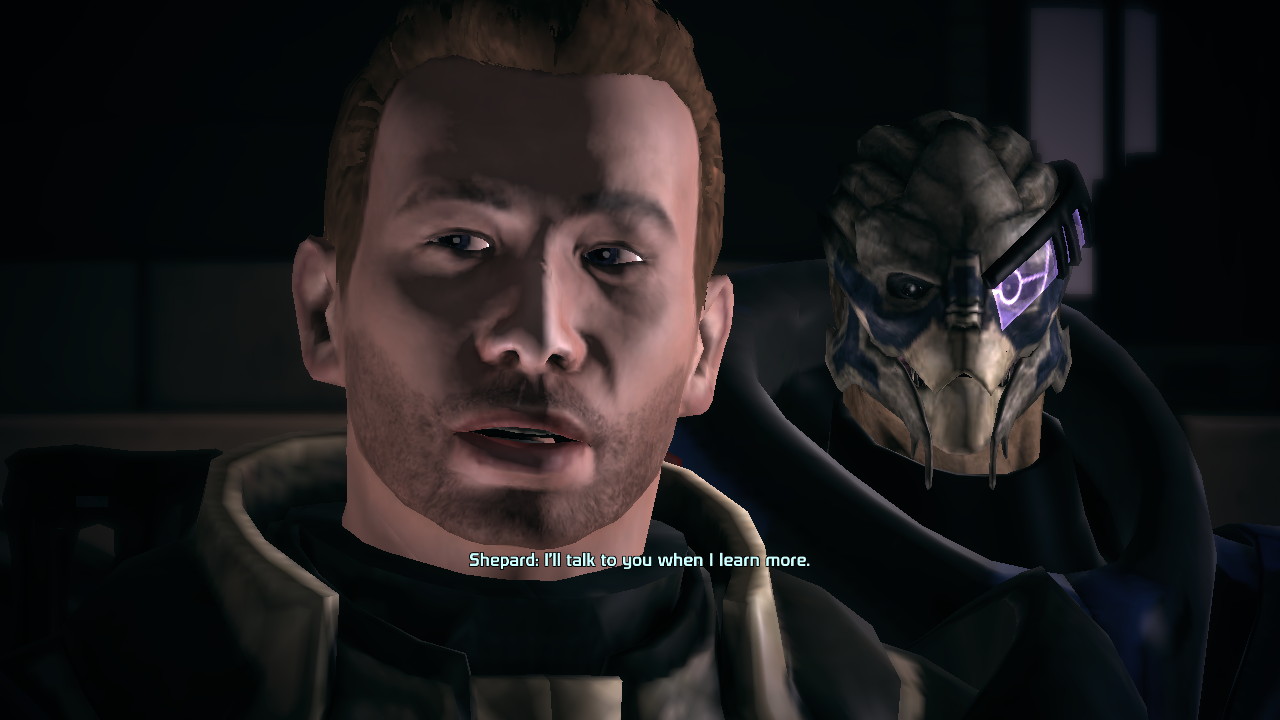
This is from ME1. (Funnily enough, I don’t have any screenshots from the second game).

The desire to push onto the second game was certainly there at that stage, but for some reason it fizzled out. And the realisation that the discussion was more than seven years ago now prompts tedious internal debates (with myself) about whether the original needs to be revisited first, leading further and further away from Mass Effect 2 until a cul-de-sac marked Knights of the Old Republic is reached. (Because blundering into the middle of a series is of course completely unprecedented in these parts).

When we lived together, PG wasn’t really into games, unless it was a bit of computer football. But suddenly there he was, a veteran of the ME series, recommending it to me. Except it wasn’t sudden, of course, because several years had passed, and our occasional back and forth on the topic has spanned the best part of a decade.

Time spent playing oldies, no matter how crap they might ultimately turn out to be, is something I enjoy, and of itself the source of little regret. And if the desire to catch up with more recent classics is really that strong, the solution is within easy grasp.

Still, it’s hard not to feel vague pangs of shame and disappointment when you realise you’ve found time to play Iron Assault, but not Mass Effect 2. (Or 3).

However, thanks to some twisted internal logic, I do consider Mass Effect to be a Christmas game. Perhaps there’s no time like the present.

Review: Iron Assault

November 22nd, 2020

Written by: Rik

Hello there.

Looking at the last few review posts, I’ve obviously given up on trying to find another way to say “I hope you’re doing ok” – so, I hope you’re doing ok.

Today we make a rare visit to the Simulation section of the site for some big robot action, in Iron Assault.