[ Content | Sidebar ]

Moments in Gaming: Demos at Christmas

August 15th, 2025

Written by: Rik

Moments in Gaming is where we look back on gaming experiences that have left a particularly strong impression on us over the years: mainly for good reasons, but sometimes for bad ones.

I’m not really sure if demos are a thing anymore; I basically haven’t been short of games to play for a long time, but the last time I saw one for a new game that I was interested in, it had disappeared from Steam before I had the chance to download it. (Apparently, demos that are available for a limited time are a thing).

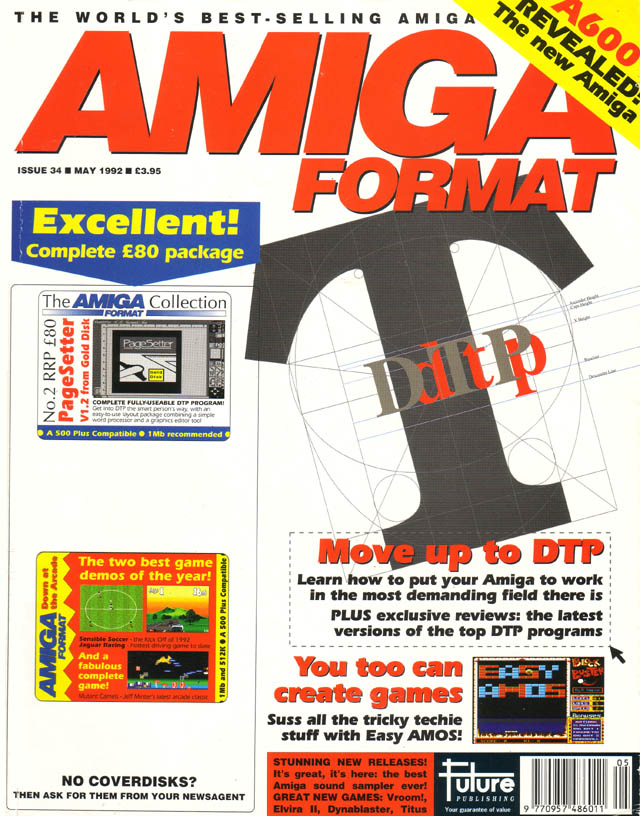
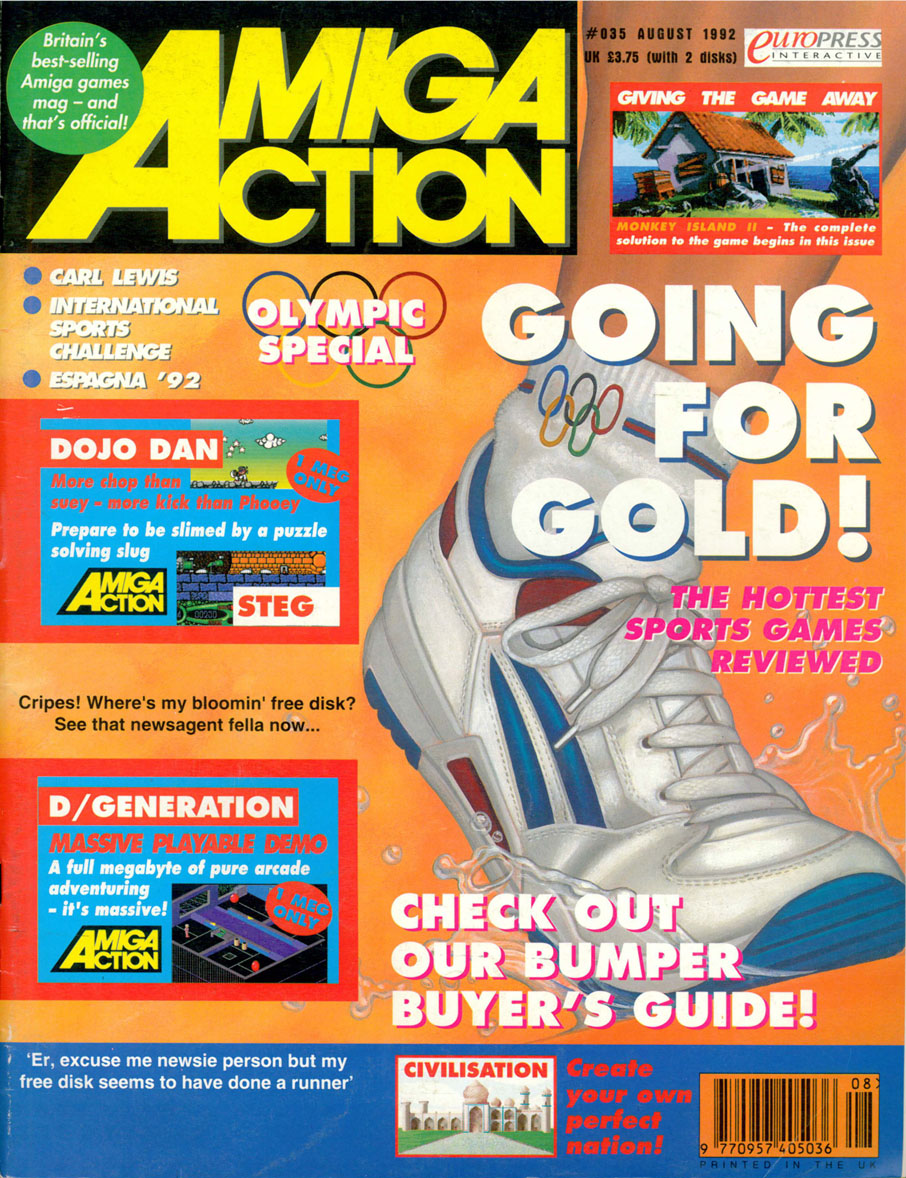
I’d possibly argue that the 90s were the peak demo era, once we got past the cassette tape days (infrequently released and often annoying to get working) and to the floppy disks that came attached to the front of most 16-bit computer magazines back then. (The CDs and DVDs, of multiple different demos, patches and bits of software, were also good, at least until the internet rendered the whole enterprise rather pointless and they only persisted out of a stubborn notion that readers would view their removal as a downgrade).

But there was something special about those days of the covermount that featured one or two ‘headline’ demos, offering a chance to taste a forthcoming full-price game and build some excitement for it. This, they often did, mainly by virtue of being so short that you couldn’t help but wonder what the full thing had in store. At least, this was the experience of an enthusiasm-rich but cash-poor child, and risked being immediately undermined if the magazine itself contained an underwhelming review of the game in question within its pages.

Looking back, it now feels vaguely shameful that in a household that was always furnished with a decent selection of games, they were frequently ignored in favour of a series of 10-minute samplers that arrived free of charge. I can’t remember my Dad ever being swayed even slightly by my desperate entreaties to get excited about whatever was on the cover disk that month, and he would studiously rebuff them using the logic, reason and world-weariness of a tired adult: there’s no sound on this, how can you tell from the first short level, the review gave it 51% etc.

For a period in the early 90s, we would be invited to a neighbourhood Christmas party held by the parents of one of Jo’s friends. As the other attendees were either girls that were a few years’ younger than me or adults drinking wine, I was given free reign to go upstairs and play on the Dad’s Amiga for the duration. Unfortunately, he didn’t actually have any games.

What he did have, though, is demos: an absolute shit-ton of demos. “I love demos,” he would chuckle. “I don’t know why anyone would pay 30-odd quid for a full game when you get all these demos for free.”

I don’t know how many demo disks he actually had: it felt like hundreds, and certainly more than could be sustained by a single monthly purchase of an Amiga magazine (in which case, the financial outlay involved would probably have funded a few decent full-price or budget games instead).

But still, I was like the proverbial kid in a candy store, cycling through dozens of Amiga demos over a few hours, getting a little taste of all those games that the Atari ST couldn’t quite pull off, and to which the DOS PC was not particularly well-suited. [Is that a belated first compliment for the Amiga on this site? – Ed.]

And while it struck me as odd at the time, and even more so the more I thought about it over the years, to not have your interest sufficiently piqued by any of these hundreds of demos to make a commitment to a complete game, the fact is that I don’t recall ever coming away from my annual demo sugar-rush with a concrete suggestion for a purchase of my own. (There was a tennis game… Passing Shot? Tie Break? I can’t remember, but I think it didn’t work on the Atari STE and we either didn’t buy it or had to take it back).

Most likely, as a full-time arrangement, frustration and boredom would have overtaken me as a kid, but as an adult, I can now imagine sitting down to blast through a couple of demos on a weekday evening for half an hour. However, with a large backlog to work through and this site’s legions of loyal readers clamouring for new content, the process of choosing the next game for review has arguably become a little too serious and self-important: once the choice is made, Rik, you must push through.

This is probably itself an overreaction to my early gaming flightiness, a hangover from the demo days, which involved me too frequently playing little more than demo-length portions of some new games and swapping between them instead of getting my teeth into any one of them properly.

But, staring down the barrel of a lot of old games (and some new ones), there’s no harm in embracing a slightly more fickle, surface-level assessment: flicking through some possibilities and rejecting them if they don’t really grab me. (It was the idea behind 2022’s Unreviewed feature, even if that did still represent an attempt to squeeze some new #content out of not very much gaming at all).

A few weeks ago, I spent a couple of hours picking out some possible games and firing them up: the one that I didn’t enjoy, I abandoned and uninstalled; the one that didn’t work, I didn’t spend hours trying to fix. It was all rather liberating. And when I eventually landed on something that I did like, it felt as if a positive choice had been made.

I’m hardly describing an epiphany heralding a radical change in approach here, but as I cheerfully rejected the two losing candidates, I couldn’t help but think back to those frenzied winter evenings trying as many Amiga demos as possible. Then – as now, and always – time is limited: best not to waste too much, if you can help it.

(Images sourced from Amiga Magazine Rack (https://amr.abime.net/)

Vault of Regret: The Thing

July 9th, 2025

Written by: Rik

The Vault of Regret is a very large place, which houses dusty old game CDs and boxes, untouched digital libraries, and the metaphysical concepts of remorse and embarrassment. Here we write about all the games we should have played but haven’t, or that we have played but didn’t enjoy, among other things.

The Thing is from a fine video game tradition of spin-offs from fondly remembered 80s properties that have been left fallow in movie-world for long enough that the prospect of a sequel, semi-sequel or sidequel in video game form seems like a reasonable way to breathe some life into it again.

Like the film, the spin-off game wasn’t exactly a massive hit, but it nevertheless received the modern remake/remastering treatment last year.

If the idea of remastering modern games that were big hits not that long ago baffles me slightly (and it does), then I really wasn’t sure what to make of this news.

Neither were the reviewers, some of whom were too young to play the game when it came out, or expressed understandable bafflement about this middling title from 2002 being thrust into the modern spotlight rather than remaining the preserve of retro nerds like ourselves.

Speaking of which, the original release of The Thing would be prime FFG fodder, in that it appeared and then disappeared quite quickly but achieved reasonable reviews on the way. “This could be quite a good game to review for the website one day” is a phrase that has caused a lot of plastic boxes to pile up over the years. (Sometimes, that just isn’t true, but in this case, I think it was).

The moment has come, though, to accept that it’s never going to happen. The main reason being, as has been documented previously: I am a total coward.

Back when the game came out, I decided to check out the film upon which it was based. It’s pretty good, from what I can remember, but also creeped me out so thoroughly I’ve never returned to it.

The basic premise, if you haven’t seen it, is that the titular ‘Thing’, discovered in remote and icy conditions on an Antarctic base, can successfully imitate other organisms, including humans, fostering a certain paranoia among the small group of American colleagues on the base that any one of them might be ‘it’. (And ‘it’ will at some point then assume some horrifying tentacled form and need to be destroyed with fire).

A successful recipe for a jumpy nightmare, certainly, and not a game that should be attempted by someone who couldn’t even get through Aliens vs. Predator, and stopped playing Resident Evil after the bit where that dog jumps through the window.

It’s also got elements of squad management, which are usually pretty stressful, and apparently your squad mates are prone to getting scared, even taking their own lives if not looked after properly.

How do I know this? Well, fortunately The J Man has reviewed it already, many years ago. Which doesn’t preclude coverage here, of course, but (despite my historic and earnest-sounding intentions in the comments section below his write-up) I’ve never even come as close as taking the discs out of the box.

And so, it’s off to the Vault of Regret with The Thing – where it will likely stay until it finds a way to mutate itself into another form and make an escape.

Review: Need for Speed: Rivals

May 30th, 2025

Written by: Rik

Hi there!

Hope you’re all doing well. Today we’re going a bit modern, by our standards, to check out 2013’s instalment of EA’s long-running racing franchise.

Here’s a review of Need for Speed: Rivals.

Review: Judge Dredd: Dredd vs. Death

April 30th, 2025

Written by: Rik

Hi there.

The urge to play a first-person shooter strikes me only occasionally these days.

But, for reasons that will be explained, I was recently motivated to go scrabbling through the games cupboard and dig out today’s game, first released in 2003: Judge Dredd: Dredd vs. Death.

Review: The Lost Vikings

April 9th, 2025

Written by: Stoo

Hi all.

Last time I posted here, I suggested that I might review a flight sim sometime this year. I’m afraid this rather ambitious goal has, so far, resulted in little more than me flailing around in tutorial missions trying to figure out HUD settings and firing missiles randomly.

So for today can I interest you in a puzzle-platformer instead? We’re diving way back to the earliest days of Blizzard Software to look at one of their lesser-known creations, The Lost Vikings.

Review: Onside Complete Soccer

April 2nd, 2025

Written by: Rik

Hello there!

Today we’re back in the realm of old football games (again). Here’s a review of Onside Complete Soccer.

Discussion Review: Batman: Arkham Asylum

March 21st, 2025

Written by: Stoo

Hi all, I’m happy to announce that after a long absence, today we have a new discussion review for you. This time, we’re off to a theatrically gloomy island housing a clearly unsuccessful psychiatric hospital, to trade punches with some costumed maniacs in Batman: Arkham Asylum.

Review: Dragon Age: Origins – Awakening

March 2nd, 2025

Written by: Rik

Hello everyone.

The reviewing machine appears to be belatedly cranking back into life again in 2025.

Today’s review is of the Dragon Age: Origins expansion pack, Awakening.

Review: Raptor: Call of the Shadows

February 24th, 2025

Written by: Stoo

Hello all.

I’ve not contributed much to this site lately, but today I have a new review for you! We’re looking at shareware scrolling shooter Raptor: Call of the Shadows.

Hopefully more to come in the future – maaaaaybe even a flight sim.

A Tale of Two Halves

February 21st, 2025

Written by: Rik

The thought may have occurred to some of our regular readers, as they plough through another 3/10 review of an absolutely ancient football game on this site, that trawling this particular section of the retro-gaming ocean is a largely pointless task, in service of a rather niche interest, the only source of enthusiasm for which is the author himself.

But, no, you fools! It seems I was right all along, as Bitmap Books recently brought out a heavy, glossy, heftily-priced hardback book on this exact topic. As you might expect, I immediately made sure I owned a copy of A Tale of Two Halves: The History Of Football Video Games, 1982-2010. In some ways, it’s a book I would have loved to have written myself.

Picture: Bitmap Books

2010 makes perfect sense as an end date: it was probably the point at which the final boiling down of all competition left us with two giants that cornered the market: FIFA and Football Manager. My experience of both since 2010 has been limited but they are, by all accounts, very high-quality franchises.

It’s very easy to romanticise the past, and my memory of football games – or those that offered on-pitch action, anyway – in the 90s and early 00s was that the situation was vaguely akin to living in a town with no decent takeaways. There was plenty of choice, and some options might have occasionally satisfied, but something would always be a bit ‘off’ that meant you couldn’t really enjoy the whole thing as intended.

‘Fancy some computer football/curry tonight?’ you’d say. ‘How about World League Soccer ‘98/Kashmir Garden? It’s got great headers and volleys/Onion Bhajis.’ ‘Yeah, but the players look ridiculous/they put grated cheddar in the saag paneer that time.’

Or to put it another way – one that actually makes sense – if you’d told me, or indeed most gamers back in the day, as we cycled through a roster of unsatisfactory titles in search of fun, that one day the ultimate football game would exist, one that was not only great out on the pitch, but had all of the official licenses that money could buy, we would have said that was exactly what we wanted.

And yet. After FIFA established supremacy, even to a reluctant Pro Evo holdout like myself, I was somehow unable to warm to the experience, while still acknowledging the action as superior to Konami’s rival, which I also occasionally revisited as it continued to lose ground for the rest of the decade. The 00s, even as it devolved into a two-horse race, was the last ‘have a go’ generation: as long as FIFA, with all of its financial backing and official licences, still wasn’t the best game, there seemed room for others to enter the market.

A Tale of Two Halves goes back much further, though, to a time when anyone and everyone could make a football game, and when football itself was a much less glamorous and well-paid profession. It’s an impressive piece of work, covering over 400 games – and that’s a number that isn’t bulked out by multiple annual instalments of high-profile franchises, sensibly dealt with in batches here – including those released on computers and consoles, not only in the UK and Japan but in Germany, Spain and Poland, too.

And yes, it even covers the elusive Puma World Football 98, although it appears as Sean Dundee’s World Club Football here, and earns grudging praise as a ‘well-made, enjoyable final runout for the old side-on 2D perspective’.

I’m going to go out on a limb and say it’s unlikely that the author, Richard Moss, has played anything close to all of the games featured, which makes it hard to know on what basis the appraisals are made. [NB: Richard has since contacted me on Twitter/X to clarify that he ‘played everything except the online titles, the Zeebo game, and a few of the arcade games’ as well as a number of others not covered in the book.]

Understandably, given the task at hand, he treats the bulky mass of extremely dry management games with some generosity, noting that while UK gamers may generally have preferred Championship/Football Manager, other games and approaches were also successful elsewhere.

(There’s an argument to be had about whether the non-playing/commercial side of things have any place in a game where you’re managing the team: my own feelings matched those of PC Zone, which would dish out high scores to Championship Manager and relegate the rest to brief reviews and low to middling scores. Indeed, FFG’s only foray into this territory is a review of FIFA Soccer Manager, a game during which it’s possible to be fired for personally authorising the building of a huge new stadium stand that the club could never afford.)

We oldie reviewers possibly all like to think of ourselves as studious historians of gaming, charting a course through the past and observing key moments along the way. But these lofty ambitions often clash with the reality of the situation, which is that such an approach isn’t really consistent with why we play and enjoy games in the first place. Going through, for example, all of the King’s Quest games in order and in rapid succession sounds like the right thing for an adventure game fan to do, but there’s a reason that we’ve never come close to doing it.

For most of us, gaming history is, to reuse an old phrase, incomplete and subjective: What did you remember? What did you always want to try out but never did? What did you never want to touch with a bargepole? Even before FIFA/EAFC, there were always genre leaders: Match Day, Sensible Soccer, International Superstar Soccer, Pro Evolution Soccer, etc.

But people did play other games and found something to enjoy in them. When I think of old footy games, I don’t just think of marathon Pro Evo sessions or days lost to Championship Manager, but of being hunched over a friend’s Spectrum playing Footballer of the Year, or doing a summer job with some lads who didn’t like real life sport but for some reason were really into This Is Football, Sony’s third place player that briefly challenged in the early to mid 00s. And yes, I also think of being a nerdy teenager playing Puma World Football, the game that no one else had heard of.

By doing the hard yards to document absolutely everything – for all that this is an area of great personal interest, there are many titles of various generations featured here that completely escaped my attention at the time – A Tale of Two Halves ensures that everyone’s favoured game of any particular moment is likely to have been captured, however briefly. Anyone enraptured by an imperfect or idiosyncratic football game of the past will find something to enjoy here.

A Tale of Two Halves: The History of Football Video Games, 1982-2010 is published by Bitmap Books and costs £34.99.