As regular readers of this site – if, indeed, any exist – will know, my contributions to FFG these days are likely to either be of a sports game or a Need for Speed title.
And as England are doing so well in a major international tournament, I thought now would be a great time to choose not to work on a football game write-up. So instead here’s a review of 2010’s NFS instalment, Hot Pursuit.
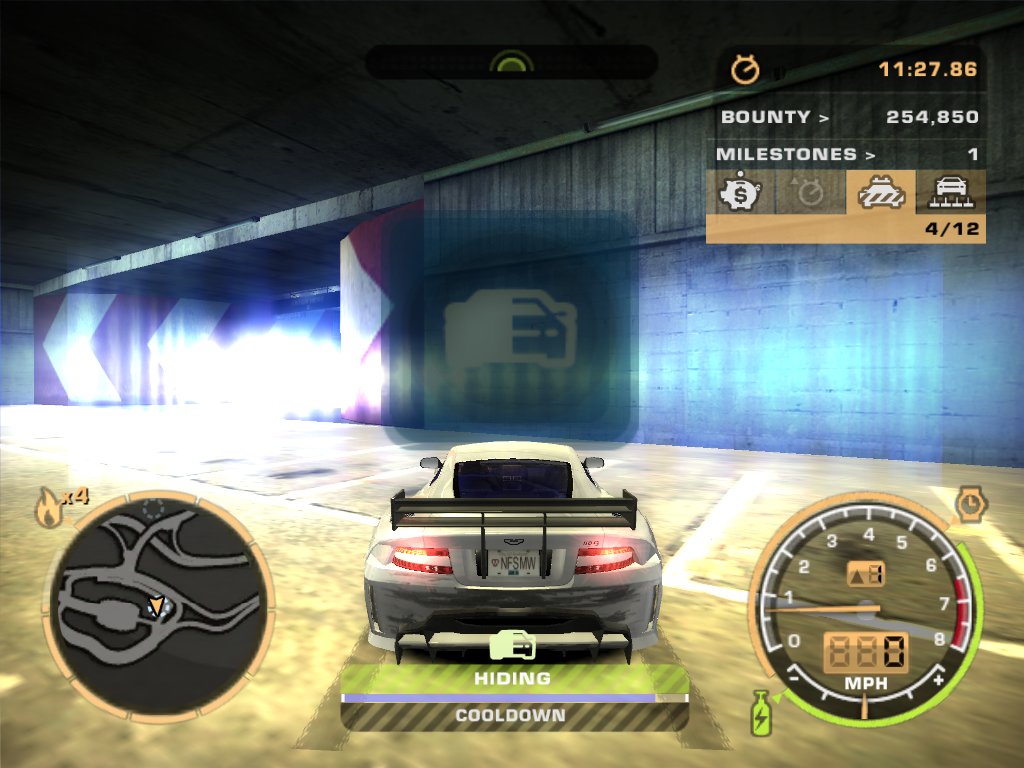
Stir up trouble, then escape it: that’s the heart of Need for Speed: Most Wanted. It’s not enough merely to lose the cops as soon as possible – you have to get them to escalate the pursuit, calling in backup, then the feds, then big 4x4s that veer across the carriageway and try to smash you off the road.
If all goes well, it’ll soon feel as if the whole force is after you. The longer it goes on, the more wanted you become, and the more bounty you accumulate. Colliding with civilian cars, smashing into bus stops and generally causing damage will all add to your total. Hitting pursuit breakers, those bits of marked scenery designed to obstruct or destroy chasing cars, serve a dual purpose of earning bounty and relieving some pressure.
Eventually, though, when proscribed bounty targets have been reached, and/or it feels as if it’s the right time, you need to end the chase. Which is easier said than done. As you desperately veer across the greens of Rockport’s golf course, the rotor blades of the police helicopter kicking up dust all around you, you start to feel like Burt Reynolds at the end of Smokey and the Bandit when Sally Field observes the chasing hordes and asks, “Did you count on this? I mean… all of this?” (Burt: “No I didn’t, honey.”)
Need for Speed tends to be a quit-and-try-again type series, with even supposedly high-stakes one-off battles able to be repeated without consequence. Here, though, it’s not a viable option: moreover, there’s been an investment in the chase, where minutes have seemed like hours, the hands gripping the joypad are now aching, and beads of sweat are starting to form on your brow. The sense of panic is palpable.
Put enough distance between you and the cops, though, and you’ll eventually see the welcome sight of the Cooldown meter. Stay undetected for the next little while and the chase is over, leaving you free to slink off to your safe house for a new paint job and a cup of tea, ready to do it all again in due course.
Viva Football was not a good game. Initially remembered in these parts as a clumsy but ambitious outsider in the 90s football race, our late 00s evaluation indicated that the intervening years had not been kind.
One imagines it’s even less enjoyable to play now, with the hideous sight of players’ bulky knees even more visually upsetting and only slightly offset by the mildly amusing sight of them high stepping during a goal celebration. Here’s a low quality video clip from our dusty archives:
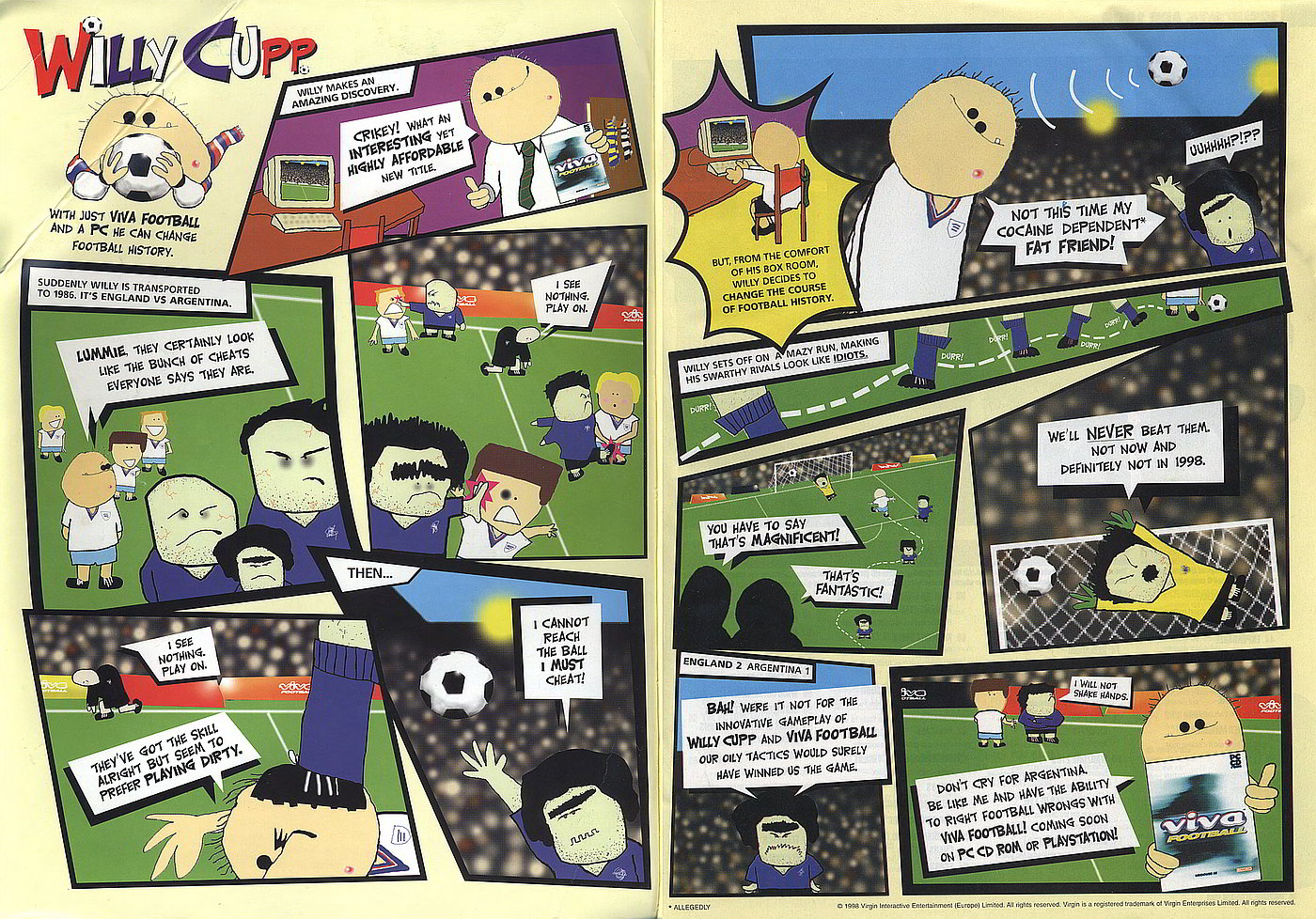
However, I do still maintain that the central idea was a good one: play any World Cup ever, with accurate squads and kits and put right historic footballing wrongs. Witness Viva’s advertising campaign, which cheerfully employs the classic “we was robbed ‘coz of cheating foreigners” approach so favoured by our tabloid newspapers:
Of course, the tie-in with the World Cup might have gone better if the game had been finished and released in time for the tournament itself. By 1999 we’d been dumped from the tournament, effigies of David Beckham had been burned and extinguished, and manager Glenn Hoddle had been fired for suggesting that disabled people were paying for sins in a previous life.
Footy games of old did sometimes have classic modes, where you could play matches from the past, but always as a bit of a side feature. With official World Cup and tournament games no longer released as stand-alone products, only as DLC (PES had Euro 2016, FIFA has the 2018 World Cup) you’d think a World Cup History version of FIFA, with all the kits, stadia and licenses, would be a winner (although, I imagine, potentially complicated and expensive from a licensing point of view).
After the top down heyday of the 16-bit football games, fans waited to see what developments the glorious CD revolution would bring. Glimpses came from two different versions of FIFA International Soccer: the fab-whizzo all-new 3DO game, and the DOS port of the original, the CD version of which featured audio commentary from the late Tony Gubba.
Unfortunately, you could only play the former if you had a 3DO, and the latter was still basically the Megadrive FIFA and therefore fundamentally a fairly awful game of computer footy. (Plus, while Tony Gubba was definitely a recognisable voice off the telly, he was – with all due respect – more of a “third match on Match of the Day” kind of guy than someone who’d be handed the big World Cup games).
FIFA ’96 brought the 3D engine and match commentary together. And it wasn’t just any old commentary: it was provided by none other than Motty himself, the BBC’s John Motson. The recently retired Motson isn’t everyone’s cup of tea, with his excitable nature seemingly inspiring the whole next generation of commentators to go absolutely bananas at a late winner during an inconsequential mid-table encounter, and many at the time preferred the more measured stylings of Barry Davies (who provided duties on rival title Actua Soccer). However, for most fans of a certain age, Motty was the voice of football.
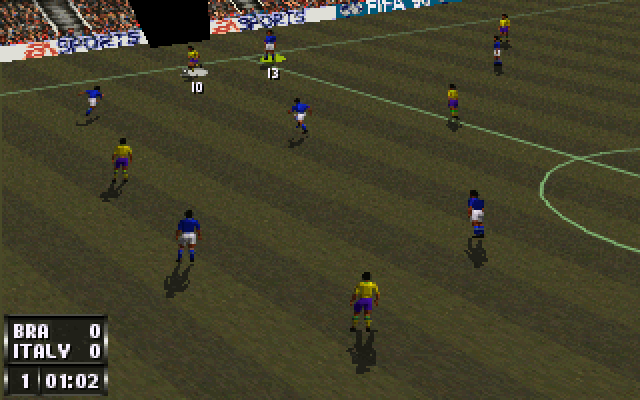
To fire up the demo and hear his voice booming out of your speakers for the first time was really something, regardless of the fact that EA made him utter the words “Virtual Stadium Soccer”. The demo featured the teams from the 1994 World Cup final: Brazil and Italy. And, this reference to Virtual Stadium aside, it looked, sounded and felt – at the time – like the real thing.
Even now, the simplicity of the FIFA ’96 commentary works in its favour, with subsequent games’ attempts to add detail only serving to make the presentation seem less authentic (a reasonably recent iteration which punctuated the action with incessant updates from AI matches sticks in the memory).
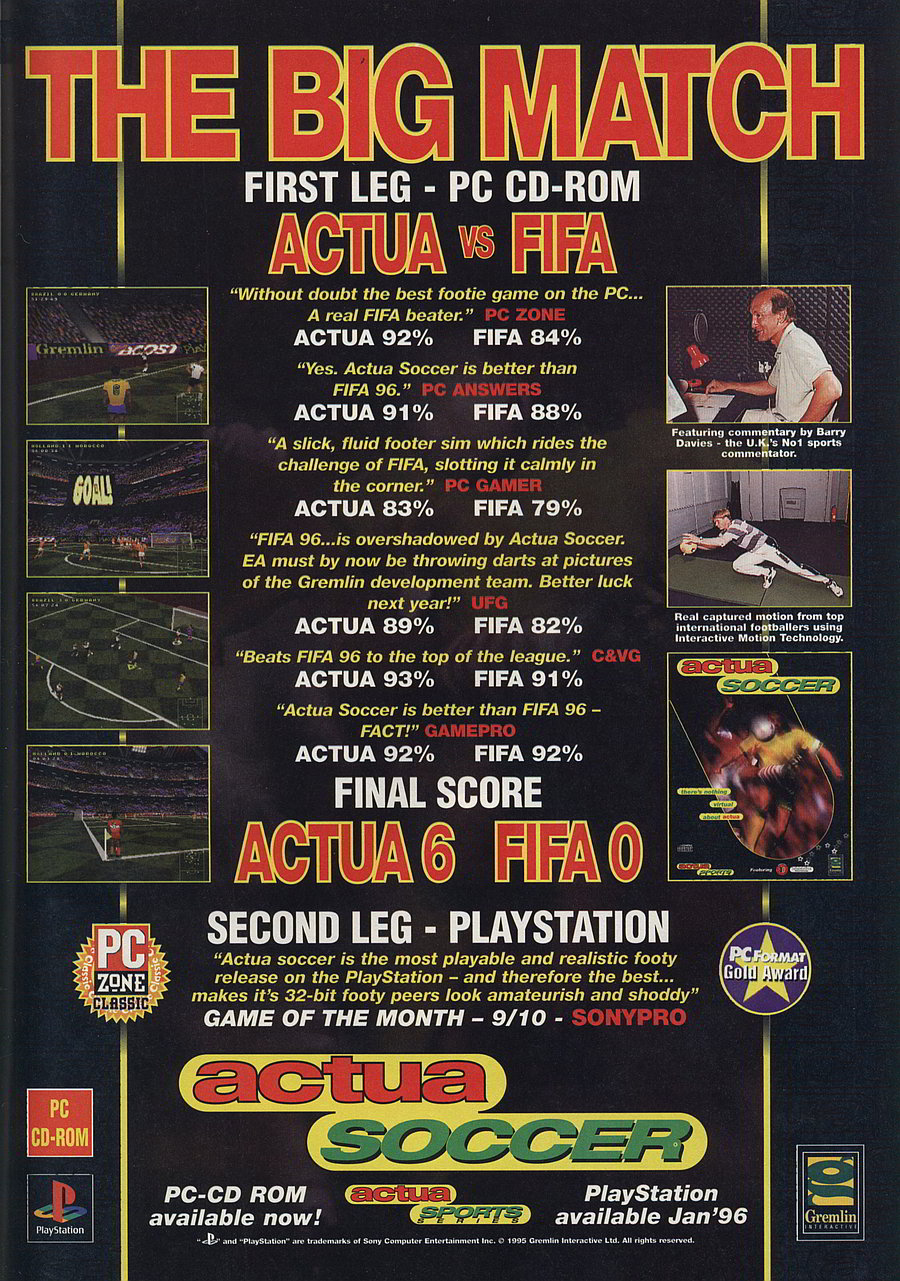
The game itself, though a massive step forward from the original FIFA, was a little on the clumsy side and contemporary critics (wrongly, in my view) compared it unfavourably with Actua Soccer, even to the extent that an advertising campaign for Actuaspecifically referenced the critical consensus. But FIFA ’96 was the template for the future of the series, and for the next generation of football games.
In the strategy game UFO: Enemy Unknown, the world is under attack from mysterious extra-terrestrials. They appear without warning, then vanish into the shadows. They raid cities, abduct people for experimentation, build hidden bases and even infiltrate national governments. Their campaign is a prelude to invasion of this planet, and brutal subjugation of the human race.
You the player are put in charge of X-Com, the small but elite international military force founded to tackle this terrifying adversary. When UFOs appear in the skies, they must be intercepted. When alien agents appear carrying out their sinister missions on the ground, you must send in your soldiers to do battle with them.
You have many reasons to worry. The aliens seem to have you out-matched on every level. They seem to carry out their missions attacks with impunity, and that’s when you’re even aware of them. There’s so much activity going on that you’re probably not seeing, which leads to a sense of deep unease as you watch the map screens. You’re constantly on the defensive, aware that you are merely reacting to alien incursions, without any long-term goals.
The most obvious way the war can turn against you is when you lose assets in battle: your aircraft shot down, your troops killed in battle. Even worse, your bases may be assaulted, and the loss of one could be a setback from which you can’t recover.
However there’s another way in which you can find yourself losing. X-Com is funded by a council of nations, but as time passes some of them will stop contributing. That means you’ve failed to effectively halt alien activities in that country. The aliens have spread their sinister influence behind closed doors, and persuaded the government to form a pact with them.
It’s intensely dispiriting when the monthly budget summary states that another nation has withdrawn. You’re watching for UFOS as widely as you can, but you don’t have a complete enough picture of their movements. You’re responding to every threat, in the air or on the ground, as effectively as you can, but it’s not enough. Time is slipping through your fingers, and you’re failing in your duty to protect the human race.
Also, your troops are a bunch of hapless incompetents that cannot shoot straight, and need a sit down after carrying a big gun up a flight of stairs. Frankly you would have hoped the armies of the world might send a higher grade of soldier. They will improve with time, if they survive, and become skilled and veterans. Still the loss of every experienced soldier is painful. You rage at yourself every time one dies under your command, and worry about how long it will take some newbie to become an effective replacement.
Another problem is your need for better weaponry and equipment. The aliens possess technology far in advance of anything on earth, such as their devastatingly powerful plasma guns. This puts you at a significant disadvantage. So over the course of the game you’ll have your scientists and engineers working tirelessly to develop new wargear. Some of the improved tech is native to earth. However to properly match the aliens you need capture some their own gear, then research and reverse-engineer it.
Many of the new items that become available are new weapons and armour for your troops. However, you also need to improve your interceptor. This fighter jet carries the burden of shooting down UFOs but despite being the most advanced warplane on earth, it’s woefully inferior to all but the smallest alien craft. Sending it into battle is a matter of crossing your fingers and praying that it will cause enough damaged before being blown to fragments.
Losing one is expensive but also, it means another UFO is continuing on some sinister mission unimpeded. You may be able to track it until it lands, and send troops to deal with it on the ground. Or it may evade you, disappearing to god knows where. That’s an undesirable outcome, to say the least. So you urgently need the ability to reliably intercept UFOs.
Once you’ve mastered some alien weapon tech, you can equip the interceptor with plasma beams. Now it has real teeth, and can inflict heavy damage on UFO. That’s assuming if it can catch one, mind you. It’s still painfully slow. It’s also rather flimsy, with little capacity to absorb damage.
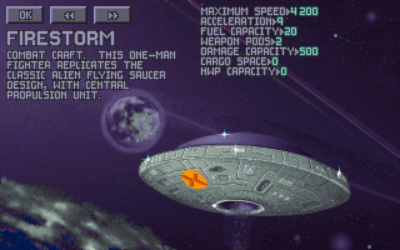
To truly reclaim your airspace, you need to put in some time researching how the UFOs work. You must set your scientists to work on their fuels, their powerplants and their navigation systems. You’ll also need to ensure you have large quantities of rare exotic materials in your stores, some of which can only be scavenged from aliens. After several months, much expense and hopefully not too many lost battles you get: Firestorm.
screenshot taken from http://ufopedia.csignal.org
Here’s the funny thing: all you ever actually see of your new fighter craft is that picture above, and some basic icons on the map screens. It’s a testament to how absorbing this game is that, despite such a basic depiction onscreen, deploying Firestorm is a moment of HELL YEAH. Crack open a beer. Shake your fist at the screen. Make whooping noises. It’s okay, no-one’s watching.* Now you’ve got your own goddamn flying saucer, and it’s going to chase the UFOs down and blast them out of the sky.
Firestorm is twice as fast as the old interceptor, making it far harder for UFOs to escape before it enters weapon range. Made of exotic alloys, it’s durable enough to take several hits and keep flying. Loaded up with your latest plasma weapons, It can swiftly and ruthlessly deal with almost any interlopers. After being comprehensively outmatched in the air war for so long, you are now much closer to being on an equal footing.
The war is far from over, of course. Aliens continue to ramp up their activity. More of their hidden bases are built every month. Still now you can allow that feeling of gloomy tension, of being burdened with an impossible task, to abate. There’s room for some real optimism, now. With Firestorm in service you have a fighting chance for victory.
The first few campaigns of TIE fighter see you carrying out the sort of missions you’d expect for an Imperial pilot. You chase rebels in the aftermath of Hoth, destroy pirate outposts, and forcibly end conflicts between warring planets. Bringing a bit of peace and order to the galaxy, Galactic Empire style.
The first mission of campaign five, however, feels a bit wrong from the start. The officer who normally gives you the mission briefing is absent, leaving just a message board to inform you of your objective: to clear a minefield and inspect some cargo containers.
The secretive agent from the Order of the Emperor is present, though. Normally he hands out special secondary objectives, usually something precise and tricky like finding and disabling an individual shuttle in the middle of a battle. Accomplishing his tasks grants you membership of the Order. Today though he just tells you to watch out. He has reason to believe that you are in danger.
Turns out he was well informed. Soon after the mission begins, your wingman breaks formation and starts firing on you! The betrayal isn’t limited to a single TIE though as further imperial fighters are launched to attack you. If you get close to your base frigate, that will shoot at you too. All the ships around you, that would normally represent safety and support, are suddenly hostile. It’s all a bit shocking and bewildering.
Thank you gog.com.
Your first priority is survival. Your TIE interceptor is fast, which can help you get out of trouble, but it’s basically made of plywood. If you’re hit by laser fire, there’s a sickening crunching noise to accompany the knowledge that you can only survive one or two more hits. Worse, the traitors have sent the deadly advanced TIEs armed with concussion missiles. When you hear the missile warning it’s a moment of sheer panic, throwing your interceptor into desperate evasive manoeuvres, because those will destroy you with a single hit.
There’s still that minefield to worry about too. In this game a mine isn’t just an exploding thing you might collide with; instead each is a gun turret. Ordinarily the threat they pose is mitigated by their inability to move. However, straying into their firing range while simultaneously dealing with enemy fighters can be intensely dangerous.
You’re alone in your flimsy TIE, and and waves of enemies are coming your way. Everything has gone to hell. The Order guy said to shout for help if you need. So do it! They send their own frigate, which launches its own fighters to tackle the traitors, and its arrival is a blessed relief. Who would have thought that sinister looking fellow would be your salvation?
That doesn’t mean you can run straight for safety, though. The Order needs you to inspect those containers for their own purposes, which is going to mean heading back into the minefield. There’s a suspicious shuttle they want you to look at too. All the while, the traitors continue to chase you. Only once this task is done can you sprint to the friendly frigate.
Looking back, TIE Fighter did lean heavily on themes of traitors and civil war quite heavily. It seems like it didn’t quite have the will to commit to a game where you play the bad guys and kill rebels. Still this mission remains memorable as one of the great “oh, shit!” moments in gaming
At the time of posting this, you still have 32 hours to pick up a free copy of Unreal at GoG.com.
I actually already have a digital copy, which I grabbed on Steam a decade ago. Must have been one of the first games I ever bought there, in fact. I claimed the gog offer anyway, because it’s our FFG policy to own stuff on gog wherever possible. Firstly to support their commitment to PC oldies, and secondly because their games are free of DRM.
Anyway Unreal is one those games that I would expect most retro fans have in their collection already. It was one of the most famous games of its type from the 90s. Even if you don’t still have a boxed copy it’s been easy to buy from gog or Steam for a long time now, and so has been through countless sales priced at less than a cup of coffee. So ownership is practically obligatory, along with Deus Ex and that copy of Half-Life 1 that Gabe Newell personally issues to all PC gamers aged over thirty.
For the record, I think it’s still worth playing. The exotic alien world of Na Pali with its mysterious stone temples and lush green open spaces, still looks amazing. I always preferred its use of colour and lighting to the drab brown of Quake. That opening sequence where you escape the prison ship and stumble into a verdant valley is one of my most memorable gaming experiences. Then there’s the module music, which harks back to earlier eras of gaming and contributes to a hazy, dreamlike ambiance.
The only downside I remember (admittedly it’s been a few years now since I last ran it) is, the weapons were a bit floaty and unsatisfying. Otherwise, I’d put it among the top few shooters to come out in the five year window between Doom and Half Life. (Other candidates being Hexen and Descent. System Shock is my first love but sits off in its own “kinda sort of an RPG” category.)
Hi there. This is our fourth and final part of our look back at the pleasures, or otherwise, of driving a slow car in racing games. It takes us up to the end of the 00s or so, roughly in line with the newer games eligible for coverage at FFG.
I’m sure there are plenty of other great examples from more recent racers, and those I’ve missed out or forgotten from other periods. But, for better or worse, I decided to keep the focus on games I have actually played.
So…let’s continue!
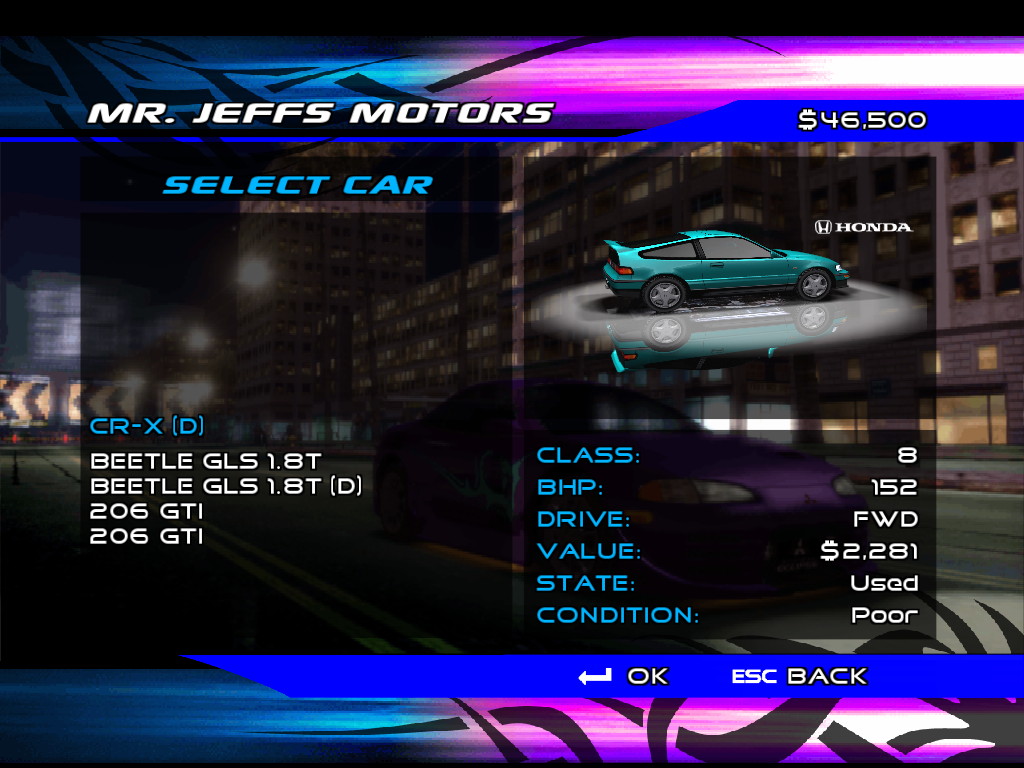
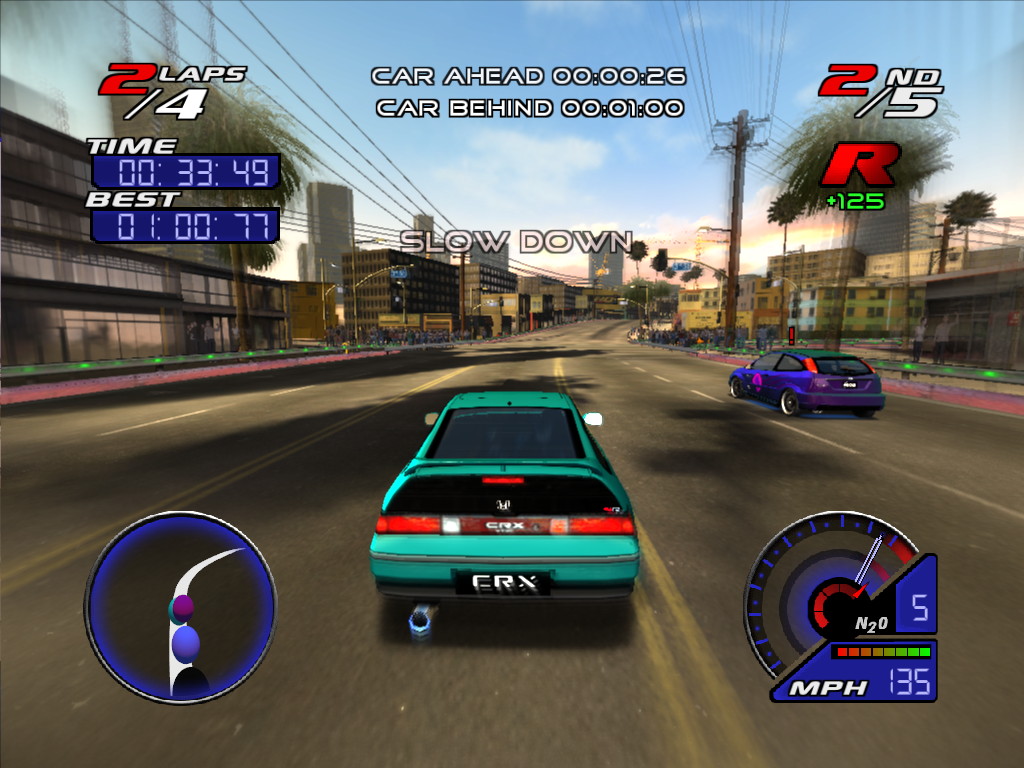
Honda CR-X – Juiced (Acclaim, 2005)
Acclaim’s Juiced arguably got lost between the shinier (and better) NFS games of the time, but – a completely broken auto save system aside – it was still a decent racer.
Best of all, for our purposes at least, the crappy starter car seemed robust enough to see you through most of the game’s early stages, and with no requirement to make your vehicle more visually appealing, there was something vaguely comical, and satisfying, about defeating hordes of smack talking street-racers armed with a poxy old Honda.
In fact, the usual instinct to abandon your initial vehicle at the earliest opportunity soon became less appealing than dragging out the CR-X’s career for as long as possible.
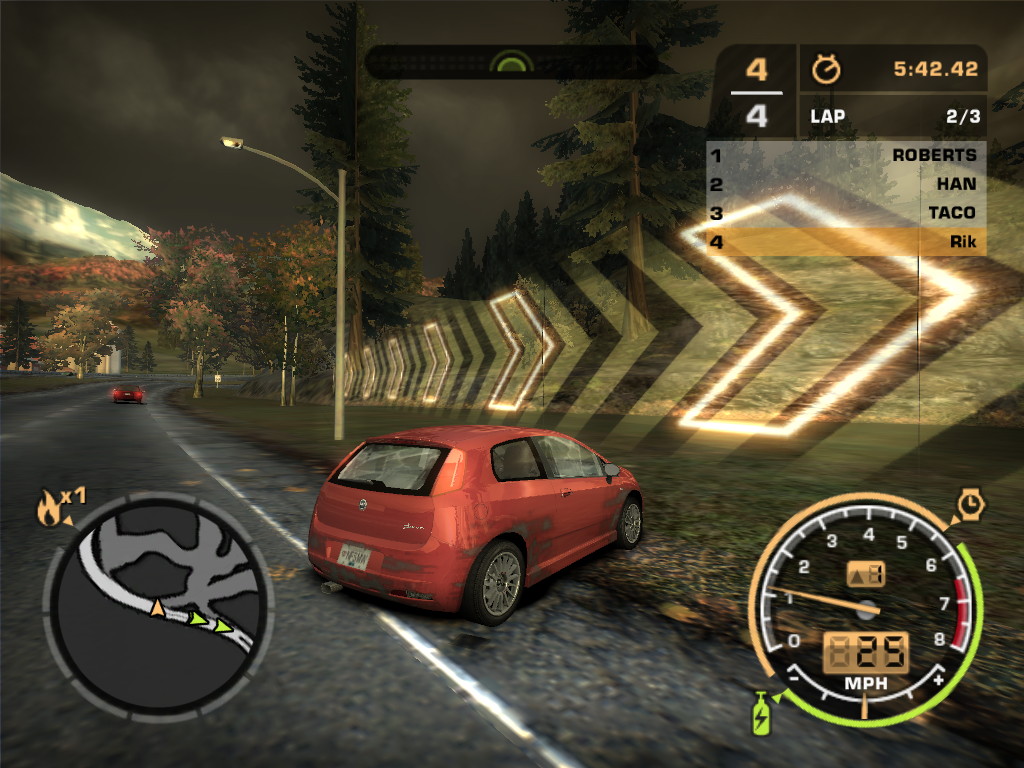
Fiat Punto – Need for Speed: Most Wanted (Electronic Arts, 2005)
Arguably the high point of the NFS series, Most Wanted nevertheless presented you with a number of vehicles that you’d never pick unless you wanted to give yourself a hard time or derive some comedy value from the experience.
Enter the Fiat Punto, not many people’s idea of a getaway car. During my playthrough, we actually owned a Punto in real life (kindly bequeathed to us by our friend PG upon his departure to the US).
For the first couple of years it was relatively well behaved, but as time went on it became more temperamental: the airbag failed for no reason and couldn’t be fixed; the engine overheated on a dual carriageway on the way to Hemel Hempstead; and the windscreen wipers failed on the motorway (twice).
Anyway, I’m sure it’s just like those Ferraris – they look nice in games and on the telly, but they’re loud and uncomfortable and have terrible fuel economy. So, take it from me – driving a Punto isn’t as glamorous as games like Need for Speed: Most Wanted make it seem.
Mini Cooper – RACE: The WTCC Game (Eidos, 2006)
It’s been my experience that arcade track-based racers often give you the option of driving a slower car for laughs but then make the experience of doing so a largely joyless one.
RACE may or may not be the best racing sim (I mean, I liked it) but it did cultivate the sense of precarious danger that you feel would accompany the experience of driving even a modestly powered car around a track at speed. The engine is loud, the car shakes, corners bring a mild feeling of dread, and yet it’s all great fun, to the extent that I could understand why people might go to a race day experience or similar.
Without even starting a full WTCC season, there’s plenty of fun to be had racing around Monza in a Mini.
(Note: screenshot is from RACE 07 as RACE refused to work for some reason).
Audi A3 – Test Drive Unlimited (Atari, 2007)
The name Test Drive implies some fun twatting around in cars, so it was criminal really that it took many years of fruitless and low-quality circuit-based racing for the series to return to its roots.
If there’s an arcade racer that allows and encourages you to sample a variety of vehicles, drive them around for fun and beat challenges with them in a non-linear fashion, it’s TDU. Indeed, the early cars are more fun to drive than later challenges involving ludicrous Bugattis and Zondas and the like.
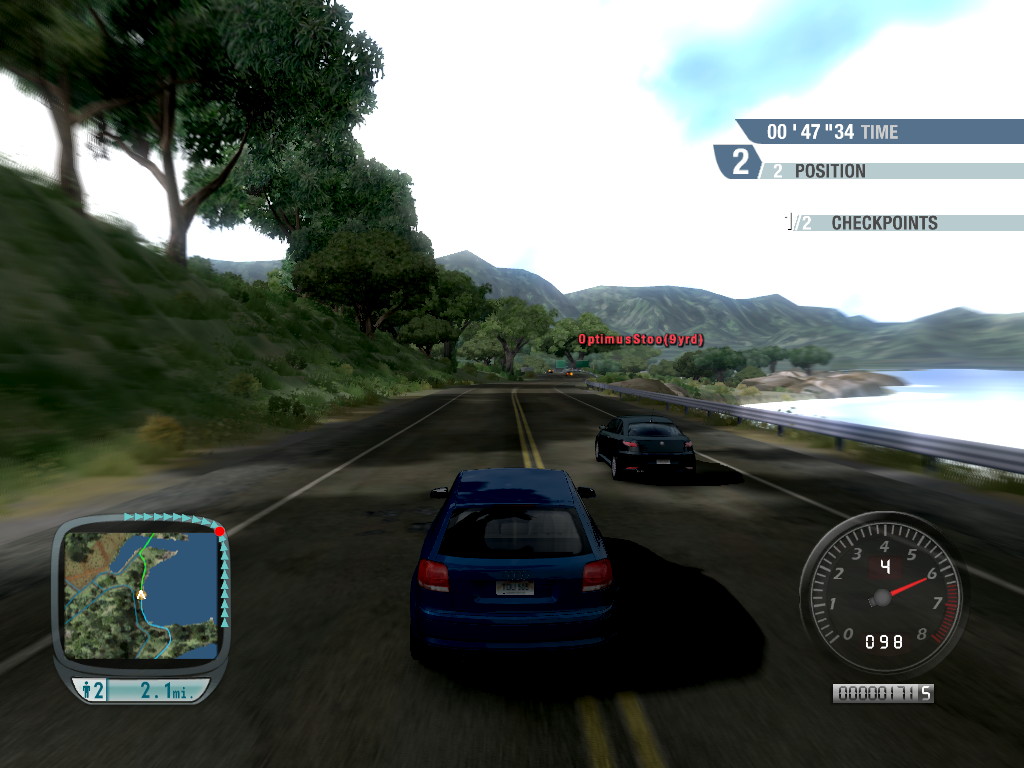
The Audi A3 (pictured here taking on Stoo’s Alfa Romeo, in a rare example of FFG indulging in multiplayer action) is a solid choice to start exploring Hawaii and, er, picking up hitchhikers and models in exchange for clothing vouchers.
As TDU helpfully gives you the full showroom experience, it’s worth pointing out that whatever we might say about crap cars in racing games, even this supposedly bog-standard Audi isn’t the same one that your estate agent might drive, with a list price of $37000 (I don’t know about you, readers, but I certainly don’t imagine ever spending that on a car).
Mazda RX-8 – Juiced 2: Hot Import Nights (THQ, 2008)
This gaudy sequel delivers plenty of vehicles although not much in the way of distinctive handling models. Still, it does successfully manage to cultivate some sense of ownership through a stats tracking system for each car, tallying up your race wins and losses for each.
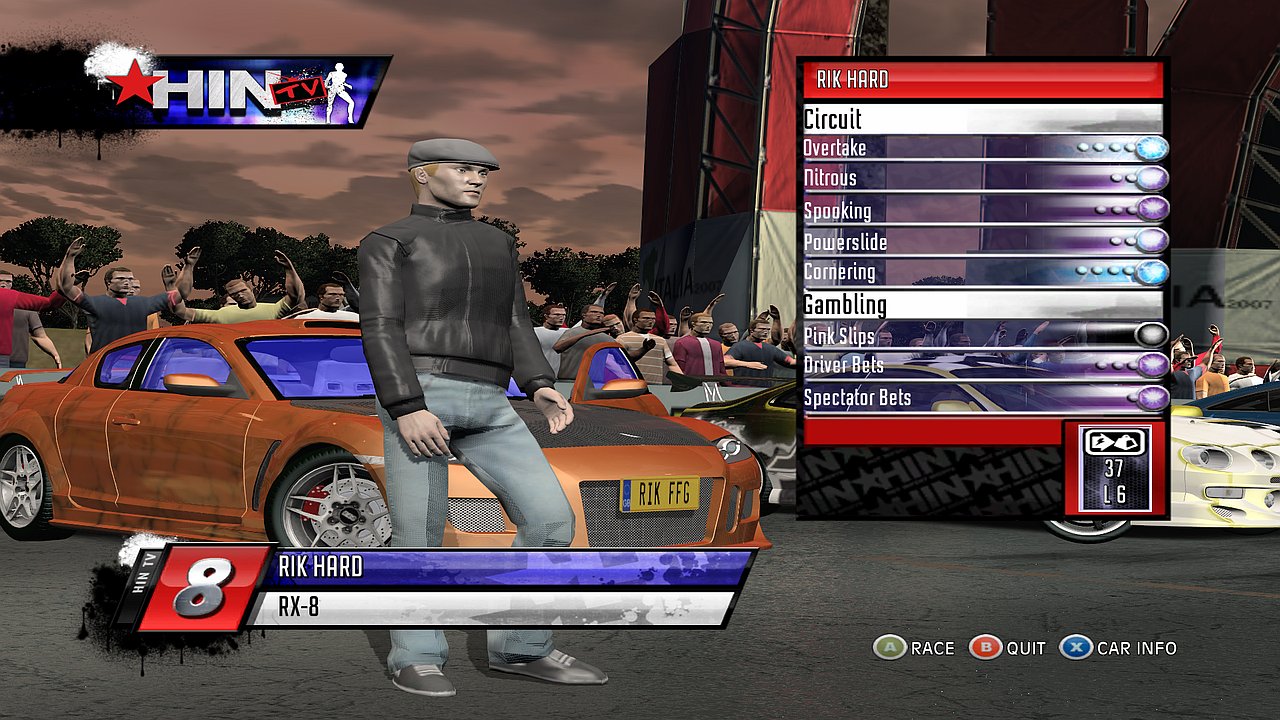
Such was my attachment to this orange Mazda (pictured here with ludicrous Guy Ritchie avatar) – a potential TigerCar 2 – that I became incensed when I lost it to a rival and engaged in a costly and ultimately fruitless battle to win it back.
If, like myself, you’re a veteran of silly arcade racers but remain ignorant of real-life car performance issues, you might also be puzzled by the way the same cars seem to be ranked differently in different racing games. In Juiced 2, the RX-8 is a lowly machine, while in, say, Need for Speed: Underground 2, it’s near the top. Next time: some kind of graph comparing them all in painstaking detail.
Hello. You can forget your Ferraris and Porsches (Ferrarae? Porsche-e?) – we’re celebrating the Volvos, Nissans and Mazdas of the racing game world with our look back at some of the slower cars on offer over the years. Sometimes they’re simply more fun to drive than your Mr-Smug-Show-Off-Lamborghini and sometimes they, er, aren’t.
Ford Ka – Ford Racing (Empire Interactive, 2000)
After the strange advertainment of the Ford Simulator series, someone had the bright idea to make a proper racing game featuring Ford cars to put in the shops next to Need for Speed et al.
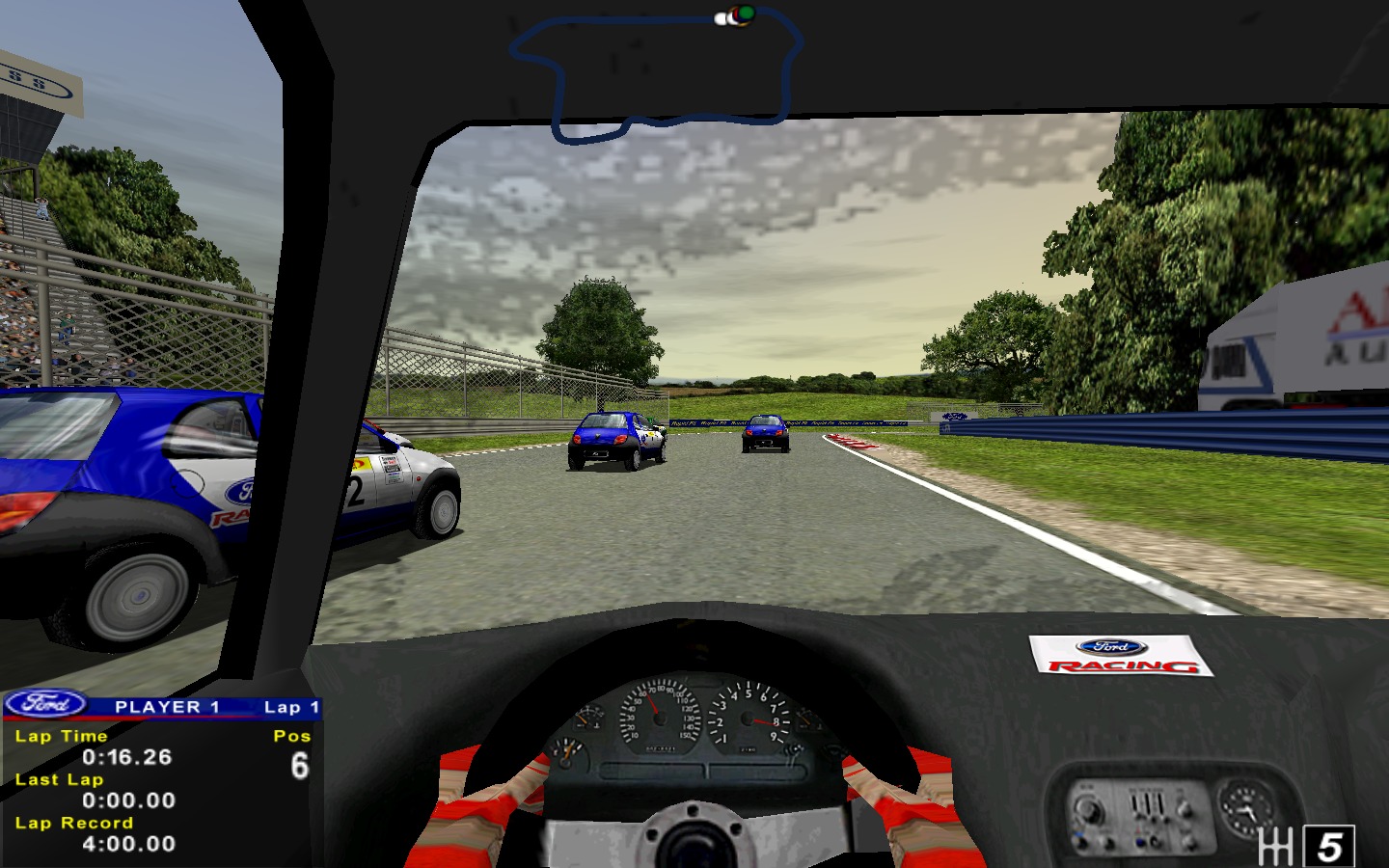
And which of us hasn’t had the dream of driving a Ford Ka(ck) around a track against a field of like-minded opponents? Well, thanks to Ford Racing, that dream can come true. Sadly, the game lacks the requisite quality to make anything of this thrilling setup, coming off as a poor relation of TOCA (following some fairly smelly reviews, copies were later bundled with other, more popular, budget releases like Crazy Taxi).
Later Ford Racing games took more of a lightweight arcade approach, allowing you to utilise a variety of cars and trucks from the US range of vehicles across a number of lap-based events, and the Ka was nowhere to be seen.
This underrated rally game certainly made you work for its top end cars, earned through hours of practice on courses with the lower class vehicles. However, it’s a blessing in disguise, as there’s plenty of fun to be had with the tiny hatchbacks on offer.
At the very bottom end you have the Citroën Saxo and Ford Puma, but if you’re feeling a little braver there’s a Honda Civic and a Peugeot at the next level up. We’ll go with the Peugeot 106, as some of my fondest memories with the game are associated with that car and the various UK based rally stages, particularly this move using a powerslide to get through some concrete gateposts.
(It’s an ancient pre-YouTube video with no sound, sorry! We had short clips like this in the site’s early years and kept them for posterity).
Side note: this game is still awesome! I spent ages trying to get it to work again and was fairly emotional when it seemed like I wouldn’t be able to.
Lancia Fulvia – Rally Trophy (JoWood, 2001)
An honourable mention for this game, dedicated to the classic era of rallying and a selection of rather rustic vehicle options, many of which are prone to sliding all over the place at the merest hint of a driving error.
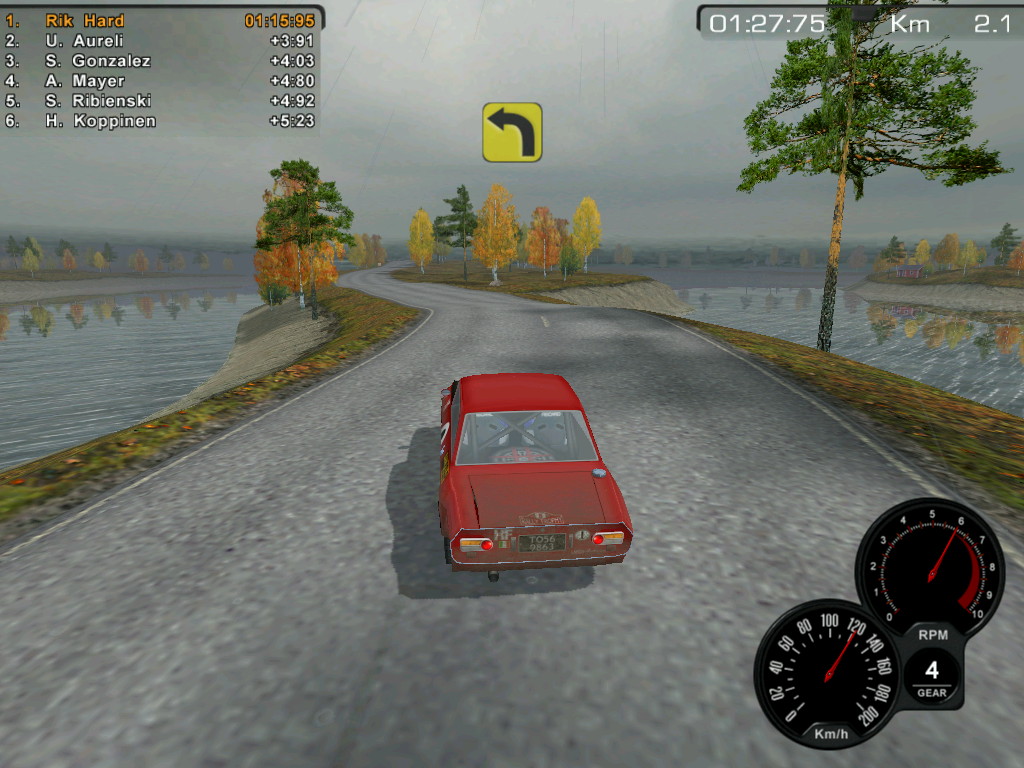
Salvation comes in the form of the Lancia Fulvia, which seems much more inclined to stay put, allowing you more opportunity to enjoy the scenery and the occasionally passive-aggressive comments of your co-driver.
(OK, so this is technically one of the better cars in the game, isn’t it? But slow and unglamorous by the standards of most racers…)
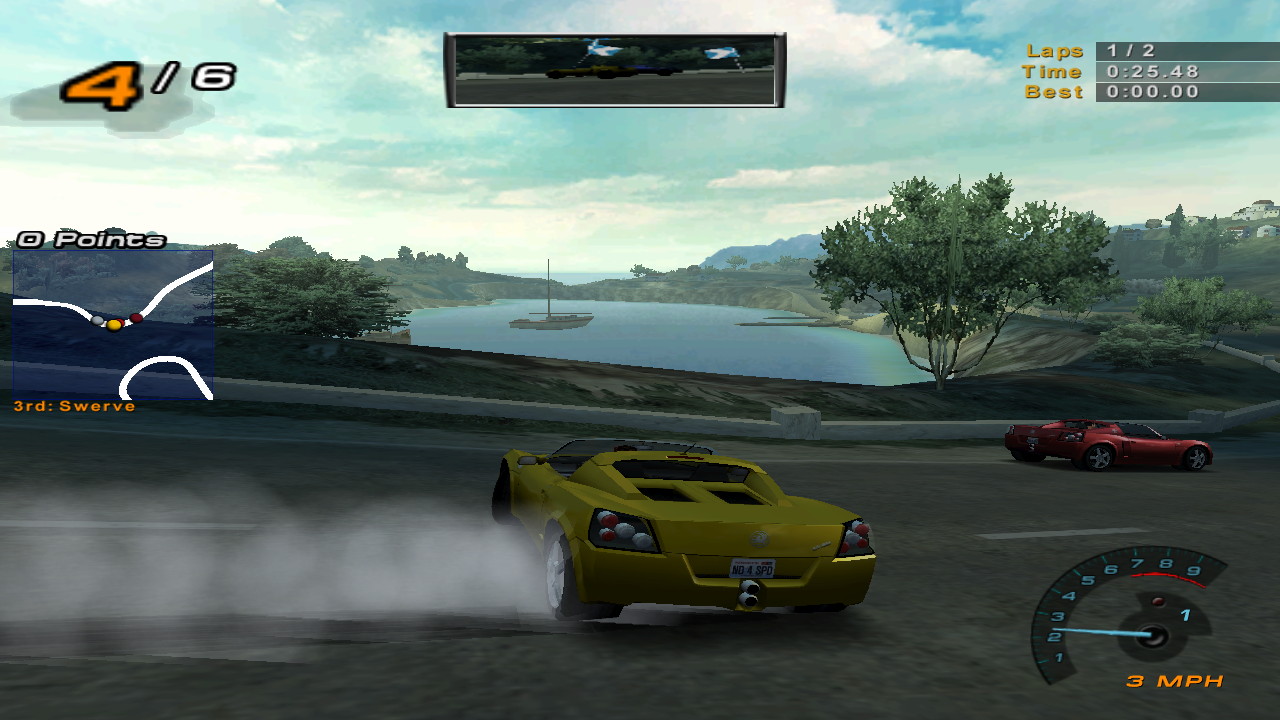
Vauxhall VX220 – Need for Speed Hot Pursuit 2 (Electronic Arts, 2002)
The pursuit was anything but hot in this underwhelming entry in the NFS series so it seems fitting that one of the starter cars is Vauxhall’s attempt at a sports coupé. (Bizarrely, the game also features the Opel version of the same car, with a negligible performance difference).
I may be generalising here but no-one buys a racing game to drive a Vauxhall. Although I do believe the VX220 was also the cover star of Bizarre Creations’ Dreamcast racer Metropolis Street Racer. (Did enough people buy that though? Perhaps the demise of the Dreamcast is all the VX220’s fault).
I don’t recall ever seeing one in real life, though, apart from maybe once, although that could have just been an Astra.
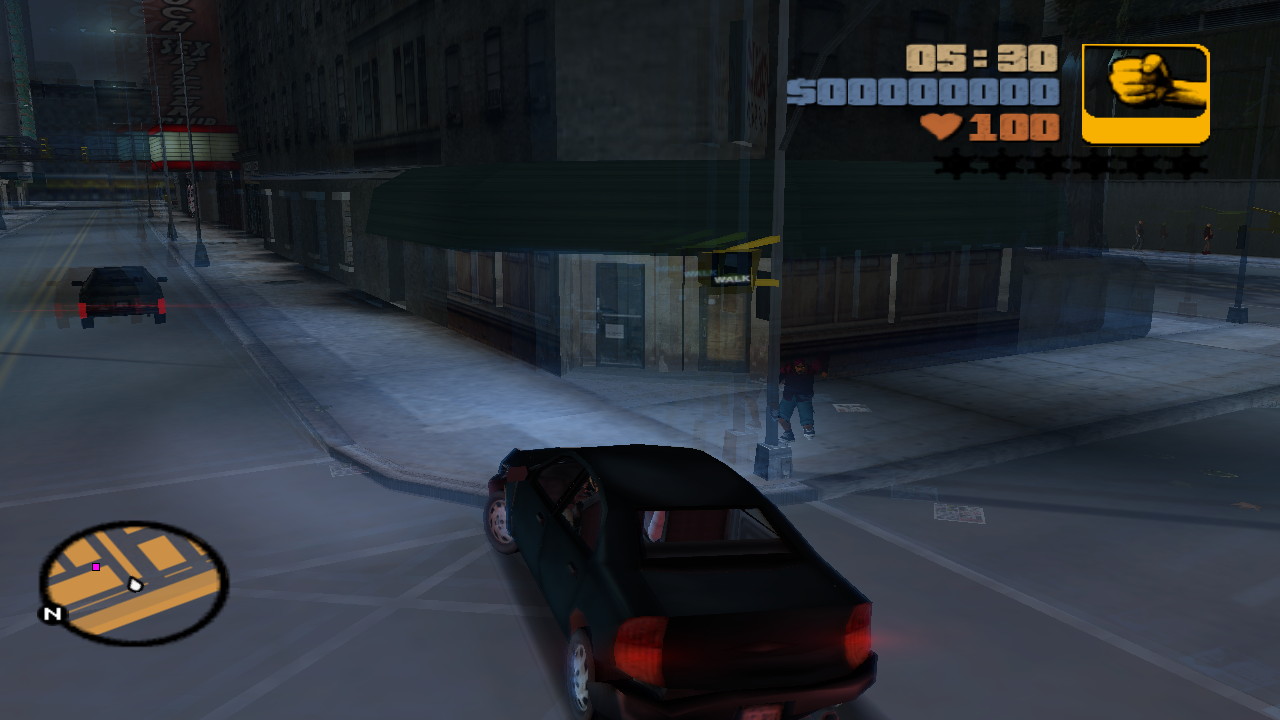
Kuruma – Grand Theft Auto III (Rockstar, 2002)
The driving bits in the earlier GTA games aren’t always the best – particularly when driving to a mission and accidentally causing a police chase, or those occasions when you actually race other cars – but as I mentioned before, they do capture perfectly that feeling of trying to push an average car to its limits during a getaway.
The Kuruma – your vehicle during GTA III‘s first mission (“Give Me Liberty”) – is an unexciting but solid beast that’s fun to throw around, and is one that will certainly ‘do’ if you need some wheels in a hurry.
Chrysler Neon – Need for Speed Underground (Electronic Arts, 2003)
Need for Speed: Hot Pursuit 2 was as naff as one of Richard Hammond’s leather jackets, so EA wisely decided to give their long-running racing series a Fast and Furious style makeover, based around earning respect on the streets.
You won’t get much respect by driving a Chrysler Neon, though, especially if you customise it like a vehicular version of Tony the Tiger. Still, although the distinctive handling (and, dare I say it, dashboard views) of the various cars had largely disappeared from the series over the years, one side effect of making you undertake thousands of very similar races was that you did begin to cultivate a sense of ownership of your ludicrously decorated motor. TigerCar, I still love you. And miss you, every day.
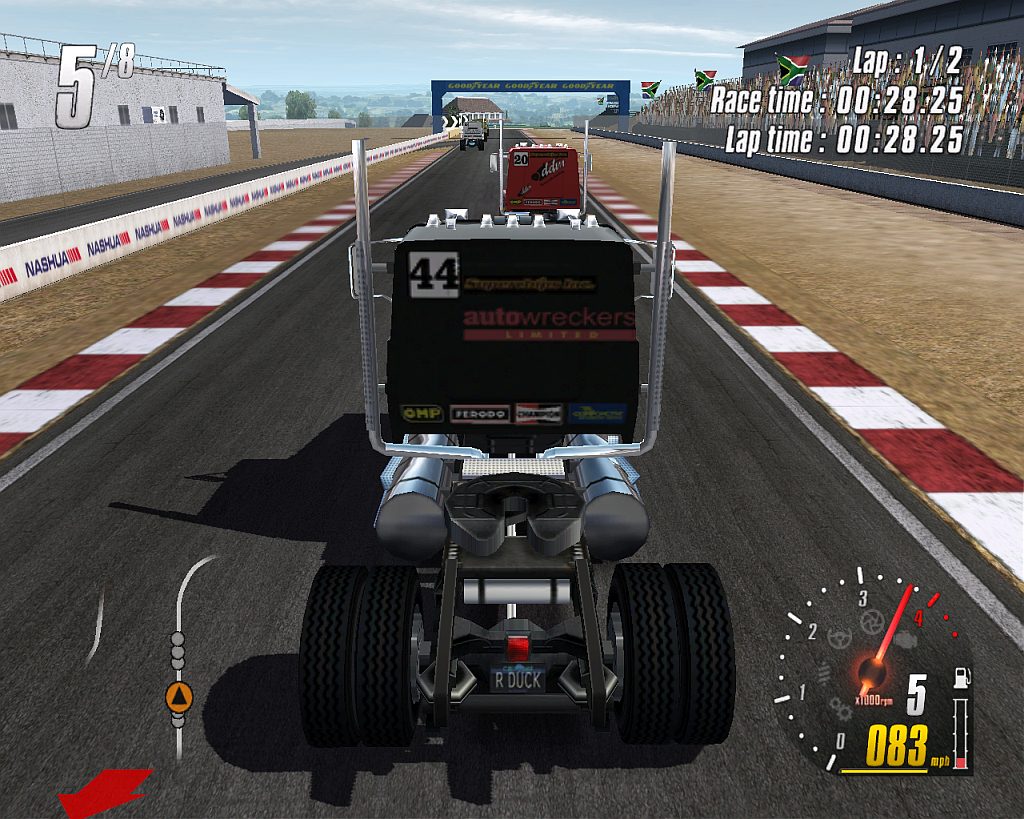
Ford LTL-9000 – TOCA Race Driver 2 (Codemasters, 2004)
The TOCA Race Driver games are known for their wide selection of vehicles (as well as some largely unsuccessful attempts to inject story-based drama into proceedings) and there were plenty of candidates for inclusion from the first game (the Saab-based racing series stands out). But instead we’ll go with some big trucks from the second game.
I know – trucks don’t really technically count, but we’re not going to go all Bus Simulator on you, I promise. I believe there were some entirely truck-and-track-based racers in the early 00s, which sounded awful, but for a quick few laps in one race, it’s a good laugh. And you can pretend to be in one of those big truck races like at the beginning of Smokey and the Bandit 2.
In Part 4: We close out the 00s with street racers galore and a trip to Hawaii…







 Posts
Posts