[ Content | Sidebar ]

PC Zone: an incomplete and subjective history, part 4

July 1st, 2017

Written by: Rik

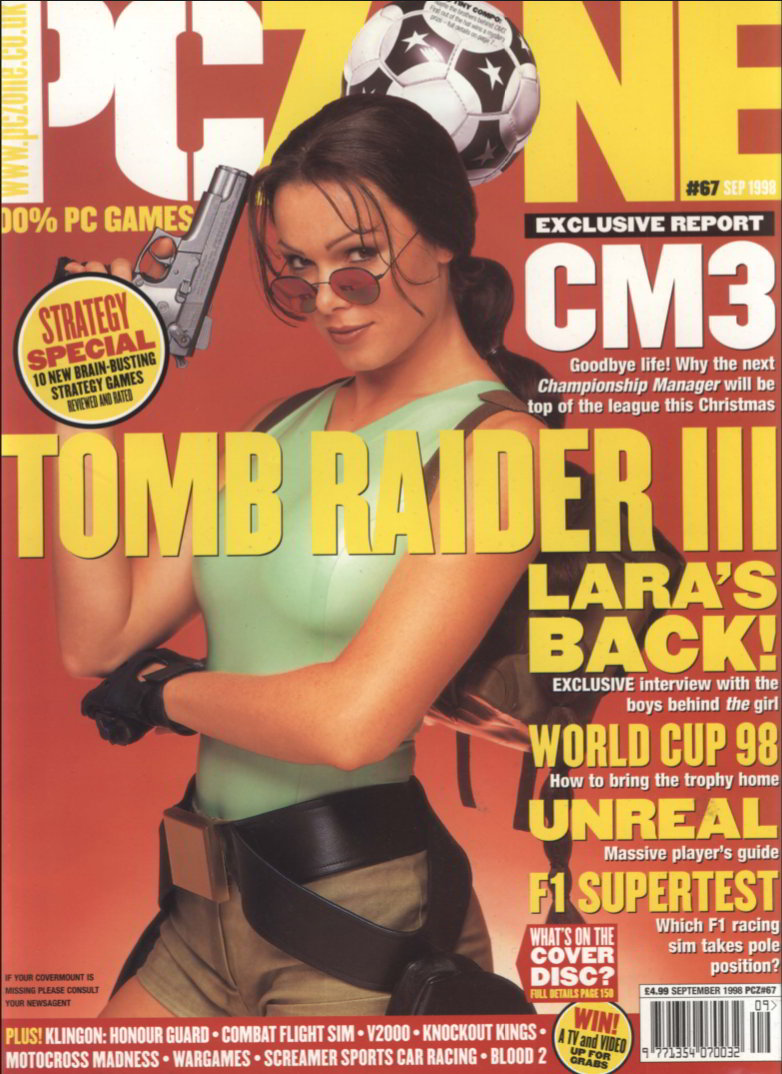
Part 4 of our history of PC Zone, and we’re into 1998: past the peak of the 90s, but still, to my mind, a vaguely optimistic time. Okay, so Britpop was dead and Be Here Now was rubbish, but we still lived in hope that England might win the World Cup and The Phantom Menace might be quite good. This was also the time when I bought PC Zone most regularly: around the time of the redesign, the cover price was slashed by a whole £2 to £2.99, which was possibly a factor (whatever horrifying and potentially unethical changes to working conditions enabled this switch were of no concern to me).

Part 4: 1998-99 – Sick Notes

zone 67 cover

While Zone’s look had evolved over the years, 1998 seemed like the first time it had undergone such a thorough redesign, with the iconic corner logo being replaced by a fairly generic-looking A-Team style stencil effort. For the first time since the very early years, there was a Meet The Team feature, in which the various writers were asked the same question (usually related to a cover game or feature) as well as declaring which games were on their hard drive. What’s On Your Hard Drive? was also another new regular feature, in which the inhabitants of a particular town or city were quizzed about their current gaming habits.

Even though the accompanying pictures often indicated that the feature had involved little more than hanging around the local branch of GAME or Electronics Boutique, I took it as a sign that games were becoming less of a niche hobby and more of a thing that the person in the street might indulge in. Like it or not, the popularity of the PlayStation probably had something to do with it, and perhaps in acknowledgement of this, Zone briefly ran a feature, PlayStation Zone (later Console Zone) which covered the latest developments in the world of the small grey box, including coverage of the PSX emulator Bleem! (eventually shut down by Sony). For a short while, the What’s On Your Hard Drive feature was also accompanied by a feature about the state of games in the same town/city, usually involving an interview of some kind with the managers of local gaming stores.

PC Zone: an incomplete and subjective history, part 4 continued »

Nintendo’s next nostalgia box

June 27th, 2017

Written by: Stoo

After the success of the Nes Classic Edition, Nintendo are giving the Super Nintendo the same treatment. The SNES classic edition will look like a miniature version of the much loved 16 bit console, and come loaded with 21 games.

That’s less than the NES Classic’s 30, but a lot of those were rather basic arcade games from 1984, the sort of thing I played for about 10 minutes. Most of what we have here is more substantial:

– Contra III: The Alien Wars
– Donkey Kong Country
– EarthBound
– Final Fantasy III
– F-ZERO
– Kirby Super Star
– Kirby’s Dream Course
– The Legend of Zelda: A Link to the Past
– Mega Man X
– Secret of Mana
– Star Fox
– Star Fox 2
– Street Fighter II Turbo: Hyper Fighting
– Super Castlevania IV
– Super Ghouls ‘n Ghosts
– Super Mario Kart
– Super Mario RPG: Legend of the Seven Stars
– Super Mario World
– Super Metroid
– Super Punch-Out!!
– Yoshi’s Island

I’m particularly glad to see Yoshi’s Island included. It came late in the 16 bit era, and so was a bit overlooked, but it’s a wonderfully charming and inventive platformer.

I guess this also means I’ll make *another* start on Final Fantasy 3, after giving up on the GBA, android and steam versions. I don’t know why I keep trying, I did actually finish the SNES original years ago. I think I’m trying to make it up to Square for playing a pirated ROM.

The surprise entry here is Star Fox 2, which was never previously released. Apparently instead of the linear levels of the original, you can freely move around a map screen and pick your battles. This isn’t a series I have much personal attachment to (the PC had X-wing by this point), but still, it’s great that Nintendo are finally making it available.

Biggest disappointment meanwhile is probably the lack of Chrono Trigger, one of the SNES greatest RPGs. Not a dealbreaker but Magus, Chrono and Frog will be missed.

The NES Classic was unfortunately difficult to find, with Nintendo totally failing to make enough of them to meet demand. Some gamers were pushed to go to scalpers on ebay, who charged twice or more the retail price. Then Nintendo went and cancelled production. It looks like this one will also only be manufactured for a few months, from september to the end of 2017. Nintendo are promising to make more units than they did with the NES classic, but I’m still preparing to watch amazon like a hawk

The RRP is higher this time at $80, although it also includes two controllers, so you’ll be ready to lose to your wife at Mario Kart, out of the box. Or maybe that’s just me.

Oh and one final thing. You might recall the original SNES had two different appearances. North America getting one version and us Europeans the other, along with Japan. I’m happy to say Nintendo will be repeating this for the classic. I always thought our version looked a bit better with that smooth, slightly curved upper surface and coloured buttons.

PC Zone: an incomplete and subjective history, part 3

June 21st, 2017

Written by: Rik

We’re onto part 3 of our history of PC Zone (part 1, part 2) and it’s getting to the point in the 90s where one of those nostalgic TV documentaries about Cool Britannia (which I would try – but fail – to resist watching) might focus its attention: Britpop, Euro ’96, Tony Blair and the Spice Girls. So, what was going on in the world of British PC games coverage (the subject of precisely zero nostalgic TV documentaries) around this time?

Part 3: 1996-98 – Cruelty Zoo

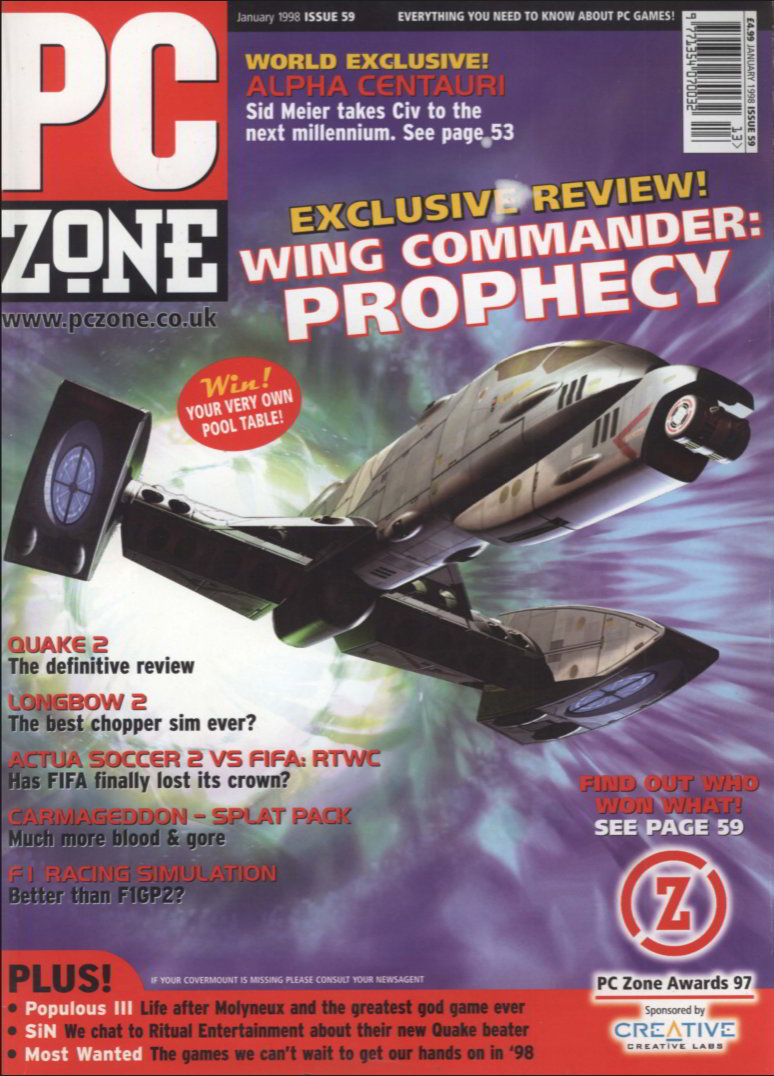
Zone Part 3 Cover

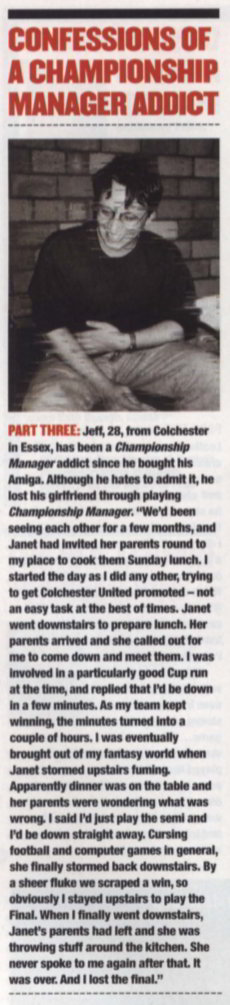
The Quake issue (Zone 43, October 1996) was John Davison’s last, with deputy Jeremy Wells taking over. Wells continued in roughly the same vein as Davison (and maintained the tradition of long-haired 90s Zone editors), although his love for football and, in particular, Championship Manager was a distinguishing feature of his tenure. Towards the end of his time as editor, Wells paid tribute to the addictive qualities of the series in a feature called The Cult of Championship Manager, which featured a variety of men old enough to know better telling tales of how the game got them into trouble (“When I finally went downstairs, Janet’s parents had left and she was throwing stuff around the kitchen…It was over. And I lost the final.”)

This era was probably Zone’s phase of peak blokeishness, with letters to the editor either praising or criticising this aspect of the magazine. In truth, as we mentioned earlier, it was largely adverts for games, rather than reviews or other content, that were the main source of controversy. This was the era of Jo Guest’s notorious ad for Battlecruiser 3000AD, which was toned down (a bit) in some publications by the addition of some pants for Ms Guest. Zone published the pant-less version, earning it praise from one correspondent (“Who would dare to put the ad for Battlecruiser 3000AD on their back cover without drawing stupid knickers on the poor girl?”)

Some months later, another advert – this time an S&M themed one promoting Destruction Derby 2 – went down less well with a reader, and Charlie Brooker (for some reason in charge of responding to letters that month) found himself agreeing, describing marketing types as “a bunch of gutless, soulless, hollow-eyed blockheads who assume that every gamesplayer in the country is a drooling, Pavlovian sexual inadequate…If I could have my way, I’d like to strand the lot of them together on a remote desert island. Ideally it would be completely devoid of all foliage or animal life, so they would eventually all be forced to hunt, kill, and then eat each other in order to survive”.

PC Zone: an incomplete and subjective history, part 3 continued »

Into the Wonderful

June 12th, 2017

Written by: Stoo

If you’re a gamer of a certain age, you may fondly remember saturday afternoons playing Gods, the platform game from Bitmap brothers, on your Amiga, Atari ST or 386 PC.

I am of that certain age but never made much progress. Apparently the game is pretty damn difficult, with four sprawling levels and a dose of puzzle solving. I do at least remember the intro theme. With its breakbeats and sampled speech, it was one of those tracks that sounded a bit like something you might actually hear on the radio, albeit rendered in that fuzzy soundblaster-pro sort of way. Probably sounded a bit better on Amiga.

Anyway, Riot Robot have gotten together with Mike Montgomery, one of the founders of original developers Bitmap Brothers, to bring us a remastered version:

The graphics are now 3D-based, but also a bit generic. There was something very distinctive about the artwork in Bitmap Brothers games, that has been lost in the transition. On the other hand at least we get smooth animation, something that tends to be neglected in these remasterings of old 2D games (see: Monkey Island).

According go the promotional blurb you also get the original game, apparently with a smoother framerate. This might be one of those remakes that doesn’t add much, but some fans might want just to have a legit copy that runs with a minimum of fuss.

It should be coming soon to Steam. Also to iOS and android where, as usual for platform games, I expect the touchscreen controls will be godawful.

PC Zone: an incomplete and subjective history, part 2

June 8th, 2017

Written by: Rik

Welcome to part 2 of our history of PC Zone (part 1 here, if you missed it). This time, we’re into the mid-90s, and what many consider the era of peak Zone. This is around the time that I started reading, too (my first issue was Zone 24, March 1995, with Dark Forces on the cover). Right, let’s get on with it, shall we?

Part 2: 1994-96 – The Editor’s Ten Inches

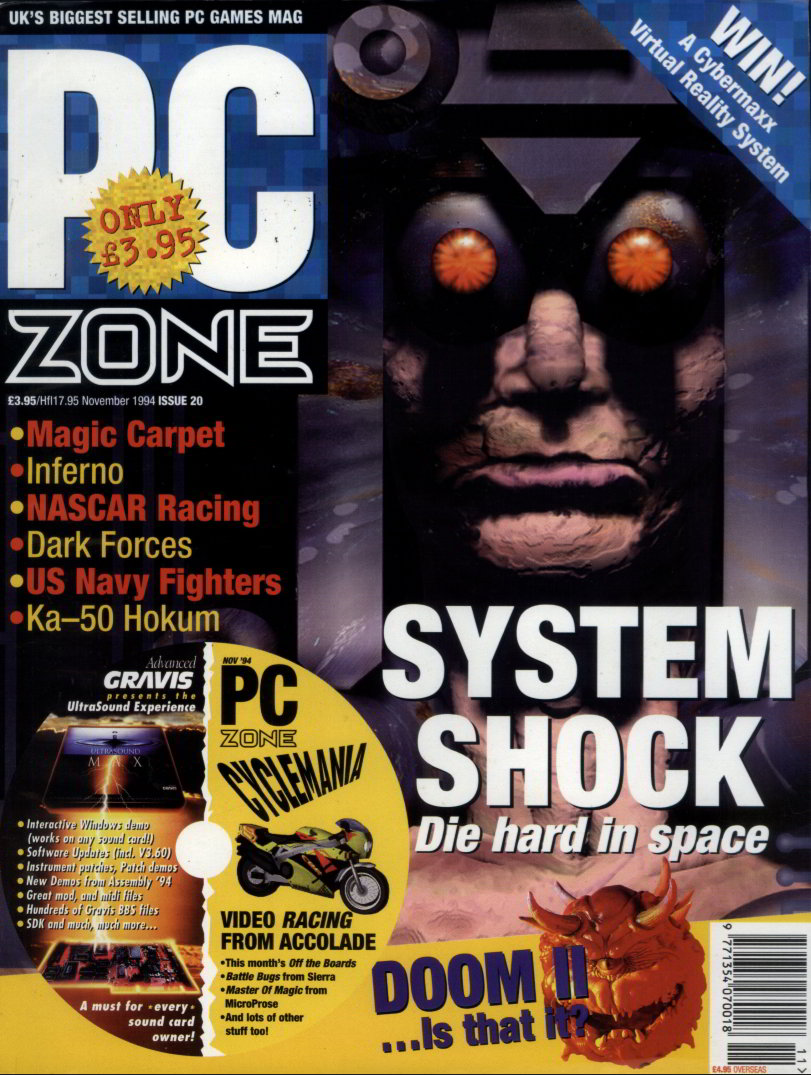
Zone 20 Cover

John Davison took over as editor in 1994, with his first issue being Zone 20 (November 1994). By this point, familiar names such as Jeremy Wells, Charlie Brooker and Warren Chrismas were also appearing in the mag. (Some years ago I became aware that Warren Chrismas was studying a course at the university where I work. Upon hearing his name I exclaimed out loud (to a gathering of extremely bemused colleagues), “Is that the Warren Chrismas who used to write for PC Zone in the 90s?” thus outing myself as an Extremely Cool Dude. Needless to say, they didn’t know who he or what PC Zone was, despite my lengthy explanation name-dropping Brooker (by this time writing for the Guardian) and detailing Warren’s stint as a technical advice columnist in the late 90s).

Looking back at Zone’s earliest issues, you can see that the transition from a fairly conventional PC games mag to the PC Zone many came to know and love began in the era of Davison, which heralded a slightly more laddish, confrontational tone, particularly in the letters section. Po-faced complaints about Mr Cursor were a fairly regular occurrence, with one correspondent (Wordprocessor, Zone 25) deriding him as a “Timmy Mallet [sic] wannabe”.

“It is obliquely gratifying to learn,” continued Mr Graham Stokes of Wiltshire, that if all else fails it is still possible to eke out a living as a writer on a subject about which you know nothing.” In response, Davison appeared exasperated by the number of people who just didn’t ‘get’ Mr Cursor but still got cross enough about it to write in.

PC Zone: an incomplete and subjective history, part 2 continued »

PC Zone: an incomplete and subjective history, part 1

June 3rd, 2017

Written by: Rik

Earlier in the year, we had a request from our reader Nick, who asked if we might consider a feature on old PC magazines. Although there were quite a few around at various points in the 90s, there’s really only one that we could ever really write about. PC Zone magazine may not be familiar to our non-UK readers, which is a shame – as Stewart Lee might say – because we’re now going to publish several thousand words which will go into the history of PC Zone in some detail.

When publication eventually ceased in 2010, there were plenty of tributes from the gaming world, and the story even got a mention on the BBC website, but a quick search for “PC Zone history” bears very little fruit, with this site’s own perfunctory ramblings from more than 10 years ago disturbingly prominent among the results.

I suppose that piece does serve as a reasonable overview up to a certain point, albeit one that couches its praise in terms of slagging off all other magazines (especially PC Gamer). But I was surprised there wasn’t anything more significant out there. Perhaps it’s appropriate, given the irreverent and slightly too-cool-for-school attitude that characterised Zone, that no-one has undertaken such detailed and slightly nerdy work. And there’s always the danger that raking through years and years of old issues in such a way may not actually make for very interesting reading, instead descending into extremely dreary analysis punctuated by supposedly amusing quotes that, robbed of all context, actually mean very little on their own.

PC Zone Logo 93

But that’s the risk we’re going to take! I should perhaps at this point mention the fact that this is going to be an incomplete and extremely subjective history of the magazine (as suggested by my chosen title), with particular emphasis on the periods when I was a regular reader. There were times when I didn’t read Zone at all for a while – the longest spanning several years – and I’m not sure there’s much mileage in trying to catch up with those years in retrospect, even if I could. We’ll get to that, though.

Even though I obviously didn’t feel strongly enough to maintain my Zone subscription throughout its life, and despite the fact that print is fighting a losing battle, I still love to buy magazines. I buy three or four every time I go on holiday, and I’ve kept pretty much every one I ever bought, certainly in the last 15 years or so. Unfortunately, as far as this piece is concerned, that doesn’t include PC Zone, and most of the old issues I did hold onto are in my sister’s loft. (And I’ve come to regret turning down a friend’s offer to take a complete collection of 90s Zones off his hands some years ago).

The complacent modern assumption is that some enterprising soul with plenty of spare time has inevitably uploaded the whole lot to the internet, which sadly proved not to be the case. Having said that, I am grateful to those who have made scans available, particularly to the proprietor of Pix’s Origin Adventures, whose comprehensive collection of late-90s scans meant that I didn’t have to ask Jo to go scrabbling around in her loft. Together with the physical copies I do still have, there was a fair amount of source material to go on, and more than enough for our purposes here.

Hopefully, if you share my fondness for looking back at things like this, there’ll be plenty of interest regardless of whether you were a fan of Zone or not: apart from the magazine itself, we’ll inevitably also be covering other stuff along the way, be it long-forgotten games, impractical hardware innovations, or daft advertising campaigns.

So, let’s begin, as is traditional, at the beginning…

PC Zone: an incomplete and subjective history, part 1 continued »

A marvellous bundle of Windows 95 wonders, part 2

May 21st, 2017

Written by: Rik

Hello!

We’re doing lists of games again, and this time we’re looking at those released between the mid-late 90s and 2001. My friend and colleague has already taken us through the first part of this particular selection, the content of which was the subject of some fevered debate (okay, a series of friendly e-mails) before we finally came to an agreement.

This was perhaps the time when I was paying the most attention to what was going on in the PC gaming world, so I felt reasonably confident about our choices this time. An argument could be made for some genres to be more well-represented than others, but again, we’ve gone for a fairly even spread. I must stress, though, that I did make a concerted effort to persuade Stoo to sacrifice any of my choices for System Shock 2, but he wasn’t having any of it. (I couldn’t make it one of mine, as I haven’t actually played it).

Apart from those minor discussion points, consider this our agreed choice of games from the period, for an imagined Win 9x based mini-console in the shape of a beige box that would run any and all of the listed games with pristine visuals and no OS or driver issues. I don’t know if such a mini-console would even be possible, but let’s not get bogged down in the details. It’s about the games, after all. Let’s begin!

Over my shoulder

The third person action-adventure grew in popularity during this period, aided somewhat by the decline of the traditional point and click adventure. An obvious reference point would be Tomb Raider, although I never actually played any of the games in that series, save for a few hours on the first one at a friend’s house, and the ambitions of the series were constrained somewhat by the need for the games to fit onto the first PlayStation. So instead we’ll include a similar game, that I have played, and was PC only: Indiana Jones and the Infernal Machine.

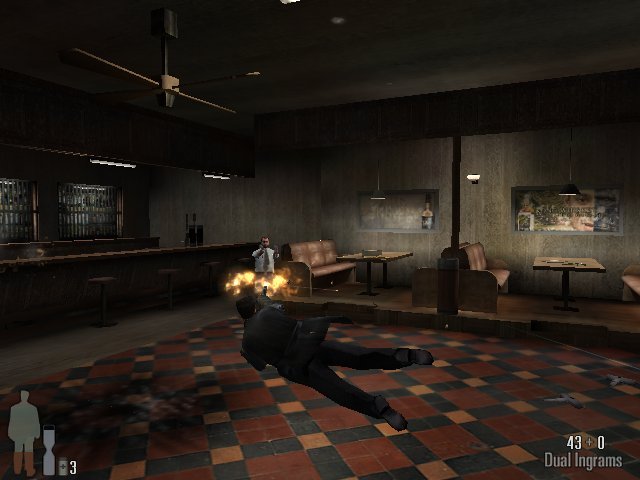
If we’re looking at games with a bit more of an adventure focus, we could consider The Nomad Soul, although I personally found it a bit of a chore to get through. So instead we’ll got for Outcast, a favourite of Stoo’s. For a bit more action, we’ll stretch the limits of the period under consideration by including the slo-mo stylings of Mr Max Payne.

win9xmaxpayne

Have you ever retired a human by mistake?

The old school adventure wasn’t exactly flourishing, but there were still a few bright spots. LucasArts eventually abandoned point and click and went 3D with Grim Fandango, an approach they repeated when returning to the Monkey Island franchise for the final time. The adventures of Manny and Glottis have to be included, but if we’re going to go for another Monkey Island game then I’d rather go for the more traditional approach of The Curse of Monkey Island from 1997.

win9xgrimfandango

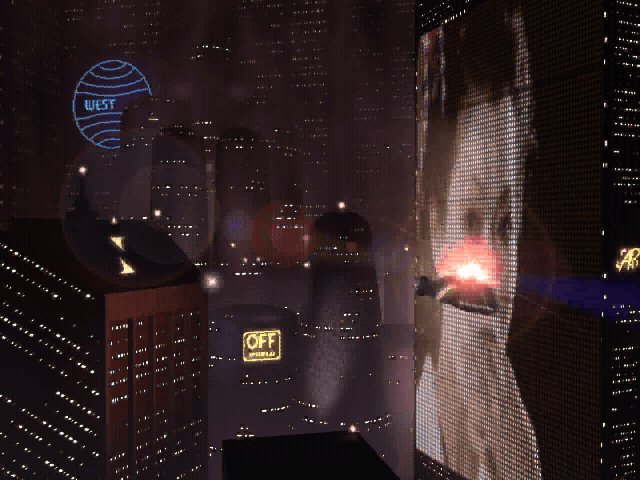
I’ll also make a case for including Blade Runner. Ok, it’s a personal favourite of mine, but (voxels aside) it’s still a very nice-looking game, and although it doesn’t totally succeed in everything it’s trying to achieve, it’s a decent example of the late 90s adventure, and I think more people should play it. Finally, we’ll put forward The Longest Journey, which isn’t perfect, but kind of a standard bearer for the genre at a time when it was more or less being abandoned by the major players.

win9xbladrunner

I know that was then, but it could be again

Sport! Speeeort! Speeeeeoooooorrrrt! It’s ace, innit? Mate? Yeah? Sport? As I mentioned last time, these games don’t necessarily age that well, and are possibly better enjoyed on other formats. I’d love to avoid simply putting forward games from long-running franchises, and there’s a part of me that would be in favour of suggesting cult favourite Puma World Football ’98, but I don’t think I can justify it. FIFA arguably had a rare high point during this period, with FIFA: Road to World Cup 98 eradicating memories of the dreadful 97 edition, and the World Cup tie-in that followed delivered the peak 90s FIFA experience. Even the console types who had access to International Superstar Soccer were willing to concede that EA had made significant progress. Sadly, it was downhill after that, and subsequent FIFAs were too fast and overly reliant on silly trick and pirouette moves. So, we’ll take World Cup 98.

I know we included Championship Manager 2 last time around, but I don’t think you can have a collection of games from this period without including a version of Championship Manager 3. The latest eligible edition of the long-running series would be the 00-01 release that we reviewed on here some time ago. And I’m going to stick to management for our final sporting choice: International Cricket Captain 2. Yes, everyone who buys our imaginary small beige console will be given a cricket game to try.

win9xcm0001

Vorsprung Durch Technik

If we’re talking about racing games, then we have to include one of the 10,000 rally games that were released between 1998 and 2001. My choice would be Rally Championship Xtreme, except it was released in late 2001, so isn’t eligible for selection. So we’ll instead plump for Colin MacRae Rally 2.0, which at least gives an excuse to include a Codemasters racer, if we’re going to ignore sentimentality and omit TOCA Touring Car Championship. Formula 1 was relatively well-represented too, although it’s hard to pick a winner from the console port Formula 1 ’97, Grand Prix 3 (which, for many, was a disappointment) and the various EA F1 games released during this period.

win9xcolin2

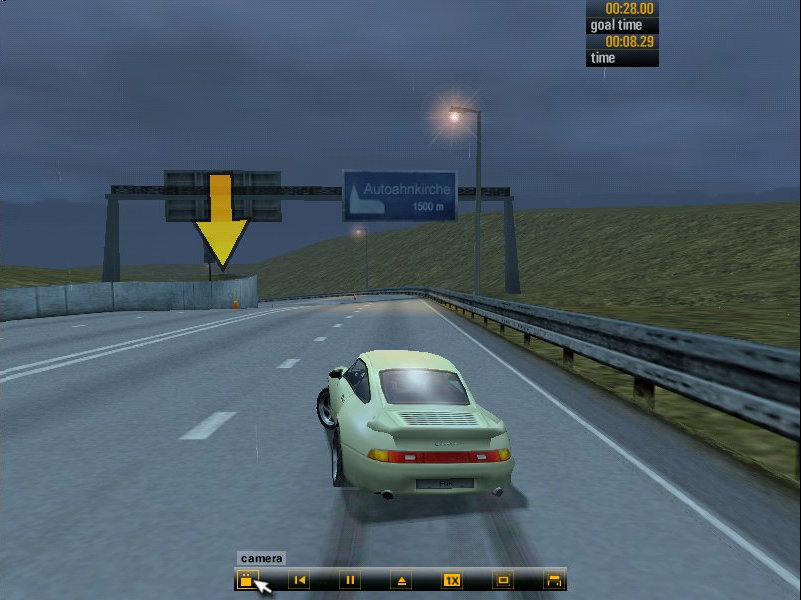
The Need for Speed brand was pretty dominant around this time, although by this point it was just a name attached to EA’s racing franchise. I have a soft spot for Need for Speed III: Hot Pursuit, but it’s edged out by Porsche 2000, which might look superficially similar, but actually has a lot more depth than NFS III or Road Challenge. Finally, we’ll go for the Microsoft racer that everyone thought would be a silly rip-off of Driver but turned out to be better: Midtown Madness.

win9xporsche2000

Kom-en schnaller?

That’s most genres covered, but I think there’s one more game we need to include: The Sims. Ignoring the franchise and the add-on packs, and everything else, it had to be acknowledged that The Sims deserves a place among the most significant games of the period. Whether it’s torturing your Sim by walling him/her in a room, unable to access a toilet, or causing real-life friction by recreating all your friends and loved ones in the game, there’s plenty of fun here for everyone.

Those are our games, but of course you may not agree. Such lists are designed to invoke friendly disagreement and discussion! So feel free to tell us what idiots we are in the comments below.

A marvellous bundle of Windows 95 Wonders

May 19th, 2017

Written by: Stoo

Last week we were inspired by the Nintendo Classic Mini to think an equivalent for MS-DOS gaming. Our idea would take the form of a bundle of the most important PC games of the early 90s, which could be played using Dosbox on a Rasperry Pi.

Today we’re looking at the days of Windows 95 and 98. The 90s were an exciting time in PC gaming – the first half of the decade, which we covered last time, saw the PC emerge as serious contender with titles like X-Wing and Doom. The later years saw great advances in 3D graphics, as hardware increased in power and dedicated 3D graphics cards emerged. We also benefited from continued variety of genres that I feel has been lost in triple-A gaming today, where there is so much focus on war shooters and 3rd-person open world stuff.

The coming of Win95 forms a convenient place to chop the decade in half. It also meant changes in how we interacted with our beige boxes. Now we were using a graphical user interface with multitasking for all things, rather than it just being something sat on top of DOS for solitaire and word processing. In this regard we were many years behind the Amiga users but their smugness was fast fading by ’95.

Our cut-off is August 2001, which marks the release of Windows XP. So technically we’re using a brief period where the current operating systems were Windows 2k (which was intended more for workplace use) and Windows ME (which sucked).

I’ve no idea if Windows 95 can be made to run on a Pi, or if it would be easier to just stick to playing on your regular PC. I guess at this point we’re detaching a bit from the “emulation box” angle and just considering what might be the greatest games of the time.

Anyway this time we’ve planned this out a bit better – we collaborated on a list together and have divided up the writeup 50/50 between us. Once again we’ve tried to be open minded and reasonable about which games to include. We’ve also tried to make sure multiple genres are represented. That said, inevitably our own preferences and areas of interest will have an influence. If you want a totally objective view, I guess you could go look up the thirty best-selling games of the 90s.

One directive we agreed on, was to stay away from multi-format games that are generally associated more with consoles. For example Final Fantasy 7 was one of the greatest roleplaying games of this period, but I imagine most people think of it as a Playstation game.

We are however starting with that genre once again so let me just grab my Chainmail Pantaloons of Wisdom…


What can change the Nature of a Man?
There were a number of isometric-viewed RPGs in this period. I considered Baldur’s Gate, since it was one of the first releases from Black Isle, the guys now known for the enormously successful Mass Effect and Dragon Age series.

Instead though I chose Black Isle’s Planescape Torment, using the same Infinity Engine. This one was known for its moving, contemplative story. In a city that joins several planes of existence, a man who cannot die unlocks the mysteries of his past lives. You as the player must decide what kind of a person he is today. For those of you who tire of goblin slaying, it’s also notable for how often you can talk your way out of problems, including even the final boss fight.

Another isometric game, but a totally entirely different kind of experience, would be Diablo 2. It’s based on endless hack and slash and a life-consuming compulsion to find shinier swords. It was also a major influence on action-rpgs that followed.

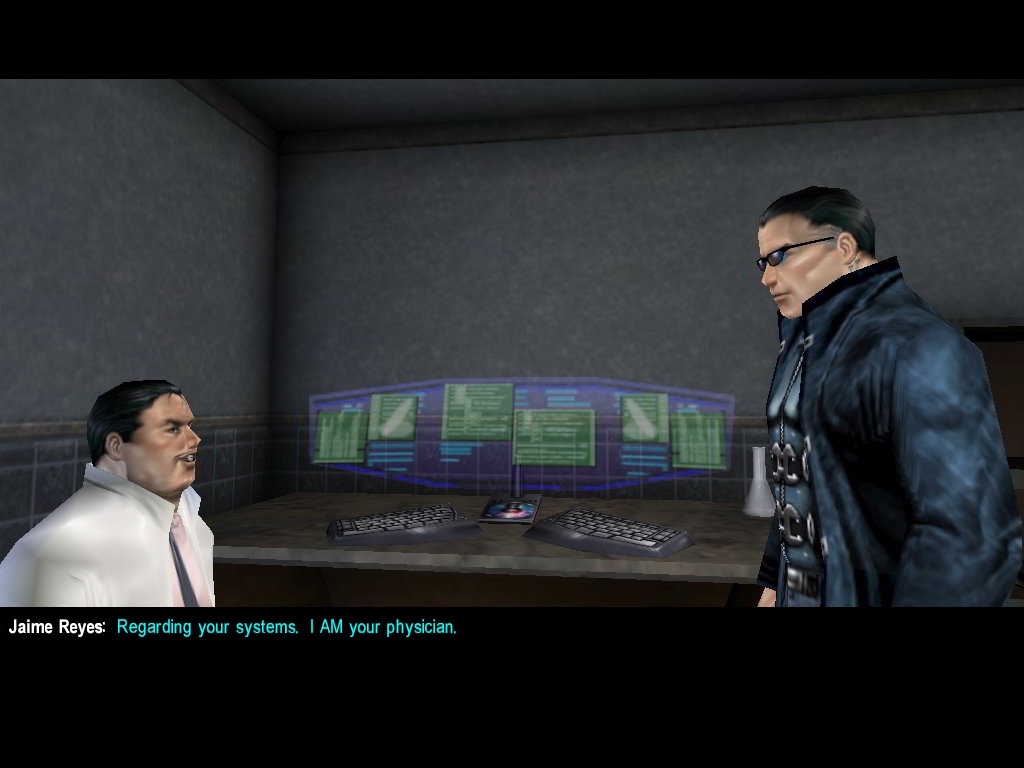
Moving onto gamess of a more 3D nature, for the next entry I really wanted System Shock 2 and Deus Ex, but they are in nature very similar. Both mix first-person-shooter gameplay with RPG mechanics like character skills. So while Rik nobly offered to sacrifice one of his suggestions I forced myself to decide and went for Deus Ex.

It grants you a high degree of freedom to solve problems – given a building full of soldiers you can shoot your way in, sneak in the sewers or try and switch off the security systems. The story is an intense near-future conspiracy thriller, where initial certainties are thrown into confusion, and you’re pitted against shadowy organisations bent on world domination. If you like you games a little more intellectual it tackles several philosophical and sociological questions along the way. It’s probably one of the single greatest PC games of all time.

wheniplayeddeusex1

Finally for this section we have the idiosyncratic and imaginative Anachronox. Its combat mechanics are inspired by japanese console RPGs, something fairly rare on PC. The story is science fiction with a bit of film noir thrown in, buy it also possesses an offbeat sense of humour. In fact it sometimes takes a turn for the outright absurd. Perhaps its greatest strength lies in the characters, each flawed but likeable, dealing with their own personal struggles whilst on a mission to save the universe from the forces of chaos.


Forget about Freeman
Action gaming had largely divided into the first and third person 3D kinds. Rik will talk you through the latter next time, so I’m talking about those late-90s descendants of Doom. By now the old pseudo-3D days were over, and everything existed in a polygon-based world of three proper dimensions.

For a start we’ll take Unreal. Epic were the first to challenge iD as builders of widely-licensed first-person engines, and their own first use of the technology still looks wonderful today. Certainly more appealing than the sludge of Quake 1 and 2 anyway. I guess that’s my bias talking, but its opening section is one of the most memorable of any shooter of the time.

My personal ambivalence towards the Quakes aside, we felt one of the two big multiplayer-oriented shooters of the time (the other being Unreal Tournament) had to be included. Even if we never played them much. So we’re going for Quake 3.

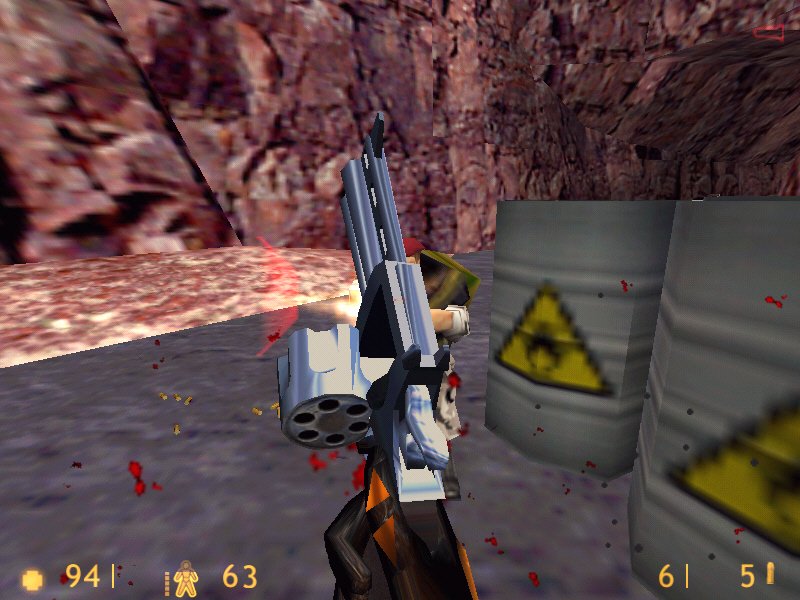
Then there’s Half-Life, without which this list could not be complete. Through the 90s, shooters had still largely been based around running around looking for a key or a switch to flip. Half Life however made us feel like a participant in a crisis, through level design and scripting. It drew us in with memorable set-piece scenes, starting with Gordon’s mundane train ride to work. Then we have the crisis of the intial alien attack, to that awful moment after the soldiers arrive, that you realise their real mission. It was a key landmark in the progression of the genre.

Rules of gaming #1: Remember to load your gun before you start waving it in the face of an enemy soldier.

I also want to include Thief: The Dark Project which is first person but not a shooter at all. Rather it’s a game of stealth and sublety, where you lurk in the shadows and avoid confrontation. It rewards patience, careful scrutiny of your surroundings, and a willingness to explore every nook and cranny of a map. It’s also uniquely atmospheric in a way no other game has matched. It came to us from Looking Glass studios, masters of immersive gaming, and since I passed up on their System Shock I’m taking this instead!


Fox Two
Our flight sim section is lacking this time, since my own experiences ended with being shit at TFX. Still, Janes USAF seems a well-regarded modern military sim. So let’s, er, take that. Suggestions in the comments would be appreciated!

Fortunately I can speak with a bit more expertise on the topic of space-sims. I reckon that Freespace 2 represents the pinnacle of that “world war 2 in outer space” style of combat and dogfighting that we saw in Wing Commander and X-Wing. Bonus points for the huge, terrifying capital ships you sometimes find yourself facing. Funnily enough it didn’t sell well, and space-sims in general went into decline afterwards.

I feel also that we should acknowledge the “big stompy robot” sims – I kind of wanted Mechwarrior 2 last time but we ran out of space. So this time I’m taking Mechwarrior 3. It kept the series trademark tactical play of balancing weapon use against watching heat levels, and the wealth of detail in equipping your Mechs. Plus it looked a bit more realistic than Mech2’s rather abstract polygon lands.


We require more Vespene Gas
One of the great realtime strategy games of this period, that epitmised the base-building and army-raising mechanics we associated with the subgenre, was Starcraft. Although it seemed like just another RTS at the time, it went on to enjoy lasting success due to immense multiplayer popularity. I never dared venture online myself since I never mastered the art of rapidly issuing commands to micromanage your army, that iss required for competitive play. I can vouch for the single player campaign being pretty good though, helped along by some memorable characters and lavish cutscenes.

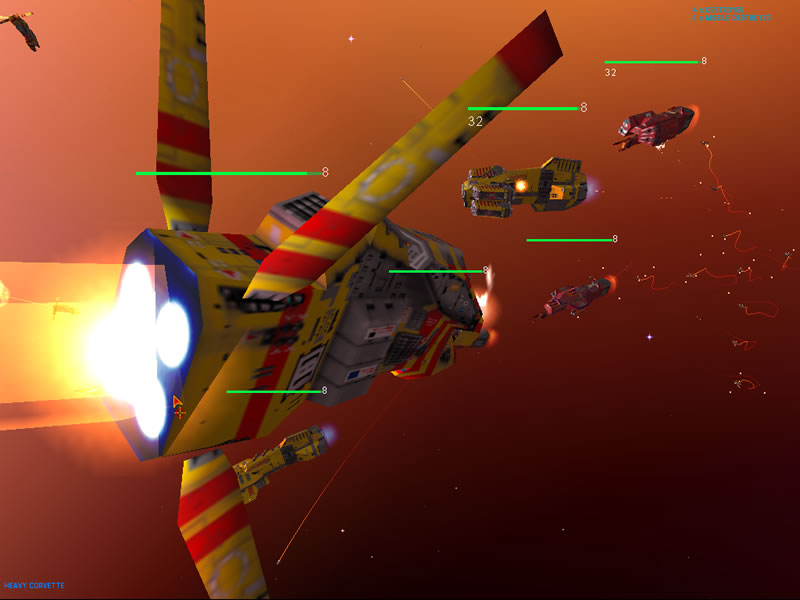
My own personal RTS favourite of the time was Homeworld, which gives you epic space warface in full 3D. In fact it’s pretty much like taking command of a battle out of your favourite space opera. Nimble fighters zip around strafing their targets, gunships prowl in close formation, and lumbering cruisers open fire with huge cannons. There’s a still certain beauty and elegance to it today despite the chunky late-90s polygons. Fortunately the three dimensional aspect never becomes confusing, due to slick controls and interface.

Corvette on a strafing run.

Another kind of strategy was Shogun, which began the long-lived Total War series. It gives us big, realtime battles of cavalry and spearmen, far more realistic in nature than the Command and Conquer RTS template. A clever player will make use of tactics like ambushes, or holding high ground. A dumb player like me just charges the spearmen foward in a big block. Anyway this is all linked by wider-scale strategy and resource management played out over a map screen.

Meanwhile, Alpha Centauri is a 4x game, created by Sid Meier who originally brought us Civilisation It took the mechanics of that earlier game, moved them to a scifi setting and swapped the idea of nations for different ideological groups. There’s a huge tech-tree to unlock as you play, along with options for customising your military units.

Finally, we’re taking Jagged Alliance 2 for squad level combat, putting you in charge of small team of mercenaries. A key aspect of it is building stats of your mercenarines, RPG-style, and finding better gear to arm them with. There’s plenty of detail to keep a strategy nut abosrbed until the small hours, and also some highly amusing voice acting.

That’s me done, so over to Rik for part 2…

don’t touch Merlin’s stuff

May 8th, 2017

Written by: Stoo

This is something I’ve been hoping for ever since sierra adventures started appearing on GoG. They now have Conquests of Camelot! You take on the role of King Arthur, seeking the holy grail in a mission to restore the fortunes of his Kingdom. You must also find three of the knights of the round table, who went missing in their own attempts to find the grail.

My original review is here – I guess I’ll be mostly saying the same things today. It’s long been my favourite of the Sierra family, in fact one of my top adventures of all time. There are a couple of reasons I didn’t bring it up in our “top DOS games” articles recently (part1, part2); for one thing, it’s fairly obscure. Also I wouldn’t say its puzzles are the greatest. At least three of the big ones just quiz you for information in the manual, so they’re basically little more than copy protection.

Still, this the adventure that made the greatest impression on me, because there is something intriguing, compelling, about the places it takes us. We are shown a mythical version of the Dark Ages, where mysterious sorcerers practise arcane arts, and supernatural entities lurk in the wildernesses and dark places. Magic is something that peasants fear and even a King must treat with respect.

The first half of the game takes place within Arthur’s kingdom, as you follow the trail of Launcelot and Galahad. You journey through a perilous forest encountering mischevious spirits, hostile wildlife and the mysterious Black Knight. Later you explore ancient ruins haunted by angry, forgotten gods. You must also visit the Lady of the Lake; for some reason she’s currently very unhappy, and has used her magics to cast her domain into the depths of an unnatural winter.

Copper or tin for widdershins!

Later your travels take you to the holy land. After a trek across the desert, you find yourself on the dusty streets of Jersualem. You’re no revered king here, just a traveller. Who’s broke and a bit ignorant of local customs. Here you spend a lot of time talking to shopkeepers about the price of donkeys and buying household items. It sounds mundane but this actually one of the game’s best sections of genuine puzzle solving.

There are again mystical forces at work behind the scenes in Jerusalem, as you meet the servants of an ancient goddess, one known by many names over the centuries. Her days are coming to an end, and this is a running theme throughout the game. Old, pagan powers are slowly fading, while Christianity claims worshippers and expands its influence.

The game is stuck in 16-colour EGA, but I generally find the artwork good enough to surpass that technical limitation. It’s clean and colourful with clearly differentiated themes like the green and browns of the forest, or the pristene white and blue of the frozen lake. The general sense of atmosphere is also greatly boosted by the soundtrack by Mark Siebert. He was also using fairly basic technology, the humble adlib card, yet did some great work with it. The music carries across various themes like the glory of Camelot, the somber nobility of your quest for a holy relic, or the relief of finding a well after a long trek across the desert.

Perhaps the one way the Camelot disappoints me relates to the map screen of southern Britannia. This indicates over a dozen locations to visit. Each promises an opportunity to explore more of the Kingdom, and learn some more about the legends of Arthur Pendragon. Then you realise you can only travel to about four places; click any other and the game just tells you there’s nothing relevant there. So we get to see rather less of these lands than is first suggested.

To be fair this section comprises only half the content of Conquests. I’m not sure how its overall length compares to other adventures of the time; maybe it’s quite average. Still, since I found this game so captivating, I would have been happy for it to last an hour or two longer.

Looking to a more practical matter, this being one of those early SCI games, you can only use the mouse to walk around. To interact with stuff or talk to anyone, you’ll have you have to type in text commands to talk to people or interact with stuff.

Since this is a Sierra game you can die, and probably will do a lot. Just save often. There’s also the possibility of putting yourself in a situation where you can keep playing but it’s impossible to win, which in old adventures could actually more frustrating than dying. Here’s a hint: take the right sort of money with you on your quest, or you’ll be stuck several hours later. If I recall right, most other mistakes of this nature are fairly easy to avoid. Like, you can leave your knights to die if you find them, but you’re meant to be a champion of virtue, you bastard. It won’t go well for you.

There are a bunch of action sequences, which were sometimes jarring and unwelcome in adventures, but I figure you’re a sword-wielding warrior, so they’re not totally inappropriate. There’s a section fighting off rampaging boars which is kind of a chore, but a short while later they made a brave effort at a first-person view jousting simulator. There’s also an epic battle at the end that I found genuinely intense, two warriors of very different cultures duelling in the dust of a fallen empire.

One more high point is the snarky commentary from Merlin, who serves as the game’s narrator . The idea is he’s using his magic psychic powers to watch over and communicate with you. Sometimes he offers advice, others he gives scathing commentary (and the occasional bad pun) about the way you’ve managed to get yourself killed.

So then, I’ve acknowledged a bunch of flaws here, but Conquests of Camelot will always be particularly important to me. It’s possible I’m just super nostalgic about it. Still, I think it offers something different to the rest of the Sierra stable at least, an actual epic quest instead of twee sanitised fairytales or goofy humour. I reckon it’s worth $7 to adventure fans, anyway.

Oh also, remember Jem from the 80s? That cartoon about an all-lady glam rock band? Funnily enough this was written by the same person, Christy Marx.

Every lie takes you deeper

May 5th, 2017

Written by: Rik

Hi there,

Today’s review takes us back to the Need for Speed series, with 2008’s instalment, Undercover.

undercovertitle1