[ Content | Sidebar ]

PC Zone Lives!

May 19th, 2021

Written by: Rik

“PC Zone’s Alive!?”

Yes, it is, and it’s with that exclamation from Brian Blessed, grabbed from the Zone archives and neatly repurposed as part of the introductory jingle, that the greatest PC magazine of the 1990s returns, this time in podcast form.

It’s all down to the sterling efforts of ex-Deputy Editor Richie Shoemaker (occasionally spotted in these parts), who has summoned an impressive array of former staff from across the span of Zone’s history to spend some time talking about their time on the magazine.

(If you’re new here, we were both big fans of PC Zone, and for a bit of a look back from a reader’s perspective, you might want to check out our retrospective from a few years ago.)

The first episode acts as a general overview, with pairs of former editors discussing each era of Zone. First up, there’s Paul Lakin and Laurence Scotford talking about the early years, followed by John Davison and Jeremy Wells, who were in charge during Zone’s mid-90s heyday. Then we hear from Chris Anderson, who took over after the 1998 redesign, and Dave Woods, who oversaw the next one in 2005. Finally, there are contributions from Jamie Sefton (who also provides the podcast’s intro music) and Will Porter, who were in the hot seat during the mid-late 00s.

(Perhaps understandably, there are no contributions from anyone representing the final, allegedly rather unhappy, years at Zone).

Other than being really excited about the project, I wasn’t sure in advance exactly what to expect, but figured that it was likely to be a deeper dive into the history of the magazine than had ever before been attempted, and would therefore go beyond the usual surface-level potted history of ‘notable incidents’ with which long-time fans will already be familiar.

Early signs are extremely promising. The first episode is reassuringly candid, and a bit more serious – in a good way – than I was expecting. Although the interviews were conducted in pairs, the sense of shared history, and shared pride in having been a part of PC Zone, really comes across. The rapidly changing nature of magazine publishing meant that each editor faced different challenges, but all relay fond memories of their time working on Zone.

The format of the podcast going forward will be to look at individual issues with some of the writers that worked on them, and Richie acting as host. So, it seems likely that there’ll be different combinations of writers contributing to each future episode, which could be fun.
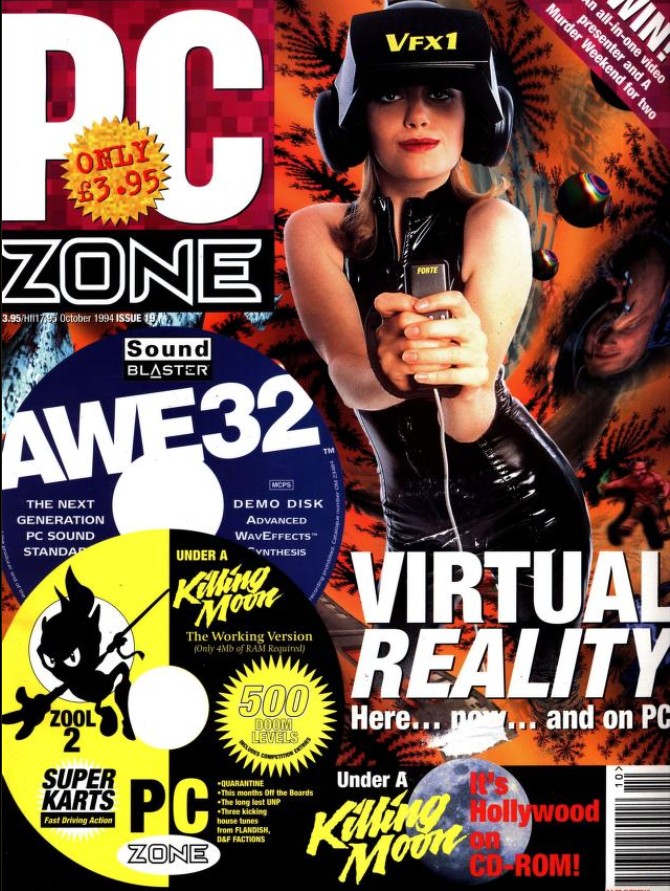
Episode two looks at an issue that was slightly before my Zone-reading days: issue 19 from 1994, when Wing Commander III and Under A Killing Moon were the big games of the day and Virtual Reality seemed like it would be the next big technological breakthrough around the corner.

With more contributors this time (Scotford returns, alongside Phil South, Daniel Emery, and Warren Chrismas), the episode is slightly more freewheeling than the first, and provides a few laughs as well as a look back to a different era of PC gaming: when PCs were becoming more affordable, but still weren’t actually that affordable (and came with mammoth software bundles), and when technology was moving so quickly that the VR headsets of the day were quickly rendered redundant almost as soon as they were released.

More specifically, if you were a Zone reader, it’ll take you back to a time when you could either give no score or two scores to a high-profile but power-hungry release, and to a time when the answer to the question posed at the start of a VR headset review face-off, ‘which VR headset should I buy?’ was ‘neither of them’.

(Super cool dude that I am, I actually remembered the later VR feature discussed in this episode and the names of the two competing headsets, and had to stop myself guessing out loud at the scores awarded. The quiz questions posed by Richie about the different games reviewed in the issue were a bit harder, though).

The second episode is dedicated to the late Duncan MacDonald, who sadly died in 2017. Duncan was a talented contributor to Zone’s review pages as well as providing regular back-page laughs as his alter-ego Mr. Cursor. Before that, he also entertained readers of Zone’s spiritual predecessors Your Sinclair and Zero.

Certainly, Zone wouldn’t have been the same without him, and no doubt some of his contributions will come up in future episodes. Through the podcast I learned that he had written a book – South Coast Diaries – and I plan to check that out very soon.

Anyway, PC Zone Lives! is a bit of a dream come true for any former Zone aficionado who wants to get some insight into what it was really like to work on the magazine. In the unlikely event that you used to read PC Zone, and now read this website, but also somehow haven’t checked it out yet, I’d certainly urge you to do so.


PC Zone Lives! is available here, and on Spotify, and a few other places.
Review: TOCA Touring Car Championship / Race Driver: GRID

May 9th, 2021

Written by: Rik

Hi there.

We have another anniversary double-bill for you today.

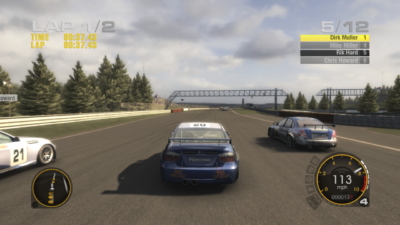
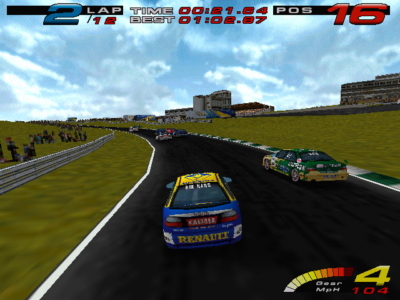
First, there’s a retrospective look at TOCA Touring Car Championship, released in 1997 and first covered here in 2004.

Followed by a review of the comparatively modern Race Driver: GRID from 2008.

We try not to over-promise here, but there are tentative-to-firm plans for more anniversary content, including (potentially) another discussion.

And possibly some cake.

Review: Lost: Via Domus

May 3rd, 2021

Written by: Rik

Hello!

Are we almost at the end? Let’s hope so. I’ll buy you a beer, when it’s all over.

Anyway, one of the things I did to pass my time in recent months was to watch a TV show about characters being cut off from society, friends and family and forced by a dangerous present and uncertain future to contemplate past experiences and mistakes in some detail. It was great!

They made a game of it too. Here’s Lost: Via Domus.

Review: Mass Effect 2

April 23rd, 2021

Written by: Rik

Hi there.

Hope you’re doing well.

In an uncharacteristically logical move, today’s review is of a sequel to another game that we covered recently.

Yes, that’s right – we’re reviewing games from a series in order, and without a delay of several years between write-ups. It’ll never last.

(Also I think this marks the first example of something being hauled out of the Vault of Regret and dusted off for review).

Here’s a look at Mass Effect 2.

Vault of Regret: Formula One

April 15th, 2021

Written by: Rik

The Vault of Regret is a very large place, which houses dusty old game CDs and boxes, untouched digital libraries, and the metaphysical concepts of remorse and embarrassment. Here we write about all the games we should have played but haven’t, or that we have played but didn’t enjoy, among other things.

Declaring an interest in Formula 1 seems like the ultimate way to advertise your advancing middle age. For those in the UK of a certain generation, a Grand Prix would often just be something that would happen to dominate one of the four terrestrial television channels on a Sunday, whether you liked it or not, and if you had even a passing interest, you would end up watching some or all of it.

Inevitably, it would later become the sole preserve of subscription-based sports channels, and hence only for people who actively wanted to pay money to watch it. At which point, the casual viewer largely disappeared, unless he or she was sufficiently interested in other sports to have those channels anyway.

However, the recent arrival of Drive to Survive on Netflix – also a subscription service, admittedly, although one with a broader range and viewer base – has recaptured that audience. Despite attracting the ire of more hardcore fans with its approach, it somehow manages to take the tale of three fairly unexciting F1 seasons, all of which were won by the same driver, and make them interesting, by focusing on individual and team stories from up and down the grid.

As a fan of driving games, this renewed interest did of course lead to thoughts of seeing what Formula One games – both old and new – might be worth a try.

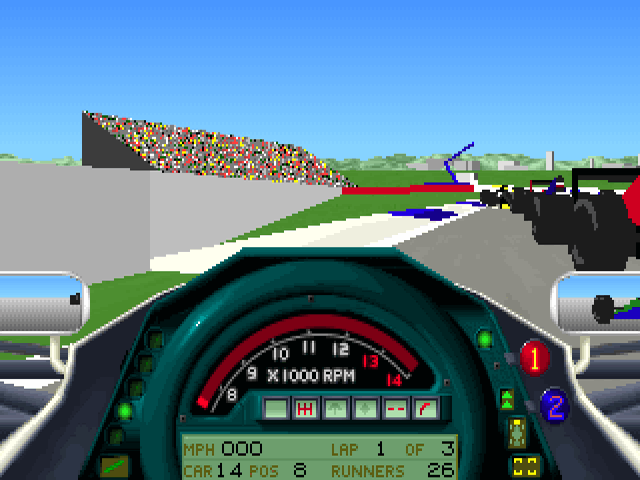
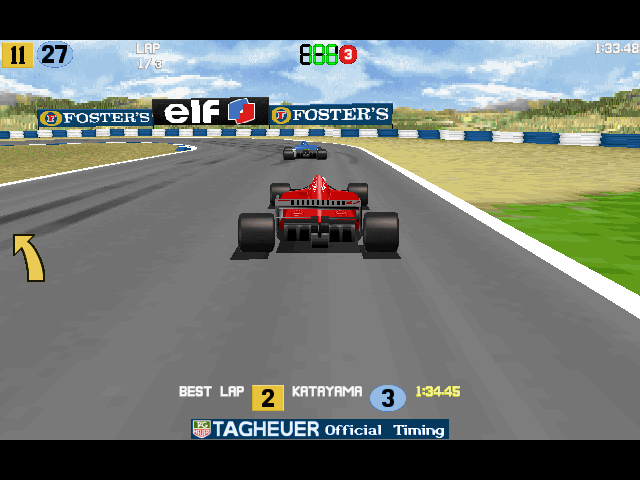
In 20 years, we’ve managed a single review of an F1 game – the PC port of Formula 1 ’97, which was initially released, and found success on, the PlayStation. As acknowledged in that dusty write-up, despite a few idiosyncrasies, in terms of looking and sounding like the real thing while also being accessible enough to pick up and play, it pretty much nailed it. It was also the last F1 game to be developed by the now-defunct Bizarre Creations, who went on to create the marvellous Project Gotham Racing series on Xbox, which, as your correspondent has belatedly discovered, also hits a sweet spot at the arcade-y end of simulation rather successfully.

F1GP still seems intimidating.

But F1 is a technical sport, with all of the off-track tweaking, performance and strategy almost as much a part of success as the driver behind the wheel, which means that most games have tended to lean in that direction. A key early reference point, particularly on PC, would be Formula One Grand Prix from MicroProse, which, along with two further sequels, dominated the 90s.

Our family had the first one on Atari ST, and my memory is of an intimidating challenge, akin to a flight sim, with a slightly droopy frame rate. Whenever I played, I was struck by an overwhelming sense that without most of the driving aids switched on I would never get around the circuit. I think I did try a handful of races with maximum assistance, which included automatic braking, but that just made me feel like I was actually doing very little driving myself.

By the time of Grand Prix 2, the PlayStation had arrived, and Bizarre Creations’ initial Formula One game had casual fans of F1 with a PC glancing over at the world of the small grey box with some degree of envy. Like the later follow-up, it would eventually be ported to PC, but in the meantime I was experimenting with inferior knock-offs, such as Power F1, a little-remembered, middling effort that pitched itself as an accessible alternative to the heavyweight sims. Nevertheless, it was still a bit of a pig to drive. I recall punctures occurring with such regularity that they seemed inevitable, with each race becoming a matter of waiting for a wheel to fall off altogether and end your chances.

Power F1: all four wheels intact, for now.

The end of the decade brought Electronic Arts into the equation, although uncharacteristically for them this did not lead to their financial might slowly strangling and eliminating all competition until they obtained a monopoly on games based on a particular sport. Instead, they released a few moderately successful titles over a few years, before the exclusive rights passed over to Sony, which meant that their PlayStation consoles (2 and 3) were the only places you could find officially-licensed F1 action in the mid-00s.

In theory, the Sony games were a continuation of the earlier series from the original PSOne, although it had experienced mixed fortunes since the departure of Bizarre Creations in the 90s. It was at this point I dabbled with the 2003 or 2004 edition for PS2, but I again found it both too difficult (playing properly) or too forgiving (with aids and ‘stupid mode’ turned on). The challenge was – is – really to make it easy enough for someone to get around the circuit while still making them feel like they’re actually doing something.

Maybe the truth is actually that for it to feel good you really do need to practice the tracks and take the races one at a time instead of trying to breeze through like you would in a more arcade-y track-based racer, like TOCA Race Driver or NFS: SHIFT. Also, in those games, it feels perfectly ok to pause and restart when you mess up. But F1 is a sport, and you wouldn’t usually quit out of another sports game just because you were losing. And, arguably, there’s even more incentive for doing so here: having practiced the circuit and qualified well, it must be infuriating for real-life drivers to have their race, and their chances, ended prematurely due to a careless prang or technical issue.

In the last decade, Codemasters have become the stewards of officially-licensed F1 games, bringing the sport back to the PC, as well as consoles. They have a pretty decent track record with arcade/sim hybrid racers, from TOCA/Race Driver/GRID to Colin McRae/DIRT/DIRT Rally, and I have a couple of their older titles in the backlog from some bundle or other, so maybe it’s time to give it all another go.

Still, it’s likely that for the franchise to have succeeded and lasted as long as it has, the tastes of the hardcore petrolheads and fans need to have been adequately catered for. And it sure still looks like a lot of hard work. Is it too much to ask for a game in which there are no nuances, except that Mercedes and Red Bull have the fastest cars and Haas the slowest? Probably, yes.

Perhaps I will dabble again. Or go back to the older sims, and see what I can make of them. But until then, it’s probably best to submit Formula One games for storage in the Vault of Regret.

Discussion: What Remains of Edith Finch (spoilers!)

April 8th, 2021

Written by: Rik

Hello and welcome to Discussion: [indie game] (spoilers!), in which we venture into more modern territory by choosing a comparatively recent indie game and discussing it. With, er, spoilers.

Today’s game is What Remains of Edith Finch, a 2017 adventure game from developers Giant Sparrow, in which the eponymous Edith returns to her now-abandoned childhood home on Orcas Island in Washington.

By exploring the house, you revisit and uncover the history of the rather unfortunate Finch family, who are seemingly afflicted by a curse that causes its members to meet a premature end, often in strange and unusual circumstances.

Although spoilers will come later, we like to give our readers an opportunity to duck out at this stage if they haven’t played the game already. As with all the games in the series so far, What Remains of Edith Finch is pretty short, and was widely acclaimed upon release, so if it looks like it might be your kind of thing, then by all means give it a go. You’ll be welcome back any time, when you’re done:

Otherwise, here’s the final ***SPOILER WARNING*** for the discussion below:

Discussion: What Remains of Edith Finch (spoilers!) continued »

Review: Sin / Sin Episodes: Emergence

April 2nd, 2021

Written by: Rik

Hello!

This site is now as old as we were when we started it.

While we go have a lie down and think about that for a while, here’s the first bit of 20th anniversary content for you.

The idea is we head back to revisit some of the games covered in our oldest write-ups, while also firing up a related title for review.

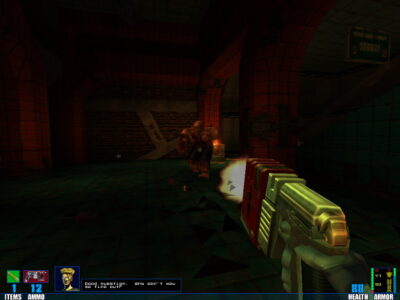
So, this time, we have a discussion about Ritual’s late-90s FPS Sin, which we first covered in the early 00s.

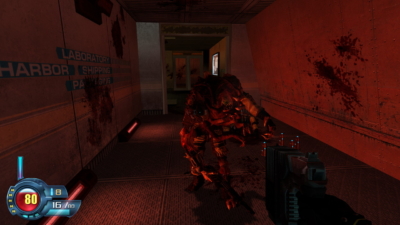
And also a new review of the 2006 follow-up, Sin Episodes: Emergence.

We have some more things planned, time allowing, so stay tuned.

And, whether you’re one of our rare/mythical long-term regulars, or a more recent arrival, thanks, as always, for reading.

Review: The F.A. Premier League STARS 2001

March 21st, 2021

Written by: Rik

Hello there.

It’s another delve into the murky world of football games past in today’s review.

A close relation of an item consigned to the Vault of Regret, this time we’re giving the 2001 follow-up the full treatment: it’s The F.A. Premier League STARS 2001.

This review also means there is movement, intrigue and drama in the world of The FFG Football League, with a game losing its place in the top division as a result.

Oooh! Exciting!

Inside The Big Cardboard Box: Random Compilations

March 11th, 2021

Written by: Rik

Inside The Big Cardboard Box is where we delve into the history of the largely defunct world of boxed PC games, with a particular emphasis on all the ones I used to own, but later gave away or sold.

Today, we move away from budget labels, and onto another method of saving money, with the 90s equivalent of a Steam key bundle: the compilation. We’ve touched upon these previously, with publishers bundling their own titles together in packages of two, three and more. However, the emphasis this time will be on the more weird and wonderful collections of titles that popped up on UK shelves (including my own).

My predilection for a bargain was such that, given the choice between buying five average games for cheap and saving up for one that was really good, I often plumped for the former. In other words, I was the ideal target market for these random compilations. I imagined they would lead to endless Sunday afternoons of fun, discovering and exploring underrated gems, and becoming a fan of previously unfancied genres. In reality, this fun was often short-lived, and the Sunday afternoons in question involved installing each of the games and fiddling around with them for half an hour or so before resolving to return to them at a later date (which I often did not do).

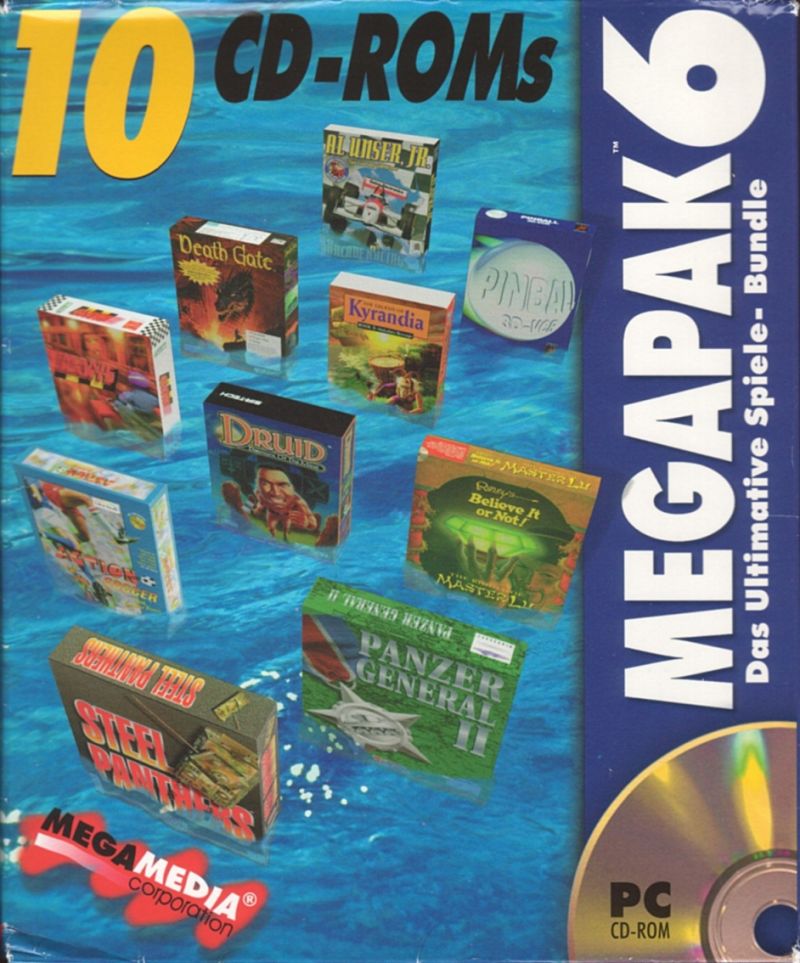
There are three compilations from the mid-late nineties that particularly stand out. The first was part of a series of mammoth bundles from the appropriately-named Megamedia Corp, which began in 1994 with the slightly-confusingly-named Megapak 11 (11 representing the number of individual CD-ROMs in the box, before it became a numbered series), a collection of multimedia packages and games of variable quality, some of which were on CD for convenience only, without necessarily being CD-ROM products.

In fact, the games on offer in Megapak 11 were getting on a bit by then, with the likes of F-14 Tomcat, Links: The Challenge of Golf, and Test Drive III: The Passion all first released in 1990. Just as the PC was starting to come into its own as a gaming machine, the early Megapaks reflected the previous era: slightly clumsy early CD titles mixed with games that were probably better experienced on the Amiga or consoles.

In time, they became a bit more appealing as the collections better showcased what the PC had to offer: the third included flight sim TFX and early Raven FPS Cyclones, plus superficially-impressive CD titles like The Journeyman Project and the dreaded MegaRace, while the fifth included Terminal Velocity, FX Fighter, Jagged Alliance and Flight Unlimited.

Looking at the various lists of games included in the Megapak releases, the wide variety in terms of genre and publishing background is really striking and does seem really rather random looking back now. ‘Something for everyone’ is all very well, and perhaps they were bought by families or groups of friends with varying interests, but I would imagine that more often than not software, particularly in those days, was purchased and enjoyed by individuals.

Saying that, it was possibly more likely then that someone would be open to playing games of all types, although for me most compilations would include at least one game I knew deep down that I would never play. I was usually willing to take the hit, though, particularly as I would usually have waited for the compilation itself to be reduced from its initial RRP.

And so we come to Megapak 6, which was the one I owned. Looking at the list of games now, I’m not entirely sure what in particular attracted me to it. Certainly I never seriously intended to play either Panzer General II or Steel Panthers. Which leaves us with a couple of racing games (Al Unser, Jr. Arcade Racing, which had the dubious honour of being one of the first Windows 95 exclusive titles and Manic Karts, a follow up to SuperKarts), two point and click adventures (The Legend of Kyrandia: Malcolm’s Revenge and Ripley’s Believe it or Not! The Riddle of Master Lu), two fantasy adventure games (Death Gate and Druids: Daemons of the Mind, which was more of an RPG), plus Pinball 3D-VCR (one of 21st Century Entertainment’s many pinball games of the 90s) and Action Soccer.

Doubtless, it would have been the racing, sports and adventure games that were most appealing, although as soon as I realised that Action Soccer was at the wackier end of the footballing spectrum, I dropped it pretty quickly. Upon reflection, Megapak 6 doesn’t seem like the strongest of the series, although I don’t actually remember seeing any of the others on sale. Megapak 8, which included Sim City 2000, Screamer 2, Broken Sword, Mechwarrior 2 and Master of Orion 2, would certainly have been tempting.

The series ended by the late 90s, although Mobygames lists a Megapak 10 as the final release of the series in 2001. However, this entry was published by Empire Interactive and includes a lot of games from their Xplosiv budget range (which we’ll likely cover in a future piece).

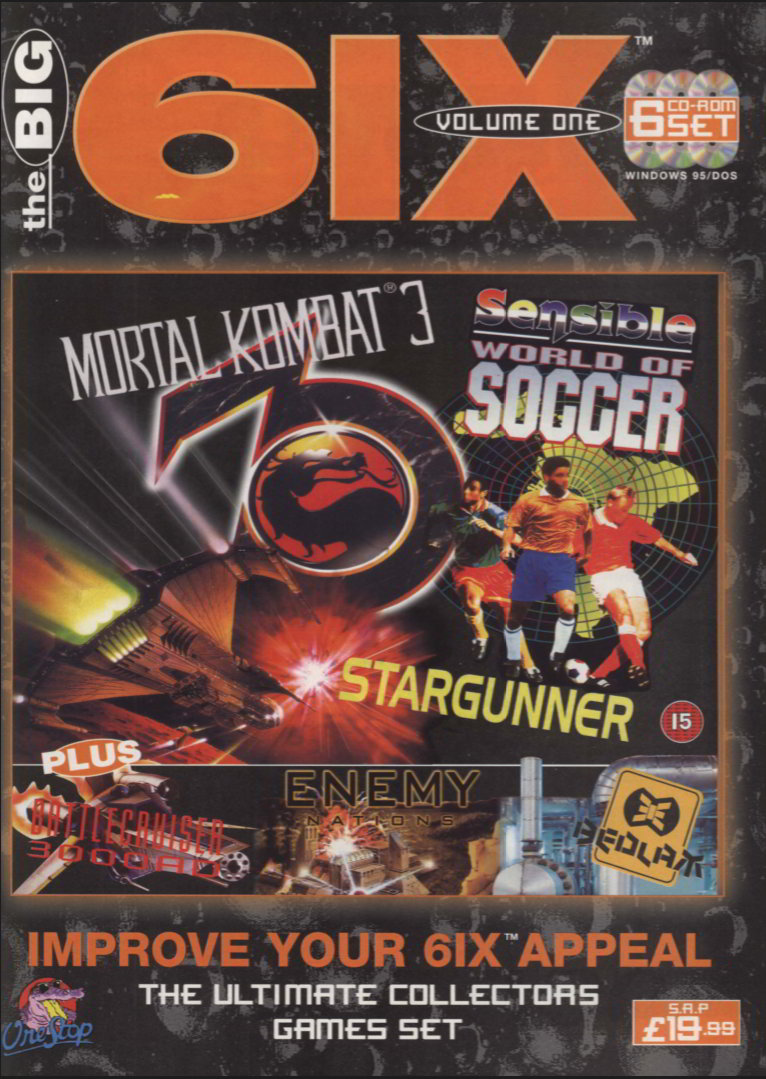
The second random compilation was called The Big 6ix (yes, that’s how it was spelled: like the 90s boy band 5ive), which found its way into my collection at some point in 1997. Again, this was a fairly bizarre selection of games from different genres: Mortal Kombat 3, Sensible World of Soccer, Bedlam, Battlecruiser 3000AD, Enemy Nations and Stargunner.

The first two games were of most interest, but I soon found out that I was still rubbish at beat ’em ups and Sensible Soccer and so dabbled more with the others. Bedlam was pitched as Syndicate without the thinking, which sounded like it would be right up my street, but although it looked nice, I recall it soon became fairly dull. Battlecruiser 3000, despite a notorious ‘sexy’ advertising campaign, was renowned for being an inaccessible and largely baffling ordeal, and I found it fairly impenetrable.

I was curious about Enemy Nations, which I had never heard of before. Subsequent Googling reveals that publisher Head Games went bust shortly after release, so perhaps it never came out at all in the UK. At the risk of crediting my past self with more patience than he possessed in reality, I do recall persisting with this for at least a short while and being fairly taken with it (although given my past with strategy games, it’s likely I just played the first mission or something). Stargunner was a side-scrolling space shooter, and apparently the final game ever released by Apogee. Without being one to judge a book by its cover, I think I largely dismissed this as kind of amateurish-looking for the time and never bothered much with it at all.

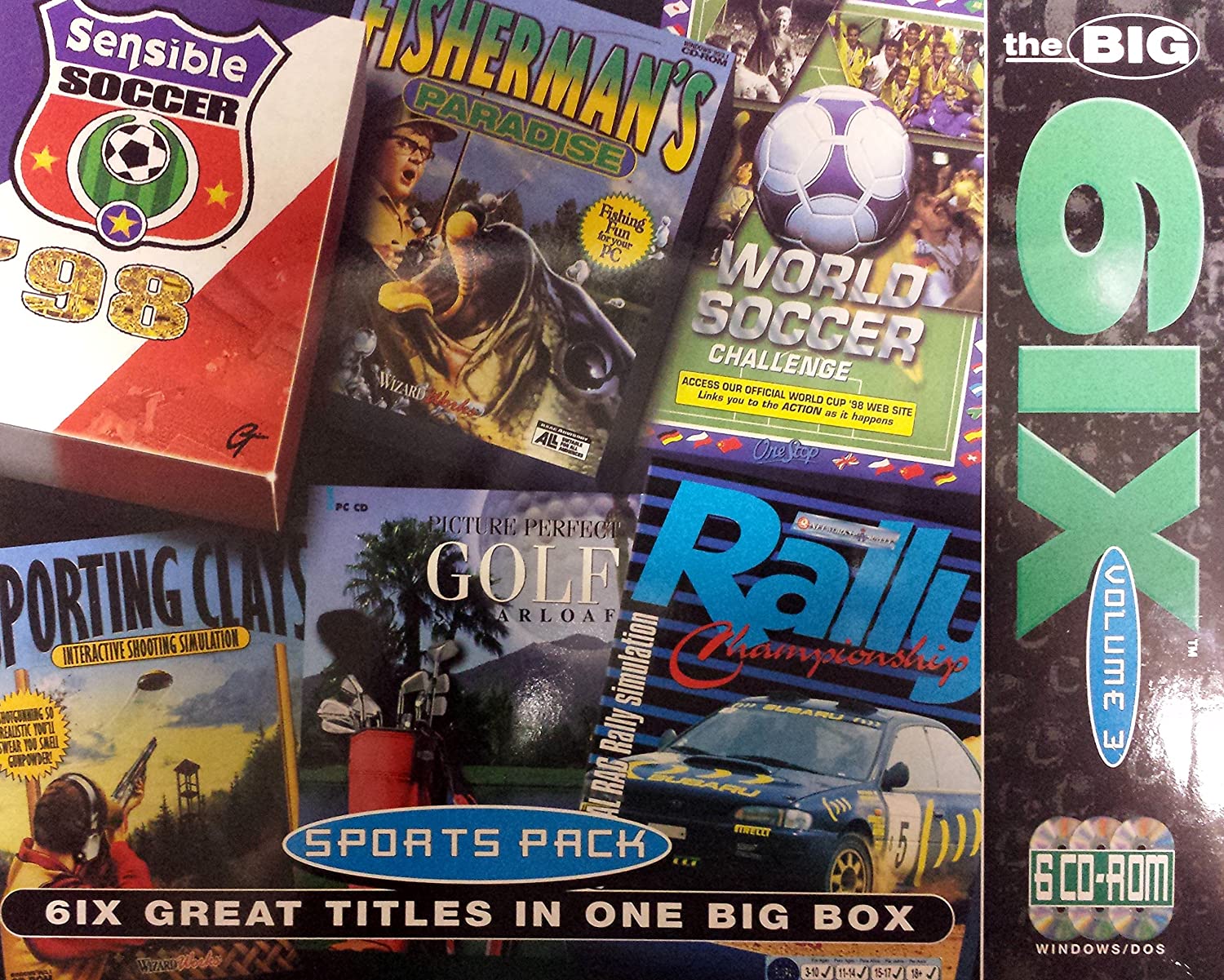
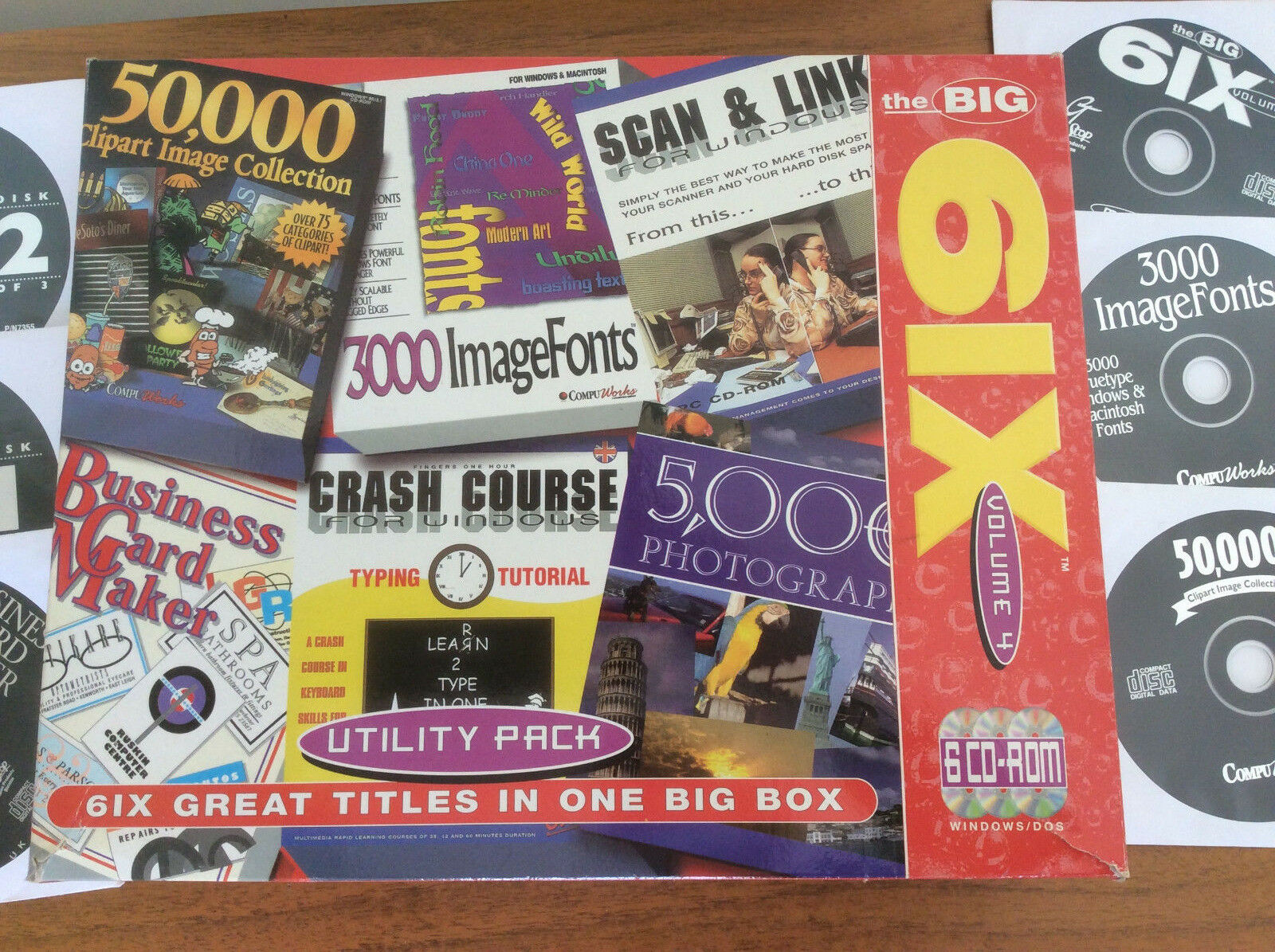
I had figured that The Big 6ix was a one-off, although moderate internet research reveals the existence of a Volume 3 (some kind of sports pack, featuring Sensible Soccer ’98 and Network Q RAC Rally Championship, among others) and a Volume 4 (various utilities and clip art). I wonder what was in Volume 2? Write in and let us know, you could win a prize.

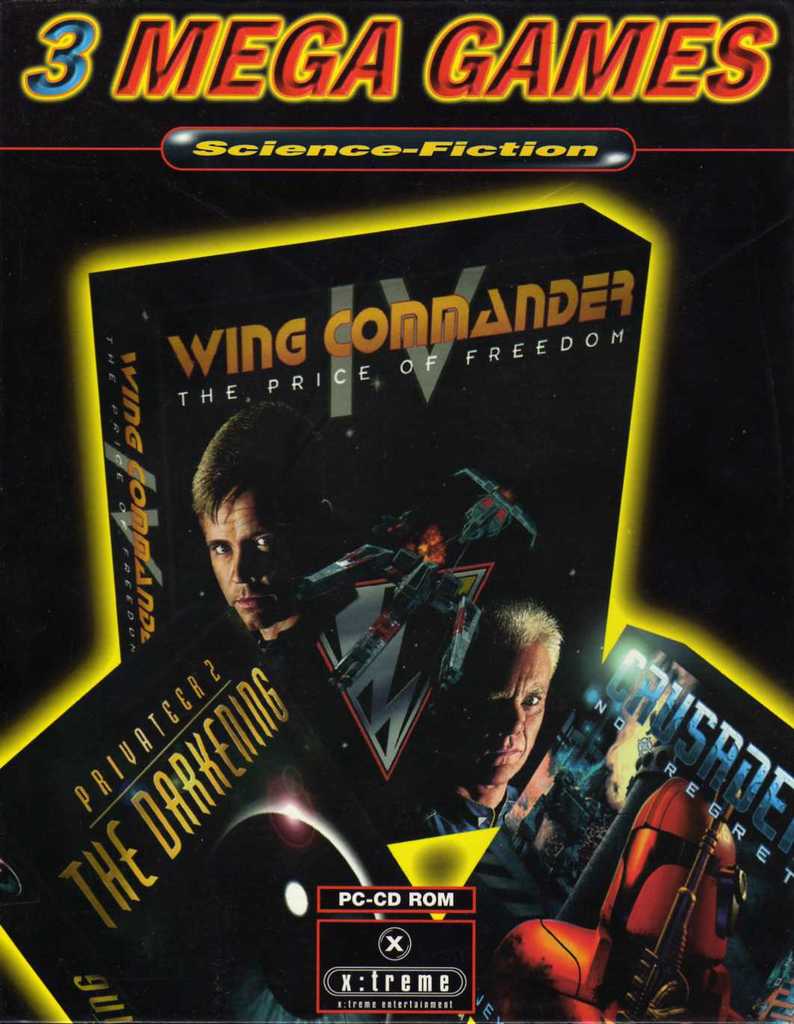
And finally, we have what was possibly the best value compilation, and one that made some sort of sense in terms of the games bundled together, while still also feeling slightly random and unofficial. It was a collection of three games across 10 CDs: Wing Commander IV, Privateer 2 and Crusader: No Regret, with manuals on a separate CD. A low-frills box with the words ‘3 MEGA GAMES’ emblazoned across the top was slightly at odds with the high production values of these Origin Systems games, each of which (I think) also received the EA Classics treatment, complete with printed manuals and supplements. But for 20 quid, it was a must, and I did actually play all three games, even if I only ever made it to the end of WC IV. And I’ve still got the discs somewhere.

Again, this was the sort of compilation that implied it was part of a series (with the ‘Science-Fiction’ subtitle) but I never saw anything like it again. Indeed, if the evidence wasn’t out there to prove otherwise, I might have thought I had made the whole thing up. However, according to Mobygames, there was also a Simulation pack bearing the same name, which included TFX: EF 2000, Jane’s ATF and Grand Prix 2.

I’m sure there were plenty more compilations of this nature out there, possibly some of which were also bought by me, but the phenomenon of bundling random games together and flogging them in some exciting-looking packaging seemed to die out quite quickly. I think as budget games became a bigger thing for the PC market, the bargain hunter was more easily enticed by the frequent ‘2 for £15’ and ‘3 for £10’ type deals in GAME or HMV, where you did at least have some element of choice, even if you might sneak the odd unwise purchase in as your third game just to get the discount.

We’ll get onto that though, in a future instalment.

(NB: Megapak cover sourced from MobyGames; The Big 6ix pic is a scan from PC Zone (Vol 3 pic is nicked from Amazon); 3 Mega Games comes via the Wing Commander CIC).

Discussion: Everybody’s Gone to the Rapture (spoilers!)

February 22nd, 2021

Written by: Rik

Hello and welcome again to another entry in our discussion series, in which we momentarily step away from the dustier oldies, and venture into less familiar territory, known as ‘games released about five years ago’.

These discussions tend to be centred on indie adventures, and feature extensive back and forth on plot points and story details, and so we’ve imaginatively titled the series Discussion: [indie game] (spoilers!)

No doubt one could quibble extensively about the definition of ‘indie’ and I’m sure that at some point, if it hasn’t happened already, we’ll find that this title doesn’t suit the game we’re discussing. [You mean like this one, with the publishing might of Sony Computer Entertainment behind it? – FFG reader]. But that’s the name, and we’re sticking with it.

Today’s game is Everybody’s Gone to the Rapture, another so-called ‘walking simulator’ from developers The Chinese Room, whose first game was Dear Esther, the last title we covered in this series.

As the player, you are invited to explore the fictional village of Yaughton, Shropshire, a place that is pretty much abandoned, save for some glowing orbs of light, which can trigger shadowy re-creations of past events. Clearly, something has gone awry, and through the course of the game, you’ll find out what, uncovering various local village-y sub-plots along the way.

As you may know, we don’t like to say too much in this early (non-spoiler) introduction bit, instead plopping a short trailer here in case the game looks like the kind of thing you might want to check out:

If it does, then you could always play the game, which clocks in at around 5-6 hours, and then join us back here.

If not, and you still want to proceed, then here’s the ***FINAL SPOILER WARNING*** for the discussion ahead…

Discussion: Everybody’s Gone to the Rapture (spoilers!) continued »